

Asia Pacific airlines are filling more seats than ever, but soaring fuel prices are eating into the returns. Now the region’s airline association wants governments to step in before the damage spreads.
At the close of its 70th Assembly of Presidents in Kuala Lumpur on November 13, 2026, the Association of Asia Pacific Airlines (AAPA) called on governments across the region to provide timely, practical support to carriers facing sharply higher fuel prices and mounting operational hurdles.
The two-day event, hosted by Malaysia Airlines and attended by AeroTime, united more than 170 delegates under the theme “Redefining Aviation: Growth, Resilience and Innovation.” It also marked a milestone for the association, which was founded in September 1966, as it celebrated its 60th anniversary this year.
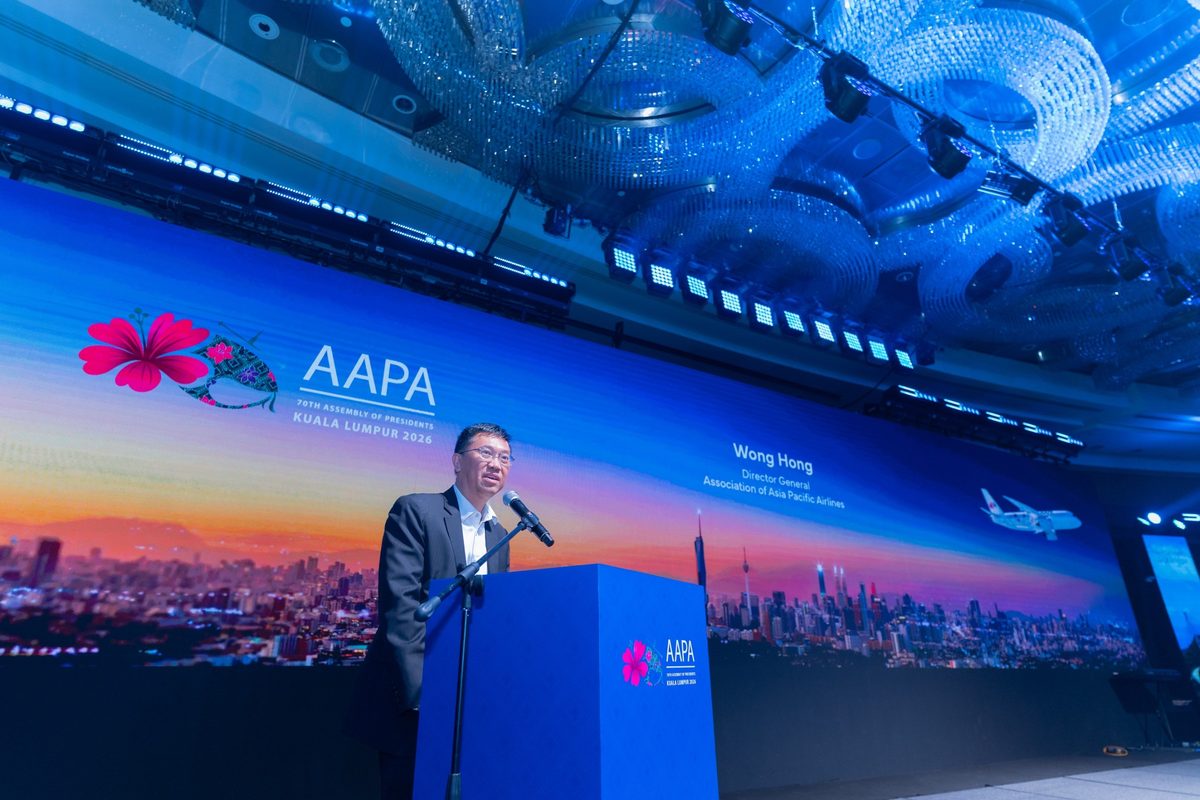
“Governments must recognize these pressures and work constructively with the industry to provide support that safeguards the long-term viability of air transport across the region,” said AAPA Director General Wong Hong.
Wong joined AAPA in April after a decade with Delta Air Lines in Shanghai and 13 years at Singapore Airlines. Kuala Lumpur was his first Assembly in the role.
Record load factors, but $186-a-barrel fuel drains margins
On the surface, demand has held up. Passenger traffic for Asia Pacific airlines grew 1.9% in the first nine months of 2026, and average load factors reached a record 83%.
“Let’s be candid. A full aircraft does not necessarily translate into a healthy bottom line!” Wong told delegates during his opening address on November 13.
He traced the industry’s troubles to “a single incident on February 28” that set off a chain of conflicts, oil flow disruptions and trade tensions. Together, he said, they have reshaped airspace access, traffic flows, fuel markets “and even the economics of entire airline networks.”
Speaking at a media briefing on the eve of the main sessions, Wong said jet fuel was trading at around $186 per barrel in October, compared with $80 to $110 in recent years. Fuel now makes up about 33% of airline operating costs. The jet fuel crack spread, the premium refiners earn over crude oil, is the widest the industry has seen in many years.
Airlines have little choice but to pay it. “We have to consume fuel. We have to burn fuel. We have no alternatives, at least not now,” Wong said. On fuel prices, he added, airlines “end up being price takers.”
That leaves carriers with little room to absorb the shock. Even in the best of times, Wong noted, industry margins sit in the high single digits, or the low double digits at most. “That better not be the norm,” he said of fuel above $185 per barrel. “If that’s the norm, we have trouble. Not sustainable.”
The strain is already showing. AAPA’s aggregate passenger numbers were negative from April to August, before edging back “just above water” in September. Wong expects airlines to use a combination of higher fares and capacity cuts to get through, while warning that passengers have a breaking point.
Fuel hedging offers no easy answer either. With many hedges due to expire, new contracts would lock in far higher prices.
“It’s like gazing at a crystal ball,” Wong said. “I wouldn’t want to be in the CFO’s position.”
Air cargo is the bright spot. Cargo traffic for AAPA carriers grew about 5.5% through August, driven largely by AI-related exports and e-commerce.
Wong urges governments to treat airlines as enablers, not tax sources
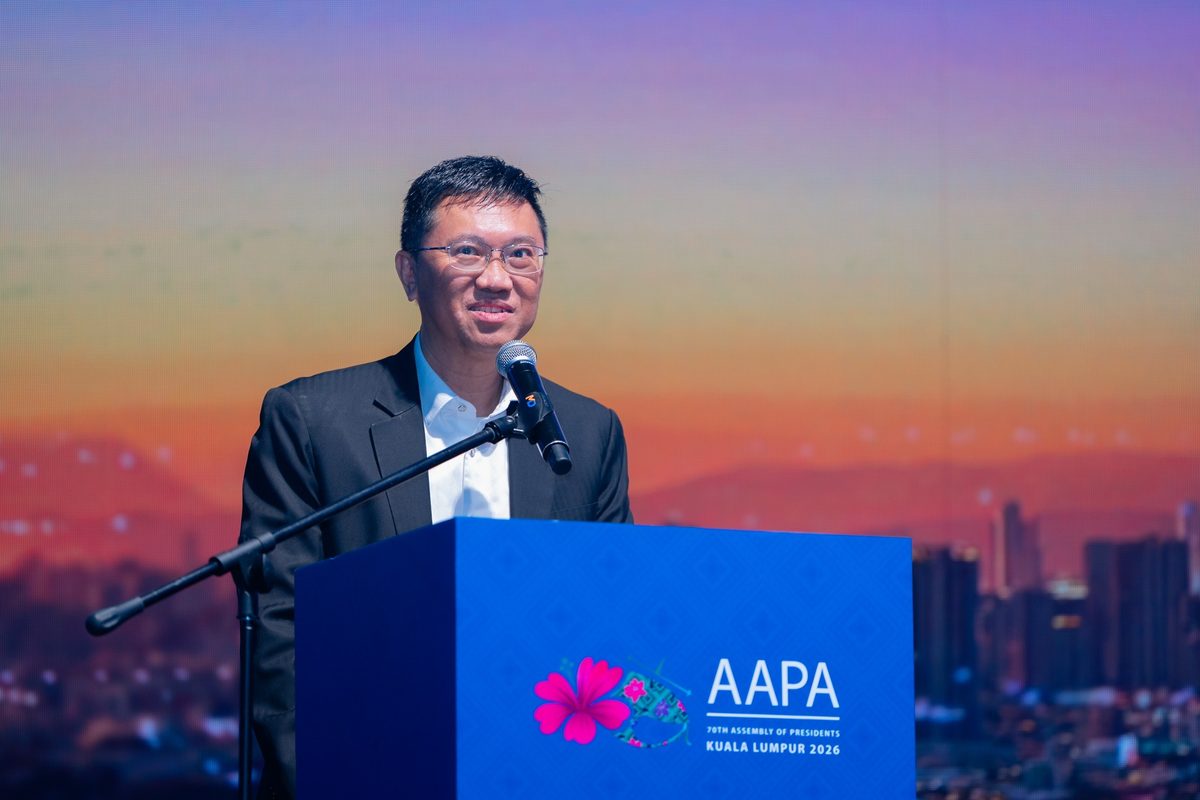
Wong stopped short of a specific wish list. “It’s very difficult to prescribe a single magic pill that everybody can take, and then the problem goes away,” he said, noting that taxes, charges and cost structures differ widely from country to country.
Instead, he urged governments to begin by benchmarking. That means comparing the taxes and fees they levy on airlines, such as departure taxes, landing fees and parking fees, with those of neighboring countries, and asking whether they are reasonable and actually support aviation.
At the heart of it is how governments see their airlines. “If airlines are viewed by governments as a source of income, then it’s a different starting point altogether,” Wong said. “I certainly hope governments can look at airlines as an opportunity to grow the economic pie for the country.”
Governments, he cautioned, should take care not to kill the goose that lays the golden egg. “If the airlines stop flying, then what’s going to happen? Then you have bigger problems to worry about.”
Asked whether some carriers could be forced to shut down, Wong said he did not want that to happen. But he acknowledged that if fuel prices stay where they are, “this could really be a problem.” Airlines with strong balance sheets are better placed to ride out the storm, but not every member is in that position.
AAPA’s biggest worry is a “snowball effect,” in which one airline’s distress spreads to others. “We want people to stay healthy. We want people to stay afloat,” Wong said.
Beyond fuel, the Assembly’s resolution called for a more coordinated approach among governments, regulators and industry to strengthen the long-term resilience and competitiveness of Asia Pacific aviation.
Six-year delivery delays and costly SAF add to the strain
Fuel may dominate the agenda, but the supply chain problems that dominated the conversation a year ago remain. Wong put the global aircraft backlog at around 16,000, and said some CEOs told him their aircraft are only now arriving, or are due next year, six years behind schedule.
Every year of delay means flying older, less efficient aircraft and paying more to maintain them, or giving up growth altogether. Wong acknowledged some progress from manufacturers and MRO providers, “but yet we’re not out of the woods.”
On sustainability, AAPA reaffirmed its target of 5% sustainable aviation fuel (SAF) use by 2030. Yet SAF still costs three to four times as much as conventional jet fuel, Wong said. Even at $180 to $200 per barrel, fossil fuel remains the cheaper option.
“Of course, we all want to fly greener,” he told delegates. “But at today’s SAF prices, the challenge is to make sure we don’t end up flying greener while our financial performance turns redder!”
Wong warned that mandates without matching support for producers simply push costs onto passengers. “Then suddenly travel is only for the rich,” he said. “That’s not what we want.” He compared SAF with solar and wind power, which took off only after early government incentives, and called on governments to take a leadership role.
To that end, the Assembly urged governments to adopt eight policy principles for national and regional SAF policies. They range from long-term policy clarity and a level playing field for all airlines to formal acceptance of book-and-claim within a region. Wong also took aim at the European Union’s plans to extend its Emissions Trading System beyond Europe, calling it “another wild idea” that overlaps with ICAO’s CORSIA scheme.
Safety, he stressed, “must never be compromised or treated as a negotiable cost,” citing recent bomb threats and hoaxes that disrupted more than 30 flights in Europe. “Growth must never come at the expense of safety.”
The Assembly adopted four resolutions in all, covering aviation sustainability, passenger rights, cabin safety and aviation security. On passenger rights, AAPA asked governments to balance passenger protection with industry competitiveness, so that airlines do not bear a disproportionate share of liability for disruptions. On cabin safety, it called for closer cooperation on risks including lithium batteries, unruly passengers and medical emergencies.
From SAF mandates to safety culture, panels echo Wong’s warnings
Three panel discussions on November 13 expanded on those themes, covering sustainable aviation fuel, safety culture under operational pressure, and the Assembly’s theme of growth, resilience and innovation.
Sustainable aviation fuel. The SAF discussion put hard numbers on Wong’s warning. Mark Watts, General Manager of Procurement and Aircraft Trading at Cathay Pacific, said SAF output will equal only about 0.8% of global jet fuel use by the end of 2026. National mandates are funneling that scarce supply into mandated markets, where it can cost up to five times as much as conventional jet fuel.
“Governments just creating these sorts of demand mandates won’t work unless, on the other side, there are incentives for production as well,” he said.
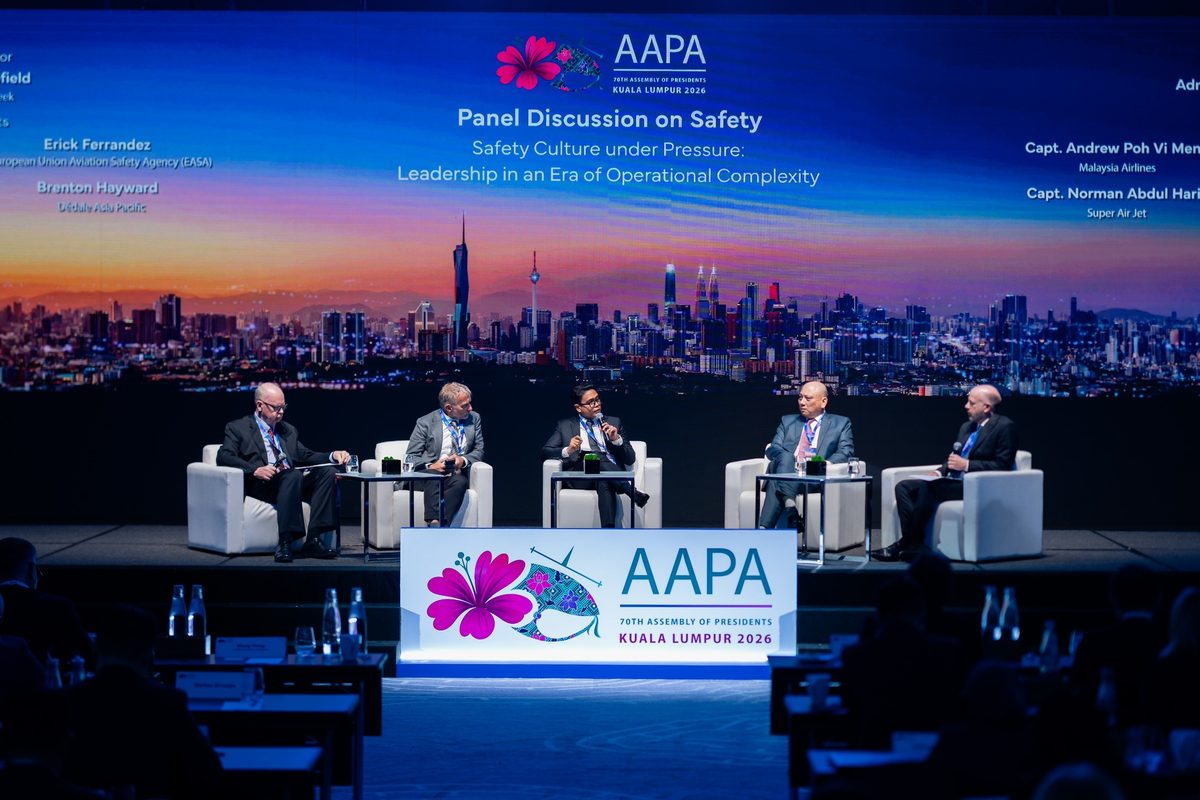
Safety culture. Speakers on the safety panel focused on keeping safety culture intact as airlines contend with parts shortages, high aircraft utilization and new threats such as GNSS interference and cyberattacks. Captain Andrew Poh Vi Meng, Head of Corporate Safety Oversight at Malaysia Airlines, said a reporting policy alone is not enough.
“The employee must be able to see that it’s a safe environment to speak up, and also that speaking up is worthwhile,” he said.
Growth, resilience and innovation. The airline leaders’ panel struck a more upbeat note, with panelists saying demand is holding up despite higher fares. Cathay Pacific CEO Ronald Lam said that with refining margins rising far faster than crude prices, the group is exploring hedging the refining component of fuel costs as well as crude oil. Air Astana CEO Ibrahim Canliel was blunt about the supply chain.
“I don’t know another industry where the mistake of a producer can be simply passed on to the end user in such a simple manner,” he said, adding that manufacturers can keep raising prices “because there is limited competition.”
Wong remains optimistic on the world’s largest aviation market
For all the headwinds, Wong urged delegates not to let today’s uncertainty cloud the longer-term picture. Asia Pacific remains the world’s largest aviation market, supported by an expanding middle class, rising disposable incomes and growing urbanization.
“The geopolitical landscape may evolve, but the underlying demand for connectivity across our region remains strong,” he said. “We should therefore be realistic about the risks of today, without losing sight of the opportunities of tomorrow.”