
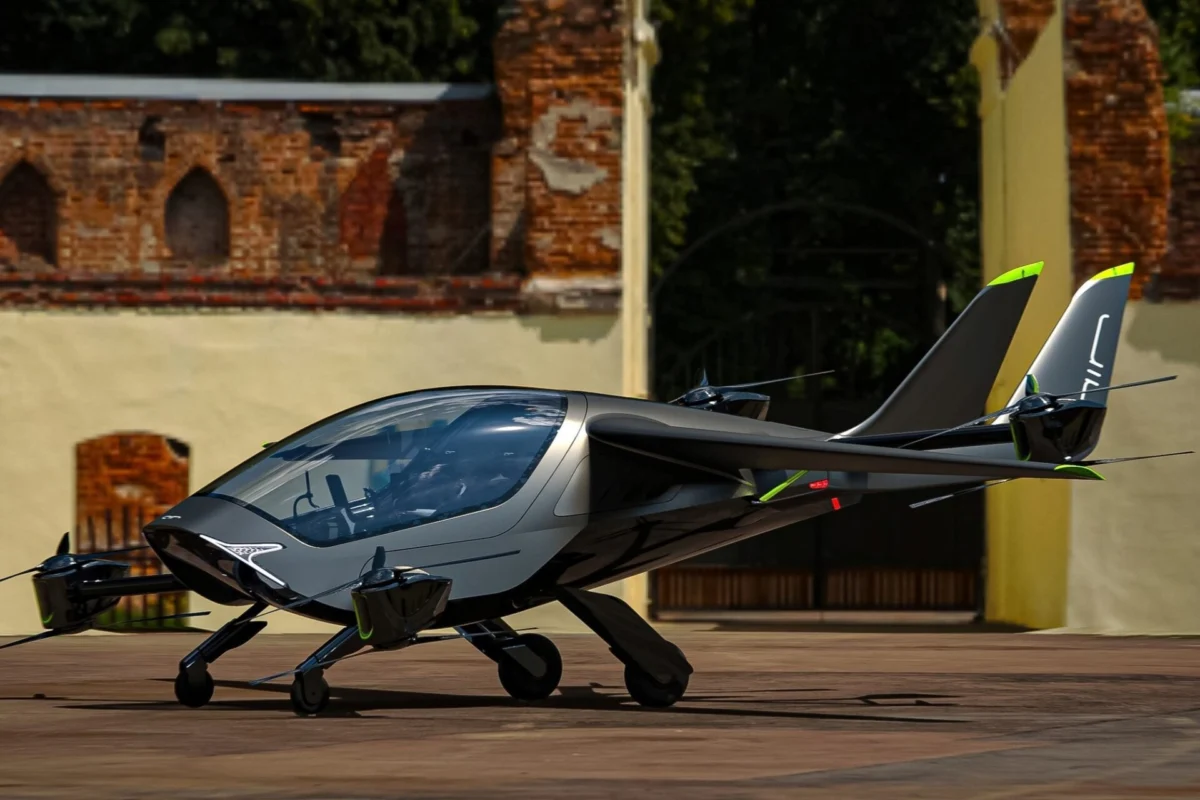
Israel-based electric aircraft developer AIR has declared that it has surpassed $1 billion in orders, driven by demand for its AIR ONE personal eVTOL aircraft and its AIR Cargo heavy-lift unmanned aircraft, according to a company announcement.
The company claims the total includes “more than 3,300 customers on a wait list” for aircraft, with some of them having already placed deposits.
According to AIR, the $1 billion figure includes 3,290 AIR ONE personal aircraft orders and more than 25 AIR Cargo heavy-lift UAS orders. The company said that two cargo aircraft have already been delivered and it expects to produce and deliver more than 20 this year.
AIR did not identify the customers behind the 3,290 AIR ONE orders. The release said only that the orders came from a wait list of customers, some of whom have placed deposits. That leaves unanswered questions about how many of these orders reflect firm commitments as opposed to reservation-style deposits.
The AIR ONE is a two-seat, fully electric aircraft designed for personal use. The aircraft is said to have a 100-mile range, a top speed of 155 mph, and payload capacity of up to 550 pounds.
When the AIR ONE was first unveiled in 2021, the company said that the aircraft would be priced at $150,000 and that it was accepting pre-orders. According to news outlets reporting at the time, AIR claimed nearly 200 customers had paid a $1,000 pre-order deposit.
AIR’s cargo platform appears to be further along commercially than its personal aircraft. The company said active production is underway for the AIR Cargo aircraft, which offers 70 cubic feet of cargo space and can carry up to 550 pounds. AIR added that current book revenue exceeds $35 million, driven primarily by delivered heavy-lift UAS aircraft, as well as mobile ground control stations, servicing packages and parts.
AIR noted that this explosion in orders follows several recent milestones, including the opening of its first production facility in central Israel, a $23 million Series A funding round in July 2025, and FAA experimental airworthiness approval in September 2025 for a US-based prototype now flying in Florida.