
Airlines in Spain have scrambled to adapt their capacity in response to several accidents and a general operational reliability crisis which has seriously affected the Spanish high-speed rail network.
On January 18, 2026, a catastrophic crash in Adamuz, Andalusia, involving two high speed trains, caused the death of 46 people and lead to the temporary suspension of services on the rail line connecting Madrid to southern Spain.
Two days later this was followed by another accident near Barcelona that killed a train driver and seriously injured several passengers.
These two episodes, as well as several other instances of material damaged caused by the storms that affected most of Spain early in the year, have prompted a broad public debate about the state of the rail network. In turn, government-owned rail operator ‘Renfe’ has restricted operations on part of its network.
Most affected by these changes is the high-speed service between Barcelona to Madrid. Since its inauguration in 2008, this rail line, usually offering over 25 frequencies in each direction, has managed to capture around 80% of passenger traffic moving between the two cities.
As a result of the recently introduced precautionary measures, trains are now required to travel at much lower speeds than usual. The reduction of cruise speed from 300-350 km/h to around 160 to 200 km/h on parts of the track has added an hour or more to travel times. What’s more, the need for increased maintenance work has also led to the cancellation of some evening frequencies.
As a result of this, a significant number of passengers have switched to traveling by air, leading to a sudden increase in demand, to which airlines have responded swiftly.
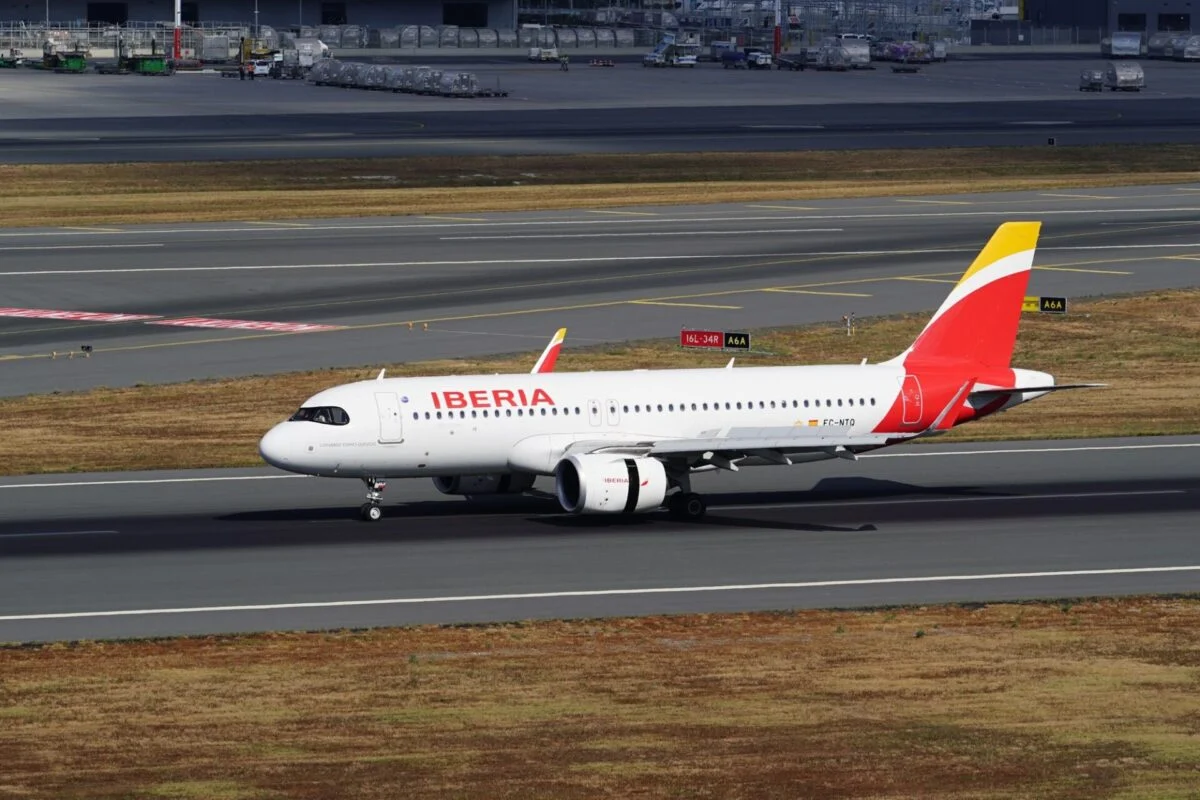
Flag carrier Iberia has increased its capacity by more than 27,000 seats on routes connecting its Madrid-Barajas (MAD) hub to several cities in southern Spain, such as Sevilla (SVQ), Malaga (AGP), Granada (GRX) and Jerez de la Frontera (XRY). This has been done through upgauging from Airbus A320 to A321 aircraft, plus the addition of more frequencies linking each of these city pairings.
This initiative has been mirrored by Spain’s second largest airline, Air Europa, which has added more than 8,600 additional seats on the Madrid to Malaga route in the period up to February 13, 2026.
On the key Barcelona (BCN) to Madrid route, Iberia has opted to apply a price cap, setting a maximum price of €99 each way for economy class tickets.
This route, which in the past had been one of the world’s top air corridors by sheer number of passengers, is operated by Iberia, under the ‘Puente Aéreo’ (Air Shuttle) brand, with some 14 daily frequencies in each direction.
These measures are going to be in place until at least February 19, 2026, when the overall travel situation will be re-assessed.
At the same time, this ongoing market situation has prompted low-cost carrier Vueling – together with Iberia, part of International Airlines Group (IAG) – to relaunch its flights between Spain’s two main cities.
Vueling had abandoned this market in March 2025, after many years of operations, mentioning the difficulty of competing with high-speed rail in the point-to-point market.
The low-cost carrier, which will also apply the €99 price cap, will operate up to four daily services in each direction during workdays, plus one flight in each direction on weekends, until at least February 22, 2026.