
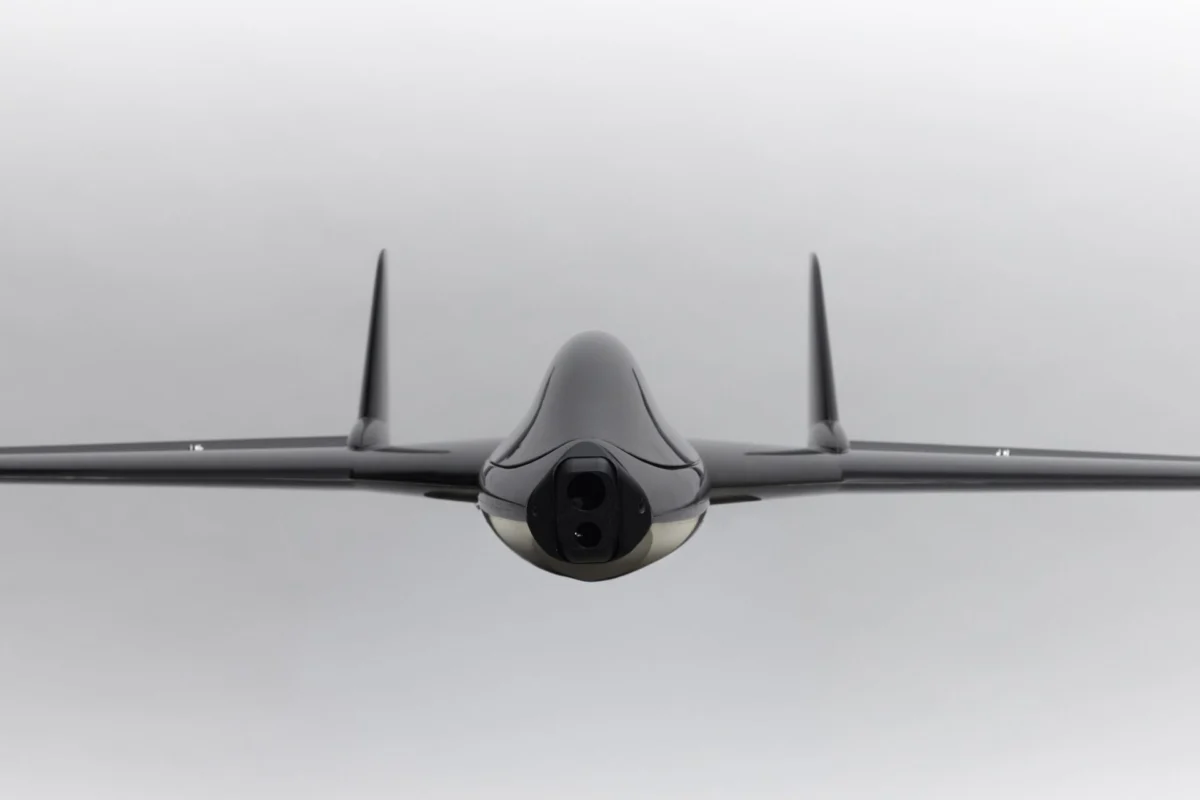
French defense technology startup Alta Ares has raised €50 million to expand production of its AI-guided interceptor drones, as European investors continue to back lower-cost air defense systems shaped by the war in Ukraine.
The funding round, announced on June 9, 2026, was led by Air Street Capital, with participation from Cherry Ventures, OTB Ventures and Harpoon Ventures.
Alta Ares, which operates from France and Ukraine, said the new capital follows “multi-million-euro” contracts and active deployments across Europe, the Middle East and Asia. The company said the funding will support additional hiring by the end of 2026, the opening of new offices in the Middle East and Asia, and expanded production at its facilities in Toulouse, France, and Ukraine.
The raise is Alta Ares’ second funding round, following a €2 million round completed in May 2025. The company also aims to develop activities in Poland, Germany and the United States.
Two interceptors shaped by Ukraine
Founded in 2024, Alta Ares builds air defense systems combining AI-automated detection, identification and interception. Its architecture is built around two classes of interceptors.
The X-Lock is designed to counter Shahed-136-type one-way attack drones and has an operational radius of 15 kilometers, according to the company. The turbojet-powered Black Bird is aimed at faster targets, including Kh-101 cruise missiles and FAB-500 glide bombs, with a stated operational radius of 30 kilometers.

Alta Ares said its systems are currently deployed in three active conflict zones across Europe, the Middle East and Asia, giving the company access to operational feedback from active theaters.
“We are not an AI company, not a drone company, not a data company. What we provide is a capability,” CEO and co-founder Hadrien Canter told the French defense podcast Le Collimateur, describing an offer that runs from the interceptor itself to onboard software, maintenance, and training.
The model echoes Kyiv’s move to involve private companies in air defense in order to address the challenging economics of air defense. Ukraine has faced repeated Russian salvos combining hundreds of one-way attack drones with missiles in a single night, forcing defenders to look for cheaper ways to preserve higher-end interceptors for more demanding targets.
Canter described an episode in the Zaporizhzhia region of southeastern Ukraine, around 15 kilometers from the front line, when his team had three interceptors available as 45 Shahed drones passed overhead. One interceptor failed, and one of the two that flew hit its target.
“Quantity is a quality,” Canter said, arguing that production scale can offset imperfect reliability, much as Russia’s drone salvos rely on mass rather than flawless performance.
Europe’s interceptor race gathers pace
The cost-exchange problem is not confined to Ukraine. On June 8, 2026, one day before Alta Ares announced its funding round, French Rafale fighters deployed under NATO’s Baltic Air Policing mission shot down a drone that entered Latvian airspace from Russia using an air-to-air missile.
The funding round comes as European defense startups attract growing investor interest. According to Sifted data, companies in the sector have raised €2.1 billion so far in 2026, close to the €2.5 billion recorded across the whole of 2025.
Air defense and counter-drone startups have become a visible part of that trend. In February 2026, Germany’s Tytan Technologies and Estonia’s Frankenburg Technologies each raised €30 million to scale interceptor and short-range air defense systems. Frankenburg’s Mark 1 missile was later fired from the Airbus Bird of Prey interceptor during its first flight, underscoring the pace at which European companies are testing new approaches to short-range air defense.