
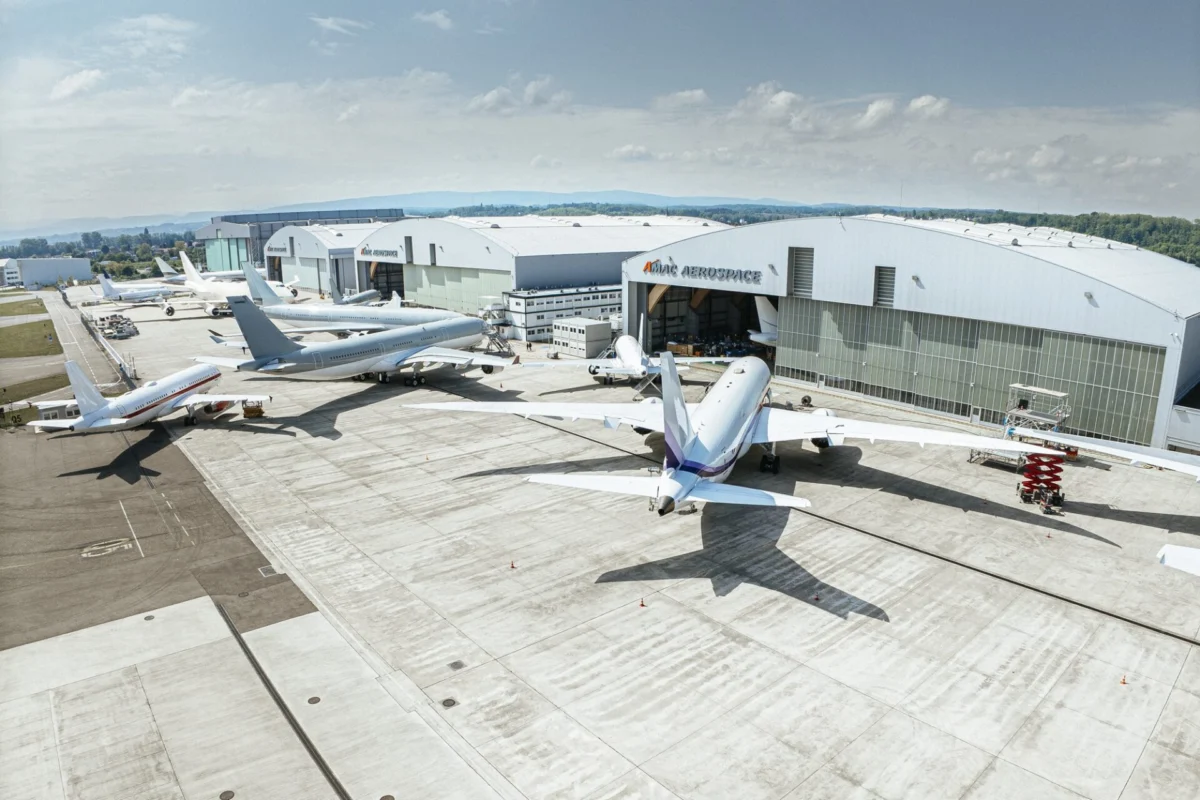
From its impressive facilities at EuroAirport Basel-Mulhouse (BSL/MLH), AMAC Aerospace Switzerland AG is leading the front line in narrow and wide-body VIP/VVIP completion and maintenance services for the corporate and private aviation markets.
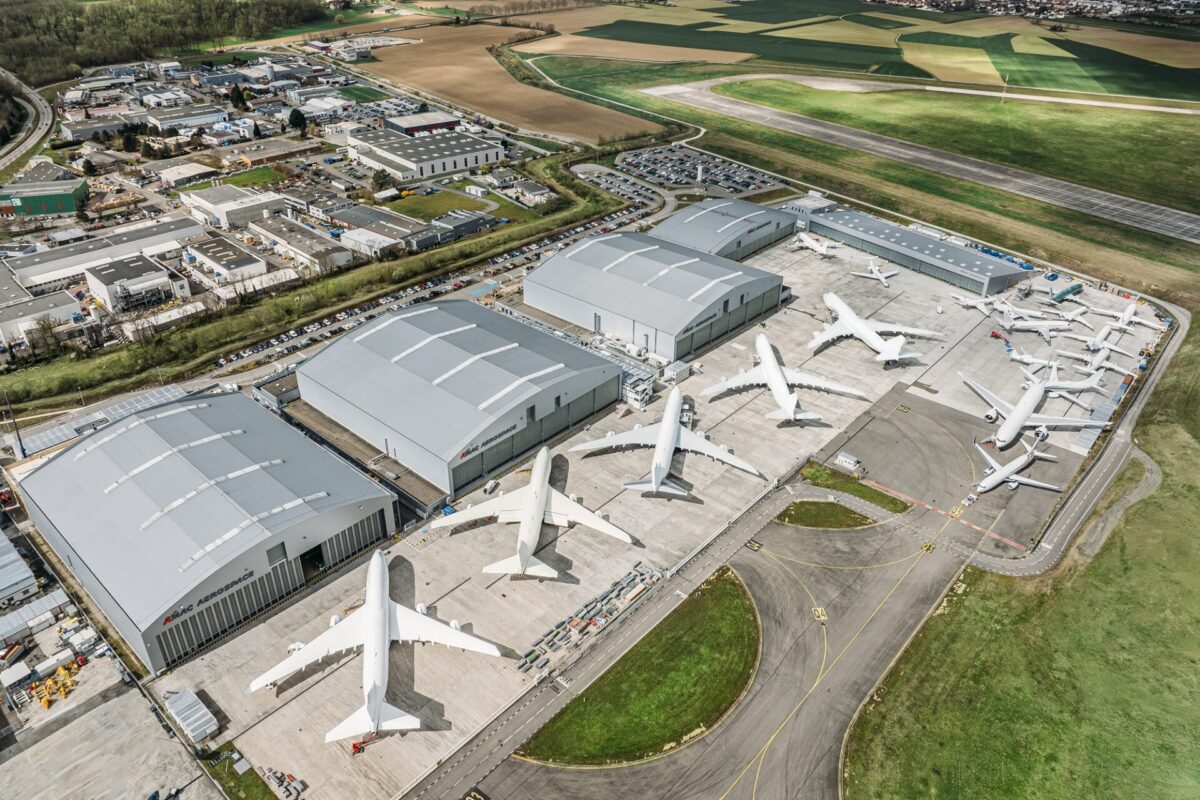
Stradling both Switzerland and France, EuroAirport is home to AMAC Aerospace’s network of five modern hangars, designed to accommodate several of the world’s largest and most valuable aircraft simultaneously.
Every AMAC Aerospace hangar are equipped with the latest technology, the largest being designed to support maintenance work and completion projects on Boeing 747s, 777s, 787s and Airbus A350s, A330s, A340s and even A380s.
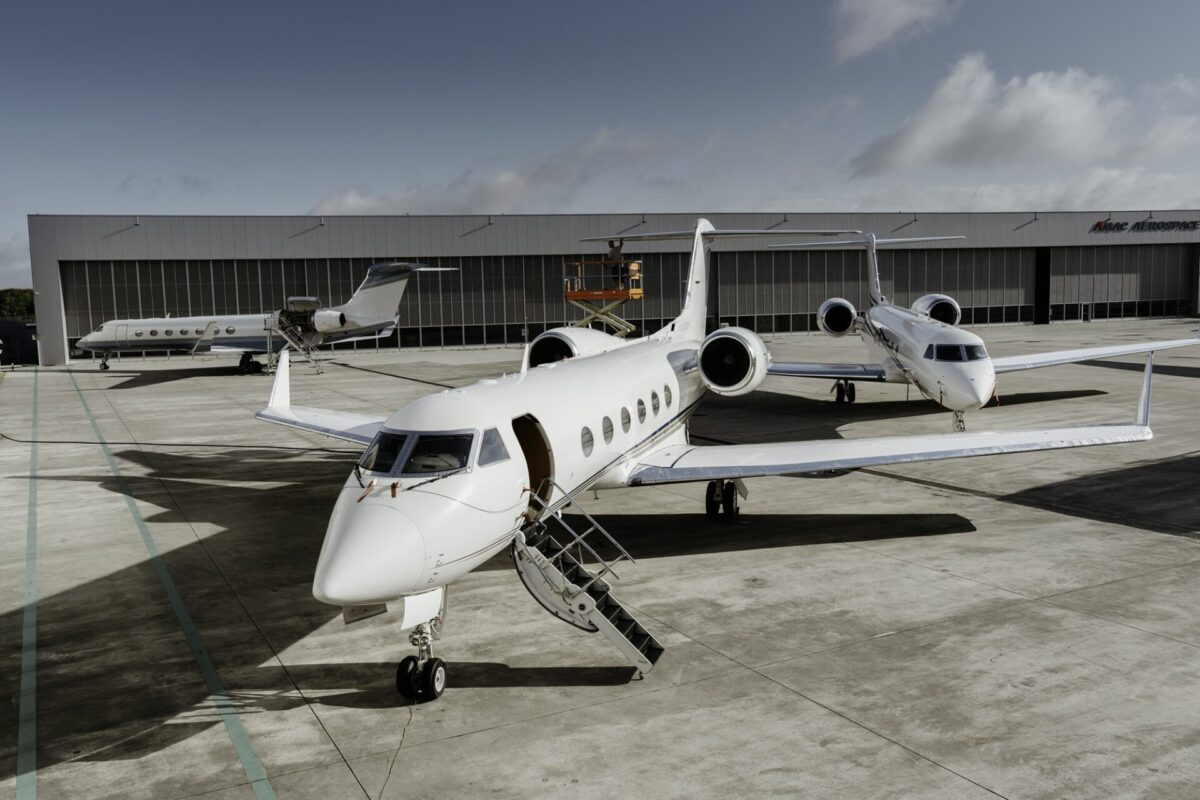
Meanwhile, the company’s small hangar looks after narrow-body aircraft including Boeing Business Jets (BBJ), Airbus A318, A319, A320, A321, Gulfstreams and selected Bombardier types.
Trusted by heads of state and royal families from across the globe to deliver the highest standards of service, since 2007 AMAC Aerospace’s team of engineers and professionals have provided a one-stop-shop, bringing together aircraft maintenance, modification, completion, refurbishment, engineering and CAMO.
Eric Hoegen, Director of Group Sales at AMAC Aerospace, told AeroTime that the company is trusted at the highest levels, because staff “consistently deliver absolute discretion, uncompromising quality and operational reliability”.
“Serving heads of state and royal families requires flawless execution, strict regulatory compliance and complete confidentiality standards, all of which are embedded across AMAC Aerospace’s operations,” Hoegen explained.
In the last quarter, AMAC Aerospace completed a total of 55 projects, including 48 maintenance, six modifications and one completion.
Among the company’s latest assignments, a Bombardier Global Express XRS aircraft underwent a 750-flight-hour inspection, while a second Global Express XRS attended for a short notice drop-in repair.
Leading AMAC Aerospace and its affiliated companies is Group Executive Chairman and CEO, Kadri Muhiddin, himself an aeronautical engineer with over 40 years of knowledge and expertise in aircraft/engine heavy maintenance, overhaul and modification.
Muhiddin has carefully curated a 1000+-person strong workforce at the Basel base, including a leadership team of executives who focus on direction and delivery.
AeroTime spoke with several of the company’s key executives to understand why clients turn to AMAC Aerospace and why they go on to become vital partners to their customers.
One stop shop value and staying ahead of competitors
With a list of time-starved clients, a central pilar of AMAC Aerospace’s operations is to offer a one-stop-shop service, ensuring that customers can fulfil all their aircraft needs in one place and return to the skies as swiftly as possible.
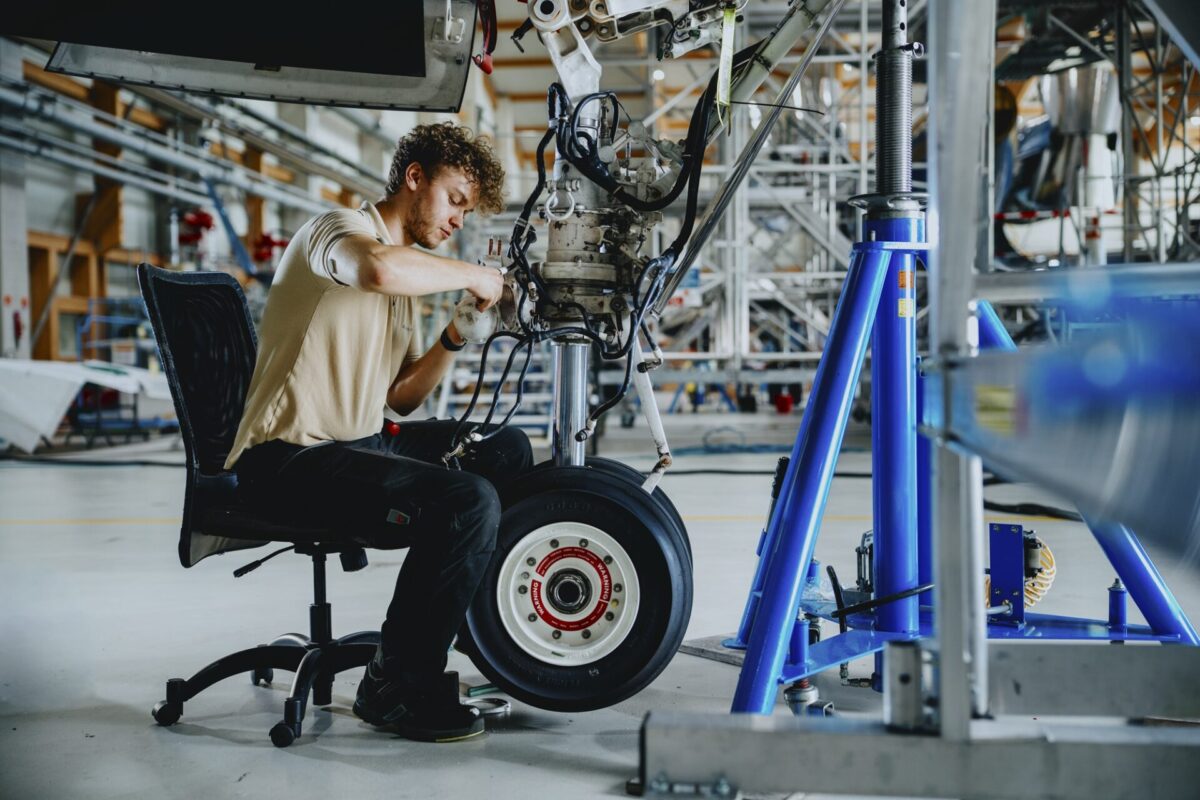
Central to its ability to do this is company’s in-house workshops for cabinetry, woodwork, upholstery, sheet metalwork, cabin varnishing, painting, window shading, electrical outfitting, wheels, non-destructive testing (NDT), composites and calibration, as well as electrical, avionics and battery workshops.
AMAC Aerospace emphasizes that, without one-stop solutions, its clients “would have to depend on many external companies and third parties, which could delay the TAT [turnaround time]”.
What’s more, the company believes that the fully integrated service it offers to clients is what enables it to stay ahead of its competitors.
“AMAC Aerospace sets itself apart through our ability to offer a fully integrated completion environment, where all critical capabilities are brought together under one roof,” Hoegen said. “This integrated model provides customers with clear accountability, seamless coordination and full visibility throughout even the most complex VVIP projects.”
He added: “As a privately-owned company, AMAC Aerospace combines agility with a long-term vision, allowing for rapid decision-making while maintaining strict control over quality, timelines and execution. The integration of design, CAMO, engineering, maintenance, production and key elements of the supply chain ensures consistency and coherence across every phase of the completion process.”
Project One – Airbus A350 completion
In December 2025, AMAC Aerospace received certification from the European Aviation Safety Agency (EASA) for the world’s first VVIP-completed Airbus A350.
The project was the result of years of detailed planning and technical development. It demonstrated AMAC Aerospace’s unique ability to deliver highly complex, first-of-type completion programs to the pinnacle of certification standards.
Alexandre Guyot, Senior Project Manager at AMAC Aerospace, explained that the “level of customization was very high, even for a VVIP project”.
“The A350 is a new generation aircraft, meaning it is a new platform with specific requirements that needs new engineering solutions. A strong relation with Airbus was therefore necessary for all OEM interfaces,” he said.
“It was a large project with a lot of suppliers and long lead times, which challenged every team involved in this project.”
According to Guyot, staff were able to overcome these challenges by having close associations with every workshop, engineering discipline, technicians, mechanics and craftsman on site.
“Good collaboration with the customer team throughout the project was essential, yet grateful,” he added.
Aerospace said the A350 completion project was “not just a landmark moment for the company, it was a landmark moment for the world”.
“Being one of all in the world is special, but being the first, 1 of 1, is truly exceptional. The project had a unique STC (Supplemental Type Certificate), like all our completion projects, and was a significant milestone within the large-cabin and VVIP aviation sector. This achievement marks our capabilities, as also reflected in 2020 when we became the first completion center in the world to deliver an A320neo VIP completion. Is there a connection…?” said the company.
The AMAC Aerospace quality lock
Working on some of the world’s most expensive private aircraft requires true dedication, with unwavering commitment to quality and achieving the highest standards.
AMAC Aerospace provides full in-house design, engineering, manufacturing, installation and certification of minor and major modifications to aircraft structures, systems and cabins.
Its engineers are experts in avionics and electrics, structural and interior work and aircraft systems, catering for all requests from their clients.
Alexis Lang, Senior Manager Completion and Group Sales at AMAC Aerospace, says that the highest standards across all Basel operations are “upheld through strict compliance with international aviation regulations, certified quality systems and a comprehensive Quality Plan governed by an independent Quality Assurance (QA) organization”.
“This Quality Plan provides a structured, system driven framework that ensures quality is consistently maintained across an expanding and increasingly complex operational scope,” Lang explained.
He stressed that quality oversight is “embedded” through regular scheduled and unscheduled internal and external audits, “ensuring full compliance with applicable requirements and continuous alignment with industry standards”.
“A key strength of AMAC Aerospace lies in its fully in-house capabilities,” Lang added. “This integrated structure enables the consistent application of quality processes, close collaboration between disciplines and smooth, controlled handovers throughout each project phase.”
AMAC Aerospace’s commitment to quality is also reinforced by a top management-enforced open-door policy, placing transparency and customer proximity at the heart of every project.
Customer representatives are granted unrestricted access to all project areas and are encouraged to engage directly with company staff at any time.
“This openness enables real-time visibility, rapid alignment and the continuous integration of customer feedback into execution,” said Lang.
He added: “Supported by certified processes, rigorous quality control and highly experienced teams, AMAC Aerospace’s Quality Plan enables the successful management of even the most demanding and wide-ranging projects, while consistently maintaining the highest levels of quality, safety and reliability.”
‘Exceptional expertise, enthusiasm, dedication and reliability’
AMAC Aerospace places great emphasis on its team’s “exceptional expertise, enthusiasm, dedication and reliability” to “consistently deliver outstanding and truly bespoke aircraft interiors”.
Across its entire portfolio, which includes facilities in Turkey, France, Lebanon, Saudi Arabia and the UK, the AMAC Aerospace group has a total workforce of over 1,350 employees.
Around 165 people work within AMAC’s Aerospace Design Organization department, hailing from a variety of different cultures, backgrounds and disciplines.
“Because of that diversity, making sure people fit—not just technically, but also as part of the team—is really important to us,” explained Rami El Olabi, Director Design Organization at AMAC Aerospace.
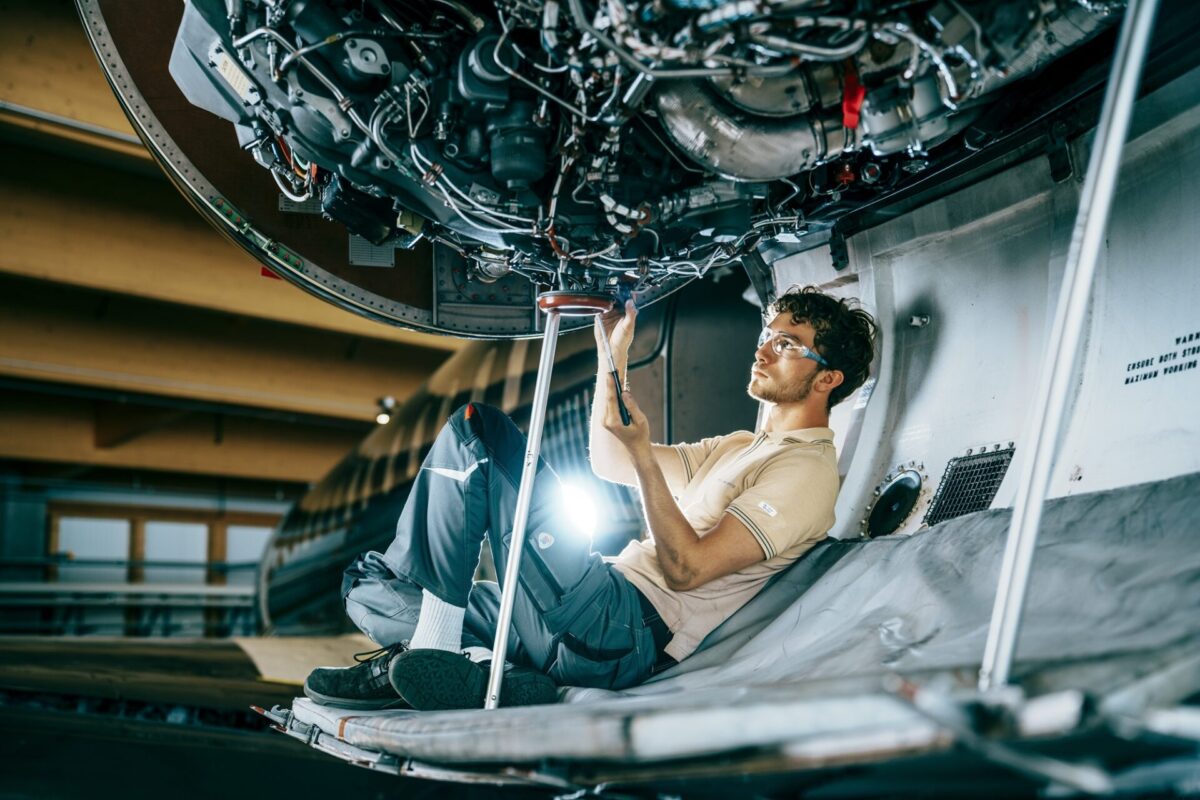
El Olabi suggests that it’s important not only to assess the skills and experience of prospective employees, but also to “get a feel for the person behind the CV” by looking at “how they communicate, how they think, and how they would fit into the team and our way of working”.
“In our Design Organization, we strongly believe that a well-functioning, aligned team will always outperform a team with a few strong individuals who don’t really integrate. So, team fit and attitude matter just as much as technical competence,” said El Olabi.
Project Two – Boeing 747-8i stringer cracks
In 2025, during maintenance checks two Boeing 747-8i aircraft were found to have stringer cracks, a potential issue that had previously been highlighted by the Federal Aviation Administration (FAA) in 2023. The FAA had warned that stringer cracks could “adversely affect the structural integrity of the airplane”.
As one of the few outfitting centers worldwide that can perform such specialized work all in-house, AMAC Aerospace was uniquely positioned to carry it out.
53 cracks were discovered in the stringers of one 747-8i, while on the other, over 80 cracks were found.
The maintenance input was carried out in close communication with Boeing for each individual finding, and the process required highly skilled, specially trained staff from a variety of AMAC Aerospace departments.
“Our relationship with original equipment manufacturers (OEMs) is incredibly important,” AMAC said. “OEMs such as Airbus and Boeing provide us with service bulletins and technical manuals, which are critical for ensuring airworthiness and our continued work. Our close collaboration with them ensures that we always have the latest technical data and promptly receive updates, allowing us to start working on projects without delay.”
AMAC Aerospace’s in-house sheet metal department manufactured all the necessary parts for the repair, including the stringers, which were all unique in shape. After fabricating the new stringers, the department shaped the curved contours using multiple stepped jogglers, a process that required special machines and tooling.
Each stringer was curved into its unique shape, then underwent heat treatment to transition the 7075 aluminum from the ‘O’ condition to the final T62 temper condition, before being installed on the aircraft.
“The in-house manufacturing of parts played an important role in the repair, as it allowed the teams to begin the repair right away without any delays waiting for parts from external companies,” AMAC Aerospace said.
Sustainability: ‘luxury and responsibility belong together’
Sustainability within aviation is an issue that AMAC Aerospace takes extremely seriously, embracing its role in addressing the call for companies within the industry to do more to lower their carbon footprint.
It is an issue that is becoming increasingly important to business aircraft owners, and AMAC Aerospace reflects that outlook through its work.
“We believe that luxury and responsibility belong together,” Lang said. “As sustainability becomes an increasing priority in business aviation, AMAC Aerospace integrates environmental considerations across design, operations and customer services.”

One of the cornerstones of AMAC Aerospace is its approach to weight efficiency, according to Lang.
“By using lighter and smarter materials, we reduce fuel consumption, which directly lowers carbon emissions. At the same time, this improves overall aircraft performance,” he said.
Away from the area of aircraft interiors, Lang says that AMAC Aerospace has conducted its carbon footprint assessment (Scope 1 and 2) and is progressing toward ISO 14001 certification.
Additionally, the company undertakes thorough waste sorting practices, optimized emissions filtration and a continual focus on energy efficiency.
“By combining bespoke solutions with responsible practices, AMAC Aerospace aligns business aviation excellence with a more sustainable future,” said Lang.
AMAC Aerospace’s market intelligence and future trends
AMAC Aerospace is extremely well placed to gauge how the business aviation market is performing, with a strong grasp on future trends.
The generally accepted view is that business aviation is currently in a very strong place, with industry reports showing travel activity increasing across the globe and new markets driving demand for private jet use to record levels.
“The current strong demands of the private aviation market are clearly reflected in AMAC Aerospace’s activity. Project volumes remain high with a sustained workload across VVIP completions, maintenance and modification programs,” explained Hoegen. “Slot availability is in strong demand, with schedules filling quickly and hangar capacity consistently highly utilized. This dynamic environment reflects both the broader market momentum and the continued trust placed in AMAC Aerospace for complex, high-end projects.”
He added: “At the same time, AMAC Aerospace’s integrated organization and structured planning allow the company to efficiently manage this sustained activity, ensuring quality, precision and delivery reliability despite the high level of demand.”
Reflecting on the past 10 years, Hoegen says that customer expectations have shifted from comfort and aesthetics toward connectivity, personalization and efficiency.
Over the last five years, high-bandwidth connectivity has become a clear priority, driving strong demand for satcom upgrades and a move toward bring-your-own-device (BYOD) solutions, as opposed to traditional onboard in-flight entertainment (IFE) systems.
“More recently, customers are increasingly focused on lighter materials, faster execution and smart, future-proof solutions that balance innovation, operational efficiency, and long-term aircraft value,” Hoegen said.
You can learn more about AMAC Aerospace on the company website.
Executive insights
Nadeem Muhiddin, Chief Procurement Officer, on AMAC Aerospace’s supply chain management:
“In today’s highly disrupted global landscape, AMAC Aerospace continues to manage its supply chain with a deliberate focus on agility, visibility, and partnership. Rather than responding reactively to disruption, the organization has embedded flexibility into its sourcing and planning models, allowing it to adjust quickly to geopolitical developments, logistics constraints, and market volatility.
Digital enablement is a key part of this approach. Greater data visibility and advanced analytics enable faster, more informed decision-making across procurement operations, and distribution, shifting the process from ordering amid uncertainty to operating with measured and manageable risk. When combined with a highly experienced team deeply embedded in the business aviation sector, these digital capabilities support disciplined and controlled decisions, resulting in a clear understanding of likely outcomes aligning with strategic objectives.
Supplier relationships are treated as long-term partnerships rather than transactional arrangements. Built on transparency, governance, and shared objectives, these relationships strengthen continuity, quality, and mutual accountability across the supply chain. When vendors may be under strain, AMAC Aerospace is able to pivot to alternative vendors ensuring business as usual.
Cost pressure and sustainability are addressed structurally, not tactically. AMAC Aerospace recognizes that the lowest initial price is not always the most cost-effective solution, just as perceived quality on day one does not always endure over time. By focusing on the total cost of ownership across design efficiency, operational efficiency, and responsible sourcing, AMAC Aerospace ensures resilience without compromising performance, quality, or compliance. Strong cross-functional leadership and capable teams further ensure that supply-chain decisions remain closely aligned with business objectives and, ultimately, customer satisfaction.
Through disciplined execution and continuous adaptation, AMAC Aerospace positions its supply chain not only as a stabilizing force, but as a sustained competitive advantage in today’s complex operating environment.”