
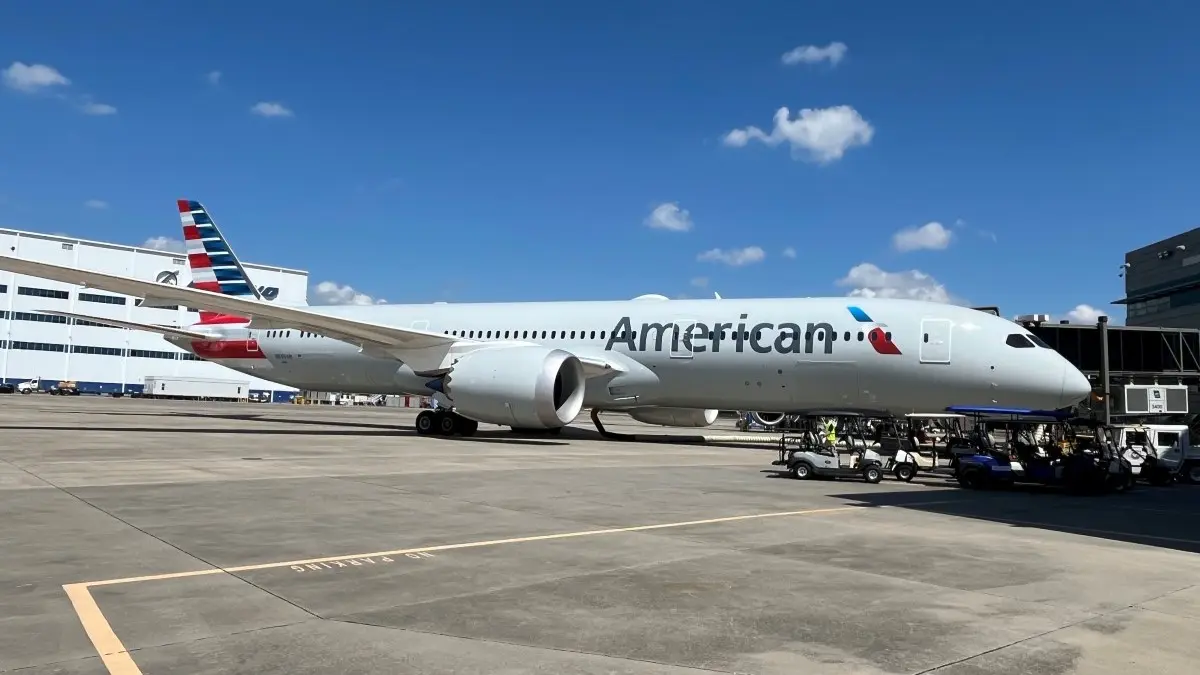
American Airlines revealed it is in discussions with Amazon about using the company’s low-Earth-orbit satellite network to provide in-flight Wi-Fi. CEO Robert Isom said in an interview with Bloomberg the talks center on Amazon Leo, the satellite-internet constellation formerly known as Project Kuiper. The new Amazon service aims to compete directly with market entrants such as Starlink as airlines push for faster and more reliable onboard connectivity.
“We’re making sure that American is going to have what our customers need,” Isom told Bloomberg. He did not comment on how far along the negotiations are or whether the airline is close to selecting Amazon as a future connectivity partner, but the acknowledgment alone signals a notable shift.
American has long relied on a mix of Viasat and other traditional satellite providers, and it recently announced plans to offer free Wi-Fi to its loyalty members through a separate partnership with AT&T. Openly discussing a next-generation satellite option suggests the carrier is preparing for a more competitive connectivity landscape.
Amazon Leo is still early in its deployment. Amazon has more than 150 satellites in orbit, with thousands more planned. In November, Amazon said it had begun a limited “preview program” for select enterprise users as it continued testing the network. A broader commercial rollout is targeted for 2026.
The system is designed to offer low-latency broadband through a global mesh of satellites, similar to the architecture that has allowed SpaceX’s Starlink to gain rapid traction with airlines and business jet operators over the past two years.
American’s interest comes as several major competitors have already aligned with Starlink. United Airlines, Alaska Airlines, and Emirates have signed fleet-wide or multi-fleet Starlink deals, with installations already underway. Those agreements have raised passenger expectations for fast, seamless connectivity and put pressure on carriers still using older geostationary satellite systems, which can struggle with latency and throughput. By entering discussions with Amazon, American appears to be evaluating alternatives that could give it leverage on performance, pricing, or both.
Isom suggested that satellite-internet technology is advancing fast enough that the airline wants to keep its options open. “As that comes, I think that there’s going to be better deals to be had,” he told Bloomberg. The comment reflects a broader industry view: with multiple LEO networks racing toward commercialization, airlines may benefit from increased competition that didn’t exist when only a handful of legacy providers dominated the market.
For Amazon, securing a major airline customer would be a significant win. While Leo has announced government and enterprise test users, it has not yet confirmed any commercial aviation agreements. Airlines represent a high-value, high-visibility proving ground for new satellite technologies, giving Amazon an incentive to strike early partnerships as it builds out its constellation.
American has not said whether Amazon Leo would replace or supplement its current mix of Wi-Fi providers. Nor has the airline discussed timelines, service levels, or how a LEO system would integrate with its free Wi-Fi plan for loyalty members. But the fact that the CEO is speaking openly about discussions suggests American wants to signal to passengers — and to competitors — that it intends to remain aggressive in building out its connectivity strategy.