
As uncrewed aircraft take on harder missions, a UAV is increasingly defined less by its airframe than by what it carries.
Endurance, range, and aerodynamic performance still set the limits of what can be done. Yet the operational effect comes from the payloads: the sensors that find the target, the electronic warfare systems that help the platform survive, and the precision effects that let operators act at range.
At Farnborough International Airshow 2026, ASELSAN is presenting a full mission chain through its UAV Payload Systems portfolio.
The Turkish defense electronics company is showing systems that span intelligence, surveillance, and reconnaissance (ISR), targeting, electronic support and attack, and precision strike. All are designed to make uncrewed aircraft more capable and survivable, from tactical UAVs up to larger medium-altitude long-endurance (MALE) and high-altitude long-endurance (HALE) aircraft.
The portfolio includes MURAD and FULMAR airborne radars, the ASELFLIR electro-optical family, ANTIDOT electronic warfare pods, the TOLUN guided munition family, and LGK and KGK guidance kits.
MURAD and FULMAR: radar for all-weather sensing
Radar anchors the sensing layer, holding contacts through weather and darkness at ranges and search volumes an optical sensor cannot match. ASELSAN is bringing two airborne AESA sets to Farnborough.
FULMAR 500 is ASELSAN’s long-range airborne maritime surveillance radar. Developed for fixed-wing UAVs and manned maritime patrol aircraft, the X-band AESA radar is designed to support naval, ground and air surveillance and reconnaissance missions. ASELSAN lists an instrumented range of more than 320 nautical miles, continuous 360-degree azimuth rotation and under-the-belly integration. Its modes include high-resolution stripmap and spotlight SAR imaging, ISAR imaging, sea search, air search, ground moving target indication, weather detection, target classification and network-centric data integration with battle management systems.
FULMAR 200 SAR Pod System is a state-of-the-art, lightweight and compact synthetic-aperture-radar solution designed and developed by ASELSAN for surveillance and reconnaissance missions of both manned and unmanned aerial vehicles, featuring agile electronic beam scanning using an AESA antenna. The system can be used for high resolution stripmap and spotlight SAR imaging under all weather conditions. Thanks to its pod form, the system can easily and quickly be integrated under the wing or the body of air platforms, so it is possible to integrate with EO/IR cameras.
MURAD 100 addresses a different requirement. Designed as an AESA nose radar for airborne platforms, it is intended to combine surveillance and fire-control functions in a single sensor. ASELSAN describes it as supporting situational awareness, identification, prioritization and engagement of threats, including missile guidance. Its air-to-air modes include beyond-visual-range missile guidance, all-aspect search, multiple target track, multiple agile target track and cued search, while its air-to-ground modes include ground moving target indication, ground moving target track, ground mapping, fixed target track and air-to-ground ranging.
ASELFLIR: giving UAVs sharper eyes

Electro-optical and infrared payloads are arguably the hardest-working systems on any uncrewed aircraft. They let operators detect, identify, track, and designate targets, and on many missions, they are the reason the UAV is airborne at all.
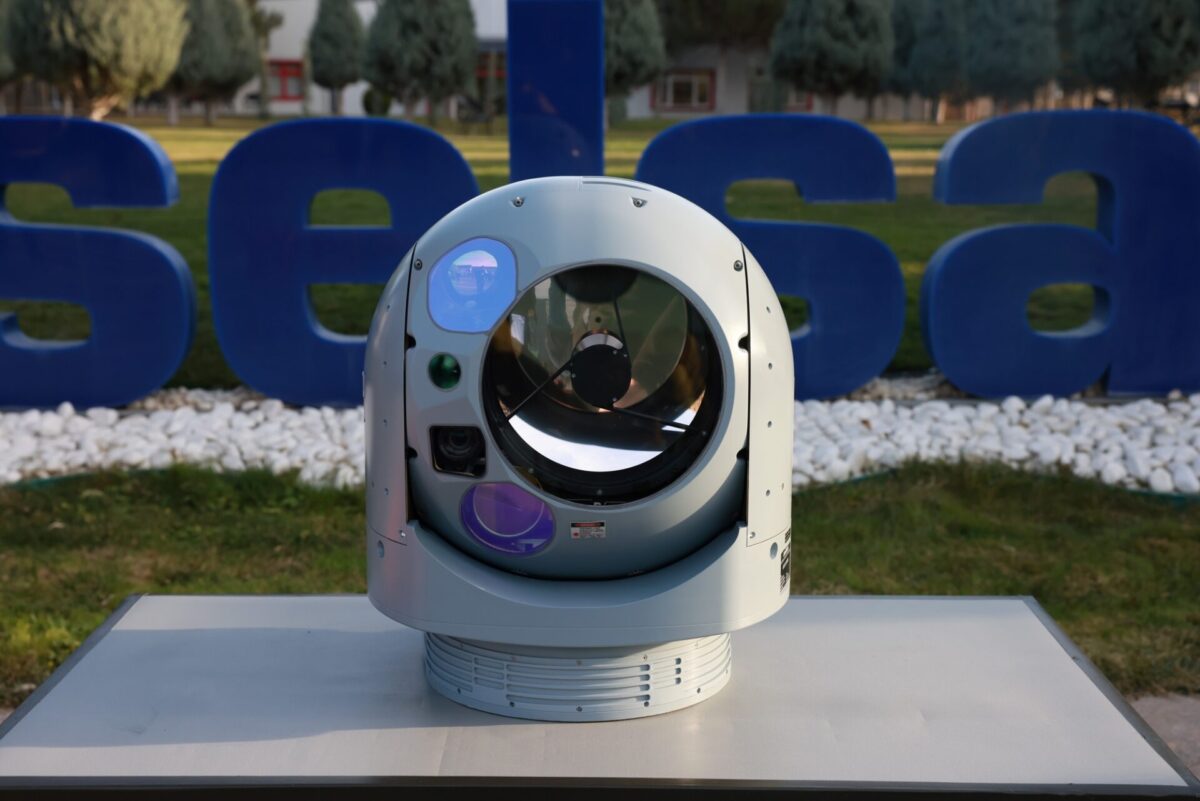
ASELSAN’s ASELFLIR line runs from compact sensors for smaller aircraft up to larger, higher-performance turrets for long-endurance fixed-wing platforms. Two systems anchor the UAV end of that range.
ASELFLIR 500 is designed for fixed-wing aircraft, including UAVs, and bundles reconnaissance, surveillance, target geolocation, and laser designation into a single line-replaceable unit. The system is able to maintain consistent performance across all weather and operational conditions, ensuring uninterrupted mission effectiveness without degradation. On a UAV, every kilogram has to earn its place against fuel, weapons, and other payloads. A sensor that performs several tasks simultaneously makes a given airframe more useful without requiring the operator to switch to a larger, costlier platform.
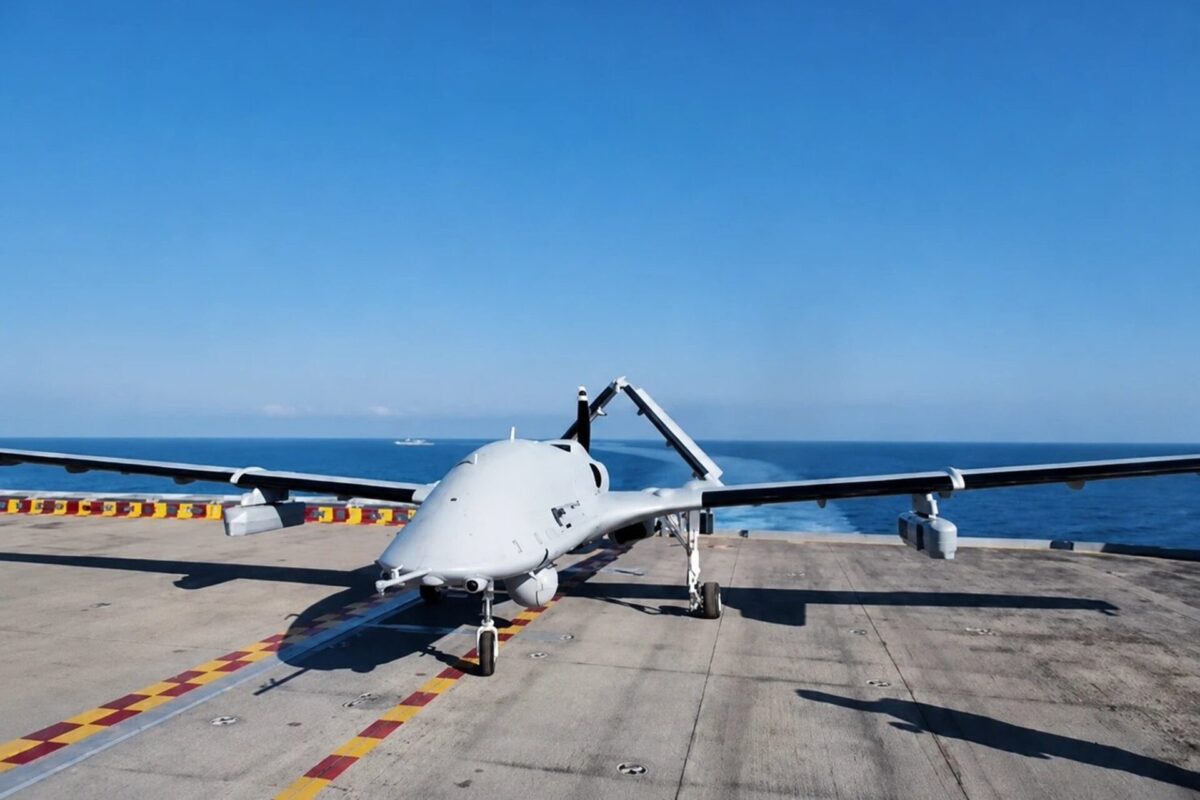
ASELFLIR 600 builds on the capabilities of ASELFLIR 500 by delivering significantly greater detection, recognition, and identification (DRI) ranges together with extended laser designation capability. This enables UAVs to employ longer-range laser-guided munitions while engaging high-value targets such as air defense systems from safer stand-off distances. Its enhanced optical reach also provides operators with exceptional long-range situational awareness, allowing surveillance deep beyond national borders without entering contested airspace. ASELSAN says more than 20 countries, several of them NATO members, have signed for the ASELFLIR 500, which now flies on the Bayraktar TB2, TB3, Akıncı, and Turkish Aerospace’s Anka-III. During NATO’s Steadfast Dart 2026 exercise on February 18, 2026, a Bayraktar TB3 launched from the drone carrier TCG Anadolu used its ASELFLIR 500 to film a German Air Force Eurofighter Typhoon in flight.
On the larger system, ASELSAN has said the ASELFLIR 600 is entering serial production in 2026 after test flights on a Baykar Akıncı, with an upgraded laser designator the company puts at up to 50 km.
ANTIDOT: bringing electronic warfare to unmanned aircraft
ASELSAN’s ANTIDOT family gives the UAV payload portfolio its electronic-warfare layer. The family is designed to let UAVs operate inside the electromagnetic fight, whether by locating radar-based air defenses or protecting forces against hostile systems.
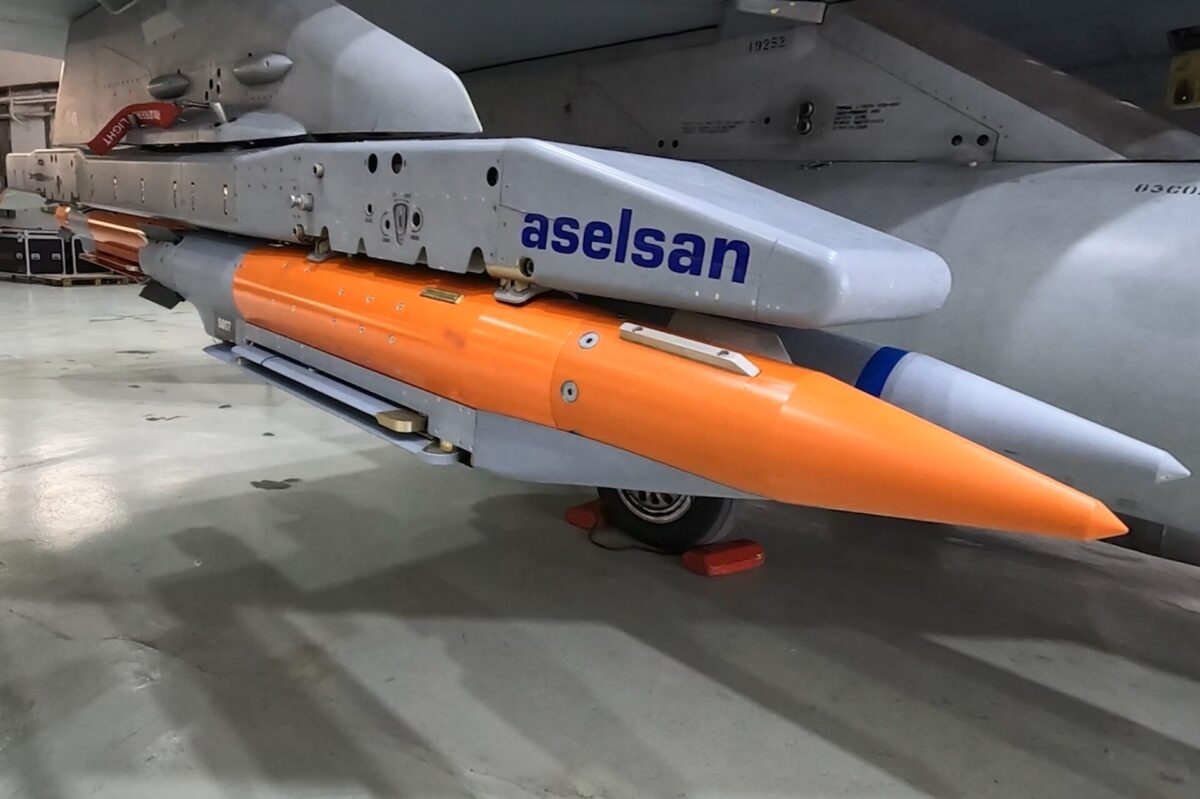
Part of the family is aimed at the SEAD/DEAD problem. Suppressing enemy air defenses has traditionally relied on specialized crewed aircraft, the so-called “Wild Weasel” platforms, equipped to detect, locate, and jam surface-to-air threats so the rest of a strike package can get through. In June 2026, ASELSAN publicly showed electronic-support and electronic-attack pods mounted externally on a Bayraktar TB3, a configuration the company calls a world first.
ANTIDOT 2ES 100 Electronic Support Pod and ANTIDOT 2EA 200 Electronic Attack Pod bring elements of that mission onto UAVs: the former as an electronic-support payload for detecting, identifying, and most importantly locating hostile emissions; the latter as an attack payload capable of jamming and suppression.
| System | Main role | Clean article description |
| ANTIDOT 2ES 100 | Electronic Support | Detects, identifies and locates hostile emissions |
| ANTIDOT 2EA 200 | Electronic Attack | Suppression of Enemy Air Defenses |
TOLUN: compact stand-off strike for UAVs

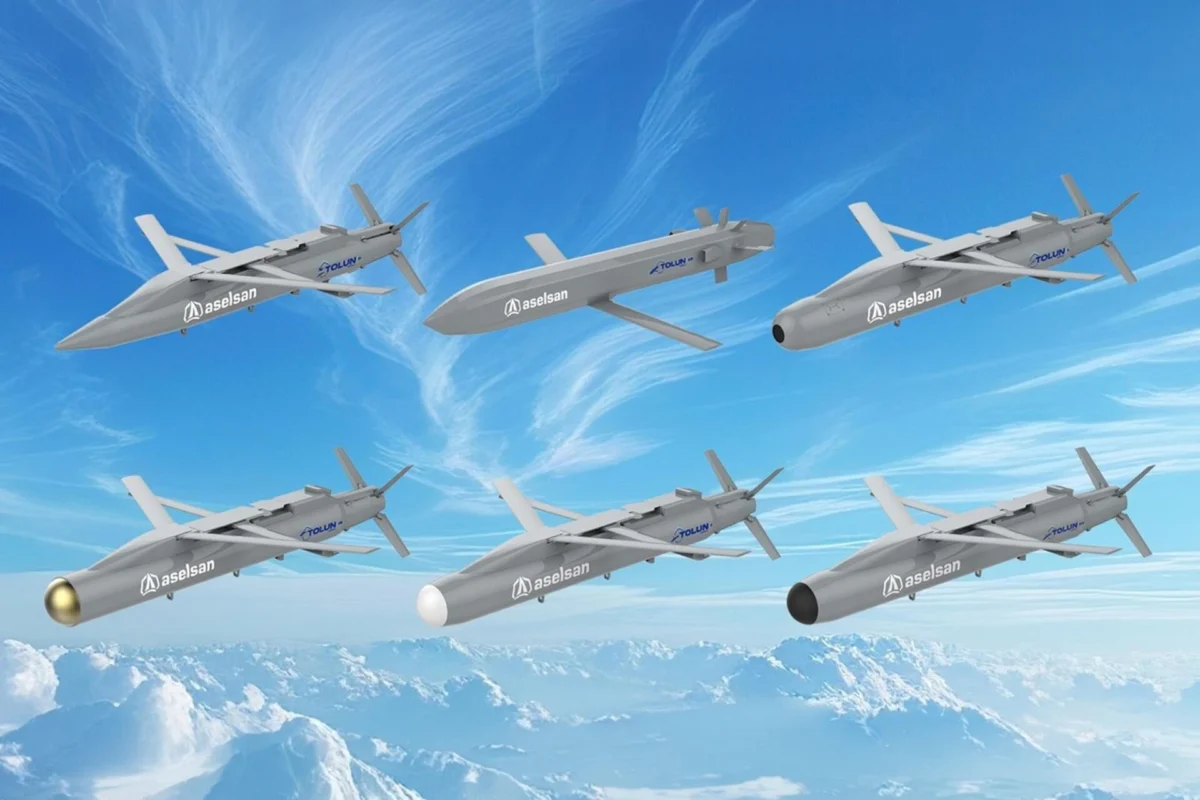
TOLUN is ASELSAN’s 250 lb-class guided-munition family, designed to give manned and unmanned platforms compact stand-off strike. ASELSAN has built several variants around a common munition class, so operators address hardened, area, moving, and EW targets.
On a long-endurance UAV, sortie value is evaluated not only by time on station but also by the number of targets serviced per mission. ASELSAN’s SADAK smart-carriage systems give compatible aircraft options for TOLUN-class weapons, from two munitions with the SADAK 2T, while SADAK 4T increases that to four.
| Variant | Primary role | Distinguishing feature |
| TOLUN P | Penetration | Warhead for armored/non-armored targets, including reinforced structures |
| TOLUN F | Blast/fragmentation | Fragmentation-focused warhead for area and soft targets |
| TOLUN IIR | Precision/moving targets | Imaging-infrared seeker + two-way data link for terminal control |
| TOLUN EW | Electronic-warfare effect | EW payload in an air-launched munition format |
LGK and KGK: upgrading existing bomb inventories
Few customers start with a clean-sheet weapons inventory. Many air forces already hold large stocks of Mk-series general-purpose bombs and want an affordable way to make them more accurate and more useful, rather than buying entirely new weapons. Guidance kits exist for exactly that.
The LGK kit converts unguided bombs into semi-active laser-guided weapons, allowing operators to engage designated targets more accurately while retaining existing bomb bodies and familiar logistics. For UAVs that carry a laser designator or fly alongside other designating platforms, this creates a direct path from detection to engagement.
The KGK kit adds wings and guidance to conventional bombs, turning them into stand-off guided glide weapons rather than simple free-fall munitions. This gives the launching aircraft greater distance from the target and can help keep both manned and unmanned platforms out of range of some short-range air defenses.
A full payload range for unmanned aircraft
For all the attention endurance and range attract, the value of an uncrewed aircraft is increasingly decided by what it carries.
At Farnborough, ASELSAN is using that idea to present a full UAV payload portfolio: radars to search and track, electro-optical systems to identify and designate, EW pods to support survival and suppression, and precision weapons to act at range.
ASELSAN is showcasing its complete UAV Payload Systems portfolio at the Farnborough International Airshow, running from July 20 to 24, 2026, at stand H2-B2110, where the systems can be seen side by side and discussed with the people who build them.