
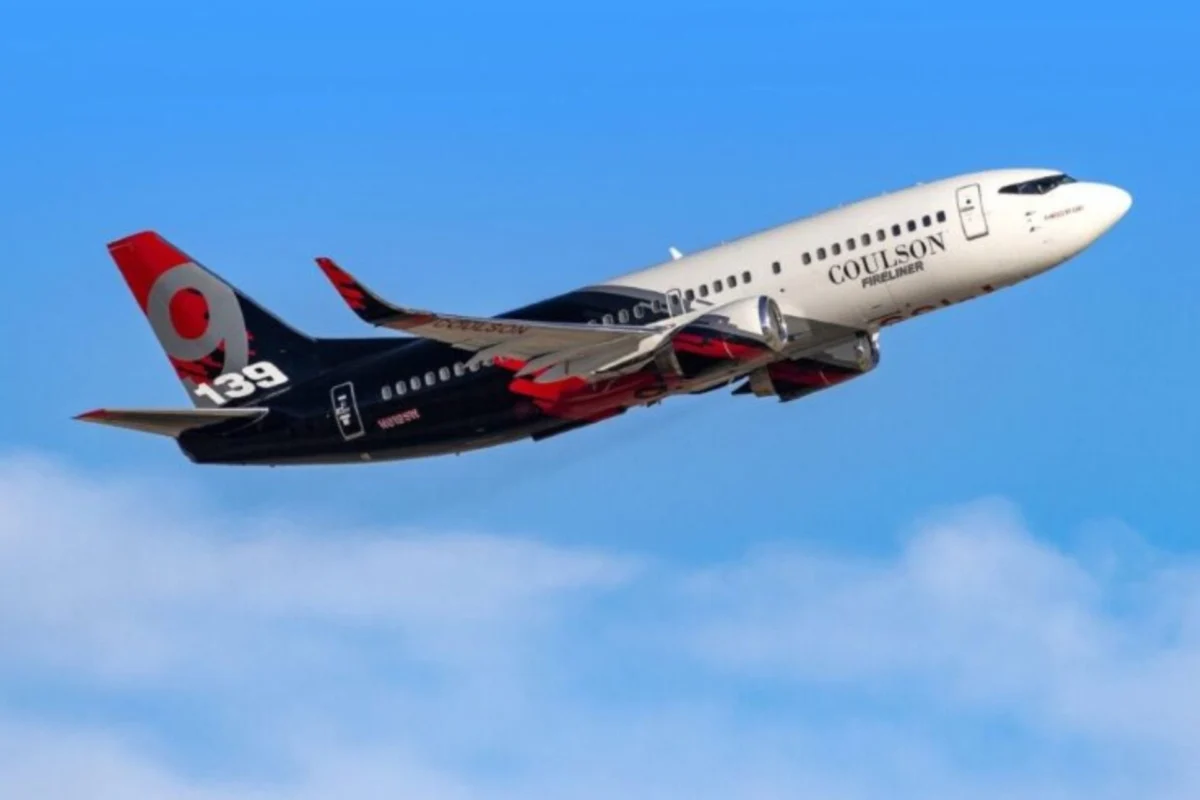
Australia has introduced its first national standard operating procedures for large air tanker firefighting aircraft, including minimum drop heights, following an investigation into a 2023 Boeing 737 firebomber accident in Western Australia.
The Australian Transport Safety Bureau (ATSB) announced the new procedures on July 29, 2026.
National standard operating procedures have been introduced for large air tanker firefighting aircraft, including minimum drop heights, addressing a safety issue identified after a Boeing 737 firebomber accident in south-west WA in 2023.https://t.co/Zhp3cJTzTj
— ATSB (@atsbgovau) July 29, 2026
The standards were developed by Australia’s fire agencies through the National Aerial Firefighting Centre, the document published on the center’s website on June 30, 2026.
ATSB Chief Commissioner Angus Mitchell said the document sets a new national benchmark for large air tanker operations, laying out clear requirements for aerial supervision, task profiles, and communication protocols.
“Large air tankers, which can quickly move around the country in response to operational need, play an increasingly critical role in the management and suppression of bushfires in Australia,” Mitchell said, calling the new procedures “a significant milestone in the ongoing maturity of the aerial firefighting safety system in Australia.”

The 2023 accident that prompted the change
The push for national standards traces back to February 6, 2023, when a Coulson Aviation Boeing 737-300 large air tanker, registered N619SW, crashed into a ridgeline in Western Australia’s Fitzgerald River National Park while fighting a bushfire.
The aircraft had just completed a partial retardant drop and was climbing away when it struck rising terrain at about 222 feet. Both pilots on board survived with minor injuries, though the aircraft was destroyed.
The ATSB’s final report, released in November 2024, found the aircraft’s low height and airspeed during the drop, combined with a delay in engines reaching go-around thrust, left it without enough energy to climb clear of the terrain ahead.
Investigators also found that neither the operator nor the tasking agency had published a minimum drop height, which meant the co-pilot didn’t recognize the developing risk and made no warning calls before the collision.
Inconsistent standards across states
A key finding in the report was that Australian states and territories had each developed their own separate procedures for large air tanker operations, unlike counterparts in the United States, where standards were found to be consistent across agencies.
Mitchell said those differences between Australian jurisdictions could lead to safety requirements, such as minimum drop heights, being left out or misunderstood by different tasking agencies.
In response, the Australasian Fire and Emergency Services Authorities Council committed to developing a single national standard, an effort that has now resulted in the newly adopted procedures. Mitchell said the ATSB welcomes the new standards and credited the collaboration among fire agencies and other stakeholders involved in developing them.