
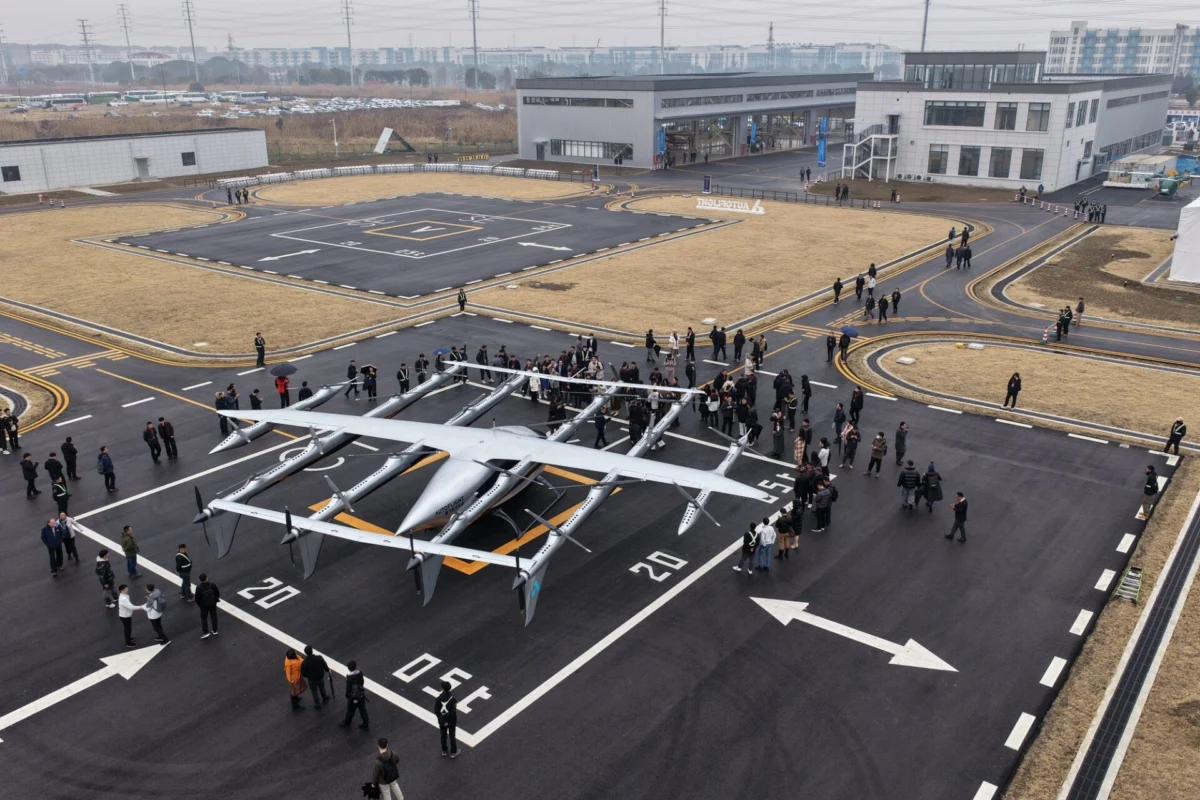
Chinese electric vehicle takeoff and landing (eVTOL) aircraft developer AutoFlight has unveiled ‘Matrix’, a five-ton air taxi that the company claims as a world first.
On February 5, 2026, details regarding AutoFlight’s latest eVTOL innovation emerged after the developer successfully completed a public full transition flight demonstration.
According to AutoFlight, Matrix has been built to carry up to 10 passengers, even including washbasins and lavatories as part of the cabin configuration.
Currently, most eVTOL aircraft are being developed to carry four to six people, so Matrix’s approach could certainly open new possibilities within the air taxi market.
“Matrix is not only a rising star in the aviation industry but also an ambitious industry disruptor,” said AutoFlight’s CEO and Founder, Tian Yu. “It will break the industry perception that eVTOL = short-haul, low-load, and will reshape the rules of eVTOL routes.”
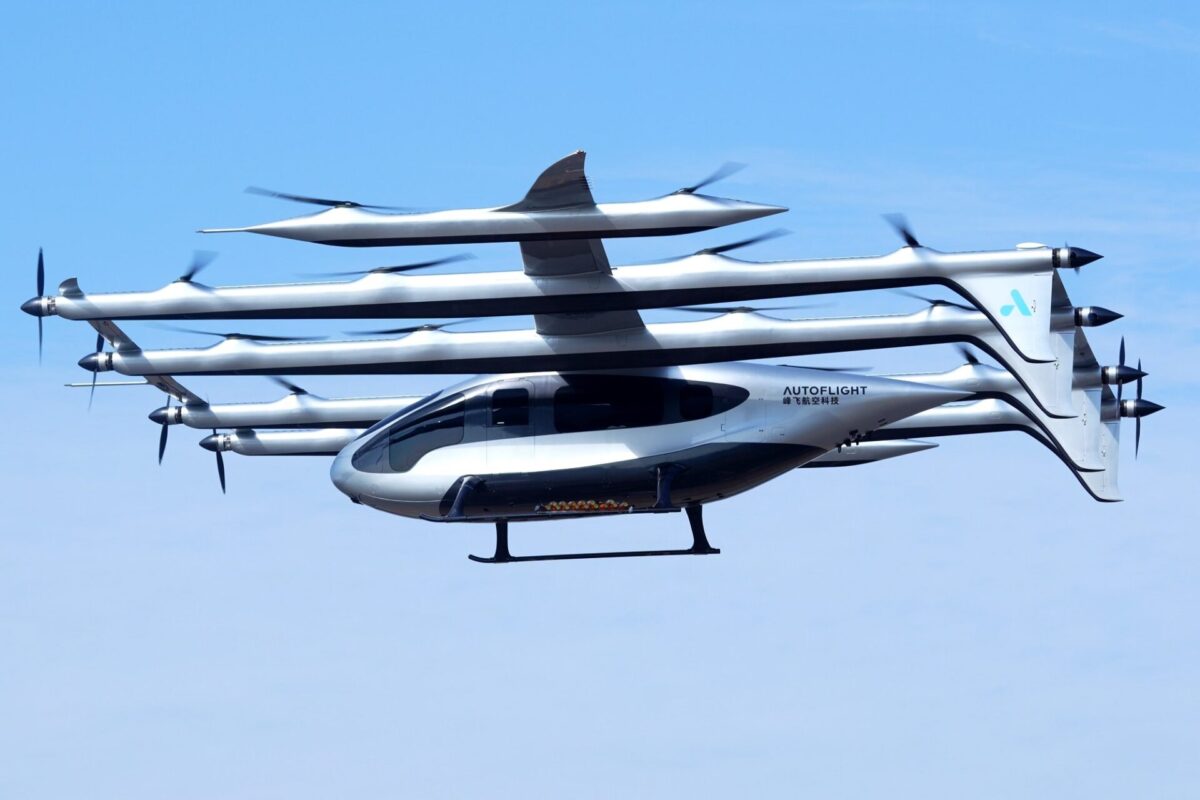
The aircraft will be available in passenger and hybrid-powered cargo variants, with a VIP configuration for just six passengers also available.
Matrix has a 20-metre wingspan, 17.1-metre length, and 3.3-metre height, with a maximum take-off weight of 5,700kg. The cabin measures 5.25m in length, 1.8m in width, and 1.85m in aisle height.
During the demonstration, Matrix completed the full transition flight sequence, moving from vertical take-off through cruise flight and ending with a vertical landing, with AutoFlight’s two-ton CarryAll cargo eVTOL also joining in.

A spokesperson for AutoFlight said: “The achievement validates AutoFlight’s eVTOL technologies across complex aerodynamic systems, high-power electric propulsion, and advanced flight control systems, marking the first time a 5-ton eVTOL has achieved full transition flight.”
Matrix employs AutoFlight’s compound wing lift and cruise configuration with a triplane layout and six-arm structure.
The aircraft relies on up to 20 fifth-generation lift motors in a distributed propulsion system, providing redundancy to maintain flight capability in single or dual engine failure scenarios.
Yu added: “Through economies of scale, it significantly reduces transportation costs per seat-kilometer and ton-kilometer, revolutionizing costs and embracing profitability. It covers all scenarios from urban commuting to intercity feeder routes, driving the expansion of the entire low-altitude ecosystem.”