
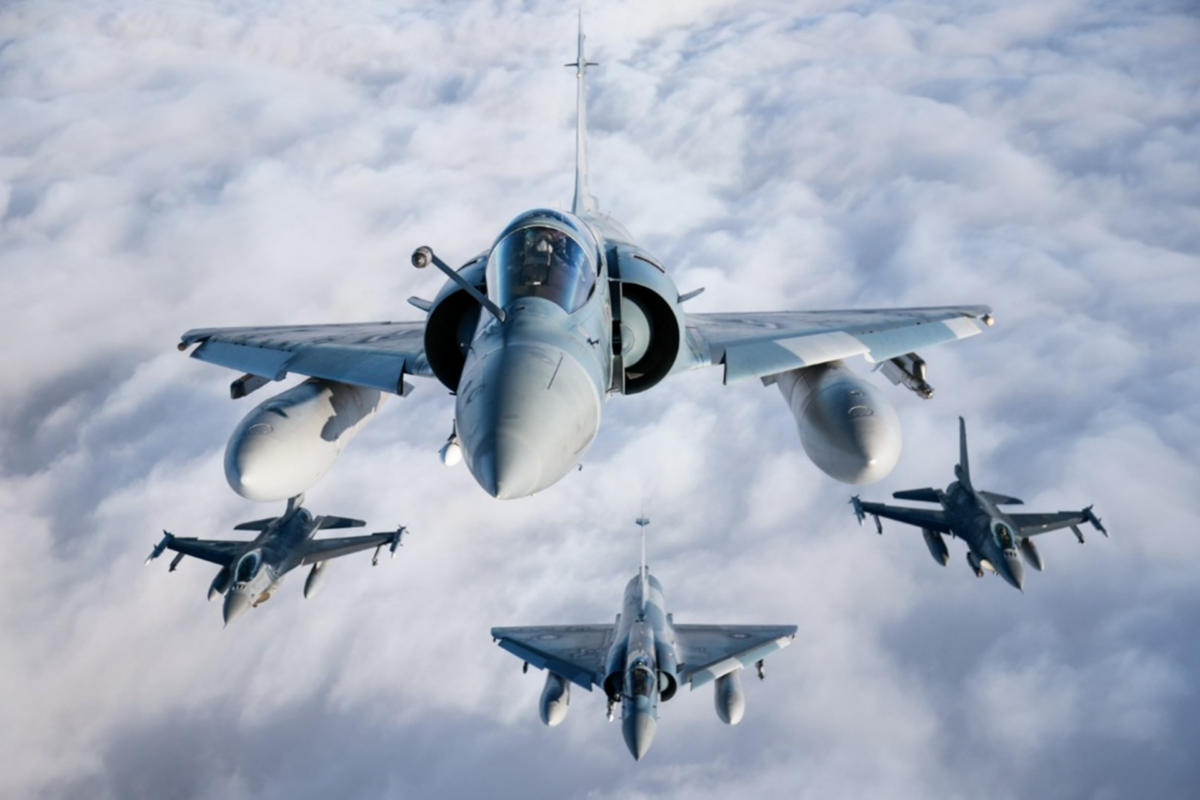
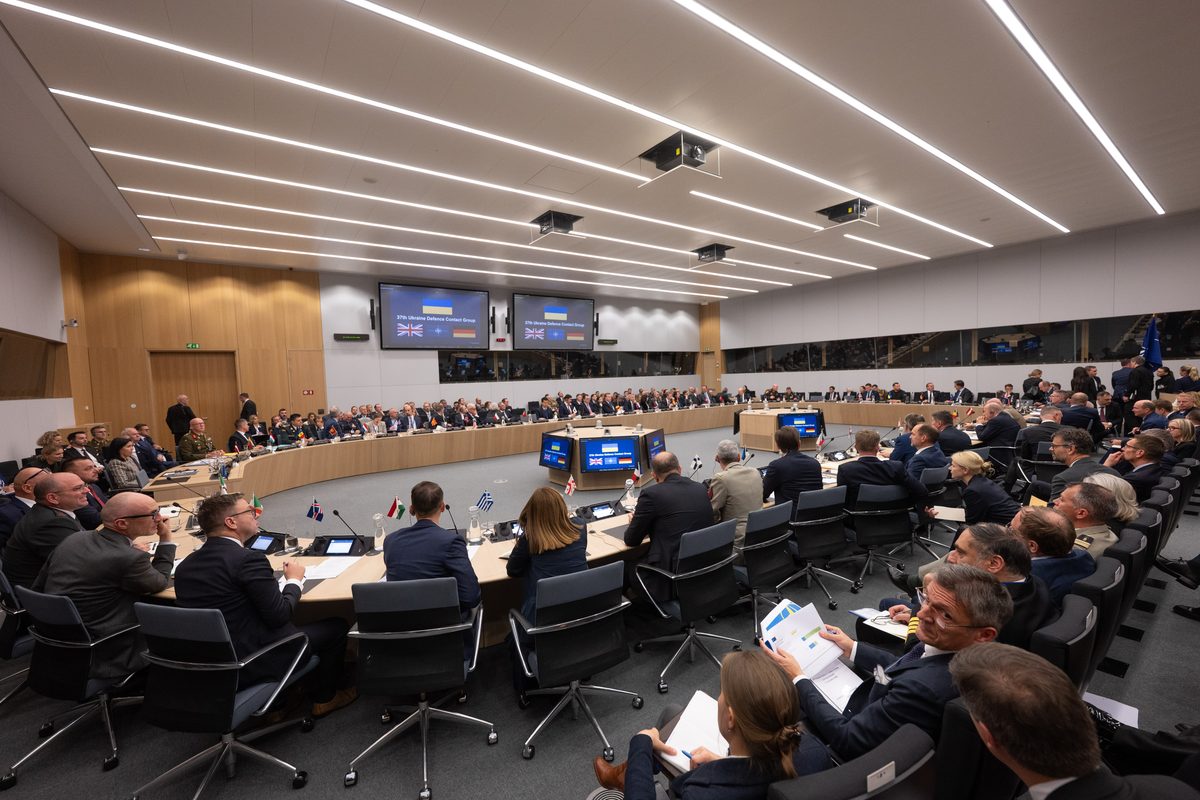
Ukraine’s allies announced plans to deliver 10 Belgian F-16 fighters and two French Mirage 2000-5F jets by the end of 2026, alongside additional air defense missiles, radars and ammunition, at the 37th meeting of the Ukraine Defense Contact Group (UDCG).
The commitments, published by Ukraine’s Ministry of Defense on November 18, 2026, followed a meeting at NATO headquarters in Brussels the day before. Several countries also pledged new funding for the Prioritized Ukraine Requirements List (PURL), through which allies finance US-made weapons for Kyiv.
“This winter, our biggest priority is protecting the skies,” Ukrainian Defense Minister Yevhenii Khmara said, according to the ministry.
Ukrainian President Volodymyr Zelenskyy, who addressed the meeting remotely, called for the provision of 40 additional F-16 fighters. He said Ukraine’s existing jets spend considerable time undergoing maintenance and repairs, limiting their availability for combat missions.
UK Defence Secretary Wes Streeting and German Defence Minister Boris Pistorius co-chaired the session.
UK, Germany and Nordic allies reinforce Ukraine’s air defenses
The UK announced a £240 million (about $316 million) package that includes more than 1,000 short-range air defense missiles and launchers, along with more than a dozen radars.
The missiles include Lightweight Multirole Missiles (LMM), manufactured by Thales in Belfast. London said the systems have proven effective against Russia’s jet-powered Shahed drones, with deliveries scheduled to begin in mid-December 2026. The package forms part of £500 million (about $659 million) in winter support already earmarked by the British government.
Germany outlined a previously announced €1 billion (about $1.1 billion) package covering IRIS-T air defense systems, radars, interceptor drones, the integration of IRIS-T missiles into NASAMS systems, and 20 mm ammunition for F-16s.
Berlin also pledged $300 million (about €274 million) to PURL, with Norway contributing the same amount. Pistorius told reporters in Brussels that the funding would focus primarily on PAC-2 and PAC-3 interceptors for Patriot air defense systems. At the previous meeting on September 8, 2026, Germany pledged Patriot PAC-2 interceptors from its own stocks.
Norway announced approximately $800 million (€729 million) in support, including $150 million (€137 million) for air defense systems and man-portable air defense systems (MANPADS), $300 million (€274 million) for PURL, and another $300 million (€274 million) to purchase Ukrainian-made drones. Oslo also pledged up to €11 million ($12 million) for equipment to counter jet-powered Shahed drones.
Denmark committed €200 million ($219 million) for air defense assets and a separate €645 million ($707 million) package covering F-16 munitions, Ukrainian interceptor drones, strike drones and PURL funding. Finland announced two assistance packages totaling €291 million ($319 million), including air defense equipment.
Belgium and France outline F-16 and Mirage deliveries
Belgium plans to transfer 10 F-16 fighters to Ukraine by the end of 2026, along with air defense missiles and 20 mm ammunition for the aircraft.
The handovers are tied to Belgium’s transition to the F-35A, the first examples of which arrived at Florennes Air Base in October 2025. Belgian Prime Minister Bart De Wever had already outlined the target of 10 aircraft in October 2026.
France plans to deliver two Mirage 2000-5F fighters by the end of 2026, alongside AASM Hammer 250 guided bombs funded by Norway and Germany, and 30 mm ammunition for the aircraft. Paris pledged additional Mirage 2000-5F jets in October 2025.
France will also supply a Thales Ground Fire 300 (GF300) radar designed to detect and track ballistic missile threats. The radar is part of a broader French-Ukrainian plan to introduce the SAMP/T NG air defense system.
Separately, Sweden, the UK and Ukraine signed a letter of intent on November 17, 2026, to coordinate ammunition, spare parts and equipment supplies for Ukraine’s future Gripen fighters. Kyiv has identified Meteor beyond-visual-range air-to-air missiles as a priority for the aircraft.
Canada committed about $31 million to procure AIM-7, R-73 and R-27 air-to-air missiles through the Czech-led ammunition initiative. It will also supply Canadian-made optical systems for FrankenSAM air defense launchers and 20 mm aircraft ammunition.
Further PURL funding and missile commitments
Other PURL pledges listed by Ukraine’s Ministry of Defense include €100 million ($110 million) from Belgium, €50 million ($55 million) from Portugal, €40 million ($44 million) from Finland, €25 million ($27 million) from Luxembourg by the end of 2026, and $20 million (€18 million) from Sweden.
The Netherlands announced a €500 million ($548 million) winter assistance package, as well as additional PURL funding. Denmark also committed further support through PURL, although neither country disclosed the amount of its contribution.
Spain pledged an additional package worth more than €400 million ($439 million), including drones and artillery ammunition, with deliveries of IRIS-T missiles also planned.
Separately, Ukraine’s government approved a new financing arrangement with NATO on November 18, 2026, that would allow Kyiv to use part of its EU loan funding to purchase US weapons through PURL. Under the proposed arrangement, NATO would hold Ukraine’s contributions until individual procurement packages are approved.
The Ukrainian Ministry of Defense said nearly $7 billion (€6.4 billion) had been contributed to PURL during its first year, with the mechanism accounting for approximately 95% of the Patriot interceptors supplied to Ukraine.