
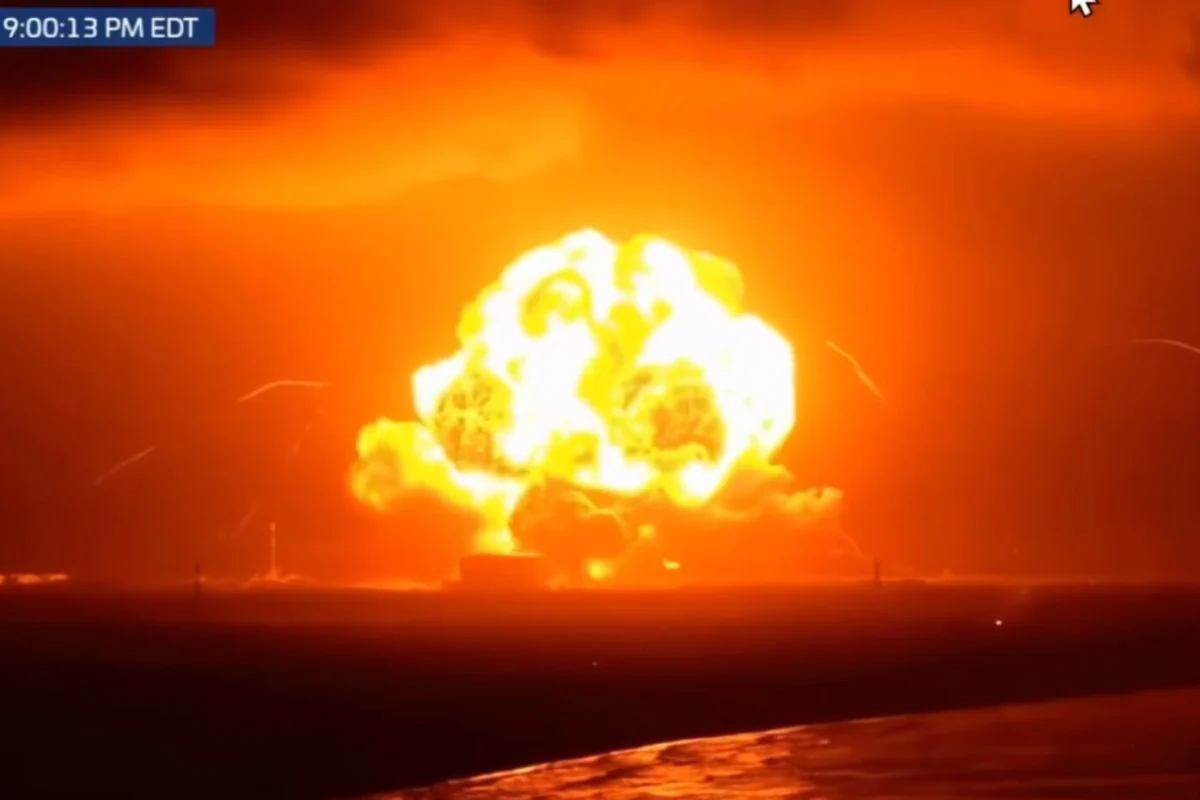
A Blue Origin New Glenn rocket exploded during a hot-fire test at Cape Canaveral Space Force Station on May 28, 2026, producing a large fireball during a ground test of the launch vehicle’s engines.
Blue Origin confirmed an “anomaly” during the test, stressing that all personnel were safe and accounted for.
A hot-fire test involves firing a rocket’s engines while the vehicle remains secured to the launch pad. The test took place at Launch Complex 36, the Florida pad used by Blue Origin for New Glenn missions.
Video posted online showed a large explosion and fireball at the pad. The blast lit the sky orange and shook nearby homes. No injuries were reported.

New Glenn is Blue Origin’s heavy-lift orbital rocket, developed to compete in the commercial and government launch markets. The rocket stands about 320 feet tall and deploys a reusable first stage powered by seven BE-4 engines.
The incident marks a setback for Blue Origin as it continues to build flight experience with New Glenn. The vehicle is central to the company’s launch business, taking in national security, commercial satellite and NASA-related missions.
The pad explosion also recalls one of the most serious recent US commercial launch test failures. On September 1, 2016, a SpaceX Falcon 9 rocket exploded at Cape Canaveral during preparations for a static-fire test, destroying the rocket and the AMOS-6 communications satellite. No injuries were reported in that incident.
SpaceX later returned the Falcon 9 to flight, but the 2016 failure became a reminder of the risk involved in testing large liquid-fueled launch vehicles before flight.
SpaceX CEO Elon Musk responded to the video of the New Glenn incident on X, writing: “Most unfortunate. Rockets are hard.”