
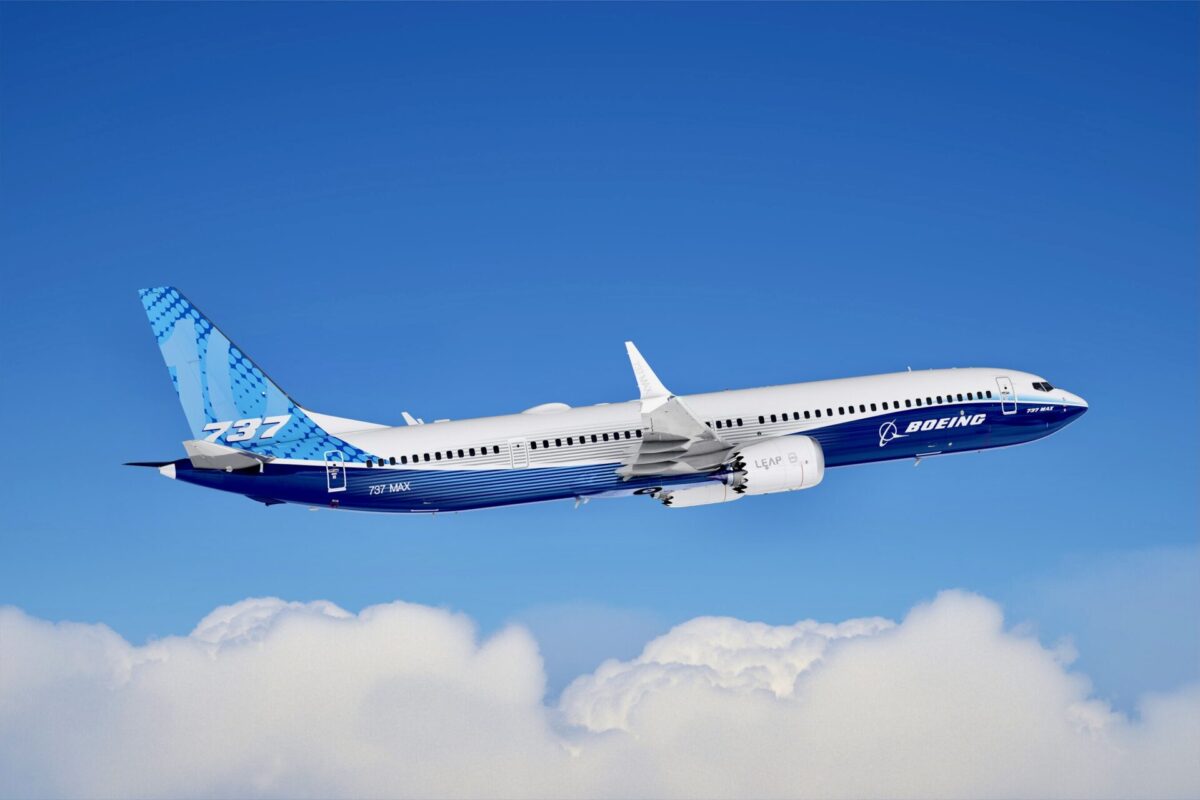
The US Federal Aviation Administration (FAA) certified Boeing’s 737 MAX 10 on October 20, 2026, clearing the way for the manufacturer to begin delivering the largest version of its single-aisle jet to airlines after years of delays.
Boeing said deliveries will begin in the coming months. The company has booked 1,555 orders for the MAX 10 from more than 30 customers, accounting for more than 30% of its unfilled MAX orderbook.
The approval completes certification of the four main MAX variants, following FAA clearance of the smaller MAX 7 in August 2026. Transportation Secretary Sean Duffy presented the certification documents to Boeing officials at a ceremony in Everett, Washington.
“The FAA’s decision follows a thorough review of the aircraft’s design and safety requirements,” FAA Administrator Bryan Bedford said. The agency said it would continue its oversight as Boeing begins producing the model.
The MAX 10 can carry up to 230 passengers, with typical two-class seating for 185 to 210. Boeing lists its range at up to 3,100 nautical miles and says it offers the lowest per-seat operating costs of any single-aisle aircraft in service.
“Completing the certification program clears the path for us to deliver a Boeing airplane that will set a new standard in commercial aviation,” said Stephanie Pope, President and CEO of Boeing Commercial Airplanes.
The certification gives Boeing a larger aircraft to compete with the Airbus A321neo and supply airlines whose fleet plans have been affected by the delays. Major MAX 10 customers include United Airlines, Delta Air Lines, American Airlines, Alaska Airlines and Ryanair.
Boeing originally planned to begin MAX 10 deliveries in 2020. The program faced tighter regulatory scrutiny following the two MAX 8 crashes in 2018 and 2019, which killed 346 people, and further delays involving the engine anti-ice system. A navigation-software issue disclosed in September 2026 also threatened to hold up approval.
The MAX 10 introduces an enhanced angle-of-attack system intended to make sensor failures easier for pilots to manage. Faulty angle-of-attack readings contributed to both MAX crashes.
Boeing says the new system monitors sensor behavior, identifies suspect readings and blocks faulty data from reaching other aircraft systems or substitutes a default value. An alert on the pilots’ displays identifies the affected sensor.
The changes also include a cockpit switch allowing pilots to silence an erroneous stick-shaker warning. Boeing says the enhanced system will become standard across MAX production and will be available for retrofit on aircraft already in service.
The certification campaign involved nearly 1,000 flights, more than 2,000 flight-test hours and 1,000 hours of ground testing. Boeing said the MAX 10 is the first commercial aircraft certified to the full extent of the 2020 Aircraft Certification, Safety, and Accountability Act, including its requirements for documenting safety assessments and evaluating how pilots interact with aircraft systems.