
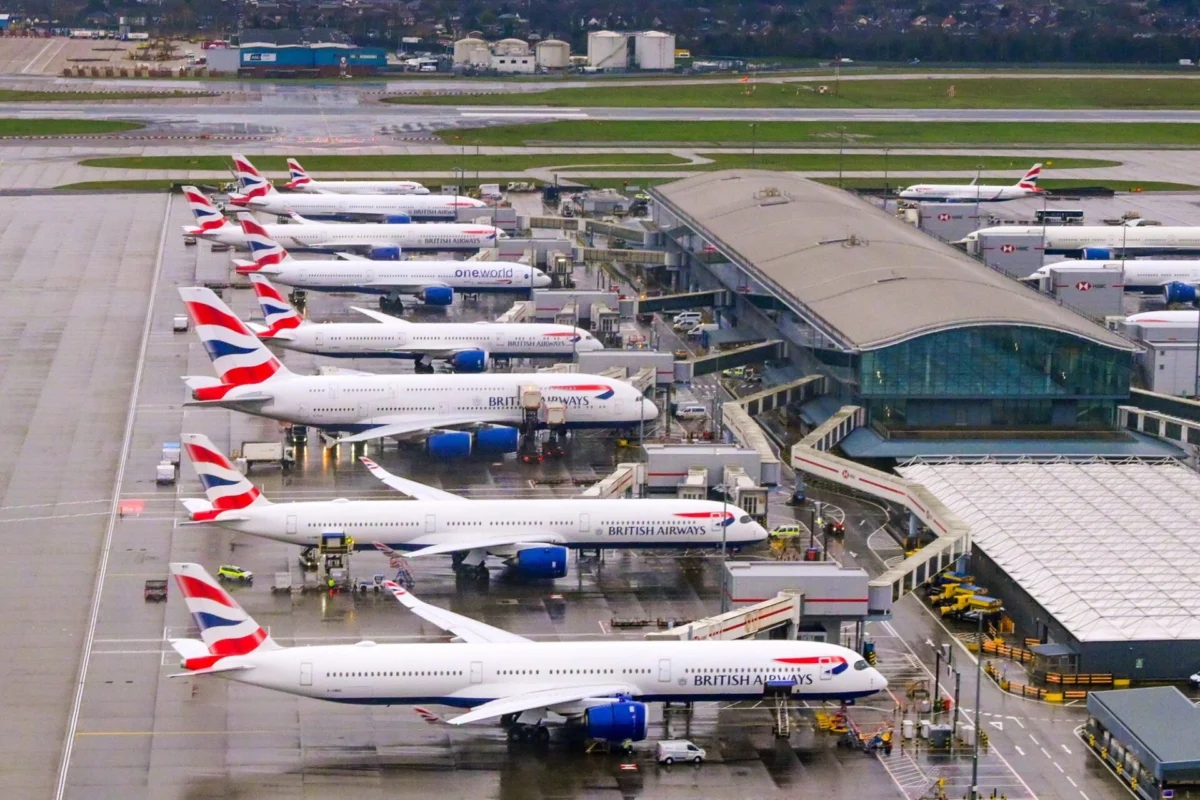
British Airways owner International Airlines Group (IAG) has claimed to have “serious questions” about the cost attached to London-Heathrow Airport’s (LHR) planned expansion and third runway, in written evidence provided to UK government’s Transport Committee.
On August 14, 2026, the Transport Committee published more than 70 pieces of written evidence received for its inquiry looking at the government’s plans for a third runway at Heathrow Airport.
IAG, which also owns Iberia and Aer Lingus, suggested that the $66 billion (£49 billion) proposed for the project is “not just large, it is exceptional”.
The airline group said that the costs “far exceed” comparable airport projects such as Amsterdam Schiphol (AMS), Paris Charles de Gaulle (CDG), Frankfurt (FRA) and Istanbul (IST).
According to IAG, it has concerns “whether the plan represents value for money or even a reliable basis for decision making”.
“Independent analysis suggests Heathrow’s cost evidence is selective, inconsistent and not robust enough to underpin such a major national commitment,” IAG added.
The Transport Committee is currently scrutinizing the draft Heathrow Expansion National Policy Statement (HENPS), as published by the Department for Transport in June 2026.
As well as gathering written evidence from individuals, organizations and companies, the committee will also start hearing oral evidence from September 2026.
In its evidence, IAG said: “Affordability is critical to the success of expansion. Without it, expansion will fail and the benefits it could unlock – improved connectivity, jobs, trade and investment across the UK – will not be realized. Indeed, the benefits we all share today will be lost too.”
IAG stressed that it is “vital” that the committees assess whether HENPS will “result in expansion that is affordable and deliverable”.
“IAG considers that the HENPS as drafted does not yet succeed in meeting these criteria,” the company said.
Additionally, IAG argued that, while increased capacity at Heathrow could strengthen the UK’s global connectivity, support trade and create thousands of jobs, “there is no credible affordability guarantee for consumers, airlines or the wider economy”.
“The question is not whether Heathrow should grow, but whether it can grow at a cost that delivers genuine public benefit rather than imposing an impossible financial burden on passengers and airlines,” IAG said. “Affordability cannot simply be an aspiration: it must be a binding requirement, tested and enforced throughout the life of the project, not just asserted at the outset.”
IAG is calling for affordability guarantees, a binding budget ceiling, protections against rising passenger charges and stronger mechanisms to control costs.