
Asia Pacific is expected to drive more than half of global aviation growth in the coming decades. Building airports equipped to handle this traffic will cost a great deal. But who is going to pay for it?
This was a question posed at the Passenger Terminal Expo Asia 2026 in Singapore, during a rather aptly titled panel discussion, “Who will finance the future of airports in the Asia Pacific region?”
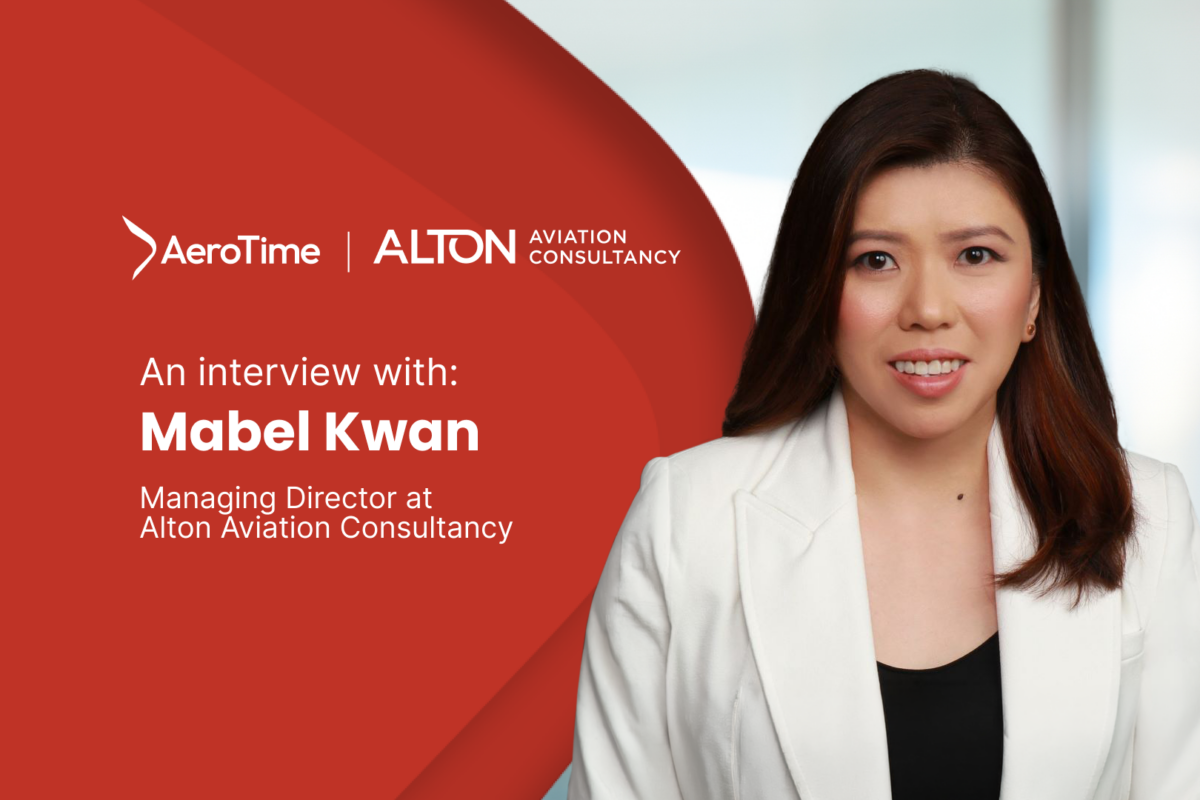
After the session, AeroTime sat down with panel moderator Mabel Kwan, Managing Director at Alton Aviation Consultancy, which advises governments and investors on airport strategy and public-private partnerships (PPPs), to talk about where the money will come from and why airports built too far ahead of demand can become white elephants.
She also explained why the traffic shift caused by the Middle East conflict is a weaker investment case than it looks.
The US$2.4 trillion question
Kwan put the scale of the challenge in numbers. Around US$2.4 trillion is set to go into airport infrastructure worldwide, and much of it will be spent in Asia Pacific.
“Asia Pacific is going to be the key region driving aviation growth, contributing to over half of the growth within the aviation industry in the next few decades,” she said. “So we need to think about how to finance and how to support that growth.”
For many countries in the region, airports are about more than capacity. Kwan described them as national strategic assets whose connectivity has a multiplier effect on the wider economy.
That makes the financing question harder, not easier.
“This infrastructure tends to be long-term and fairly extensive,” Kwan explained. “It’s very important that we think about how to finance it and how to make it sustainable, and not just be a white elephant.”

Building ahead of the curve
Airports across the region are under pressure to expand, but Kwan said many have the opposite problem. Governments often aspire to build big, grand airports and they build them before the traffic arrives.
“A lot of this is built ahead of the demand curve, which means there are situations where you are not fully utilizing it,” she said. “There’ll be periods where the economics of the airport doesn’t work.”
The answer, Kwan argued, is to pace development so it does not weigh on the budgets of governments and investors. “There’s no silver bullet,” she said. It starts with each country’s connectivity strategy.
Singapore is one extreme. Its airport is critical to an economy where aviation is a core industry, so Changi Airport Group (CAG) and the Civil Aviation Authority of Singapore (CAS) are investing to stay at the forefront.
Second- and third-tier city airports are a different case. Many have not yet reached the steep part of their traffic J-curve, and their catchments are still maturing.
“It needs to be a very moderated approach, modular in the expansion,” Kwan said. “COVID was one example where traffic really dissipated. You are going to see a lot more volatility in the industry, not less.”
Future-proofing is easy to say
Kwan’s advice is to roll out the master plan in phases. Rather than betting on specific technologies, airports should be built to adapt.
“Future-proofing is easy to say, but it’s hard to achieve because technology is changing all the time, and the trends are also changing all the time,” she said.
Retail is a case in point. Airports have invested heavily in non-aeronautical revenue, but Kwan said passenger habits are shifting. With rising incomes and e-commerce, travelers increasingly spend at their destination rather than at the airport.
She warned against designing to benchmarks. “We always like to use benchmarks. Certain airports have 40% non-aeronautical revenue, and therefore I’m going to build a huge shopping mall in the airport,” she said. “But you need to look at the catchment. You need to really contextualize it.”
A spillover that won’t last
The Middle East conflict has reshaped global routing, and Asian hubs picked up some traffic that once flowed through the Gulf. Kwan doubts that adds up to a lasting investment case.
“Asia Pacific airports have benefited from some of the spillover traffic from the Middle East, especially in the immediate aftermath of what happened in Iran,” she said. “But longer-term macro fundamentals have begun to creep in as well.”
She pointed to high oil prices squeezing airline economics, with carriers cutting capacity on underperforming routes. After the initial uptick, she said, traffic is settling back to long-term trends. She also expects the strong Middle Eastern carriers to try to win back market share.
For governments, the bigger lesson is about timing. Even when demand shifts toward a region, airports cannot build fast enough to catch a temporary surge.
“Infrastructure is very much a long-horizon asset class,” Kwan said. “You should plan for the long term instead of these short-term spikes and troughs.”
Short-term swings are better handled through operational flexibility, she added, by refining processes and adjusting parameters so airports can react faster. “You can’t just plan to increase capacity in the short term,” she said.
Start with the objective
Alignment between policy, capital and performance is something Kwan referred to as “sort of like a nirvana”. It’s the goal everyone pursues. In her advisory work, Kwan said, getting there depends on a bespoke structure rather than a standard template.
“Underlying any structuring of PPP models, you need to understand the fundamental objectives of the government in going out for a PPP exercise,” she said.
Some governments want expertise more than money. They use PPPs to grow local talent and raise an airport to international standards. In those cases, Kwan said, the model should attract strategic international investors who bring operating skills.
Others mainly want to monetize the asset. That opens the door to a wider pool of investors and a range of structures, from concessions and PPPs to an IPO. Here, the priority is long-term, stable financing rather than know-how.
Whatever the model, Kwan’s message for the region’s planners comes back to flexibility.
“You need to build an airport that can adapt to changes,” she said, “rather than say, ‘I’m going to plan for certain technologies in the future.’”