
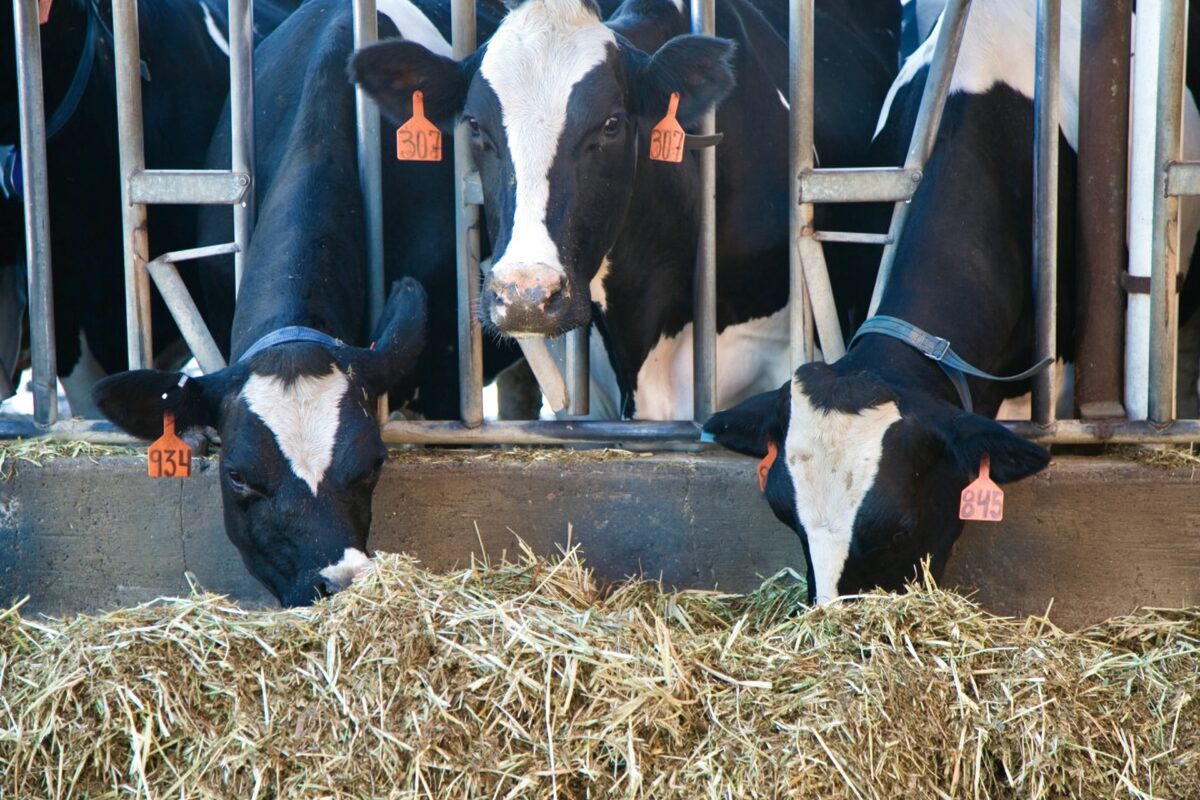
At a dairy farm near Madera in California’s San Joaquin Valley, a startup has turned gas from decomposing cow manure into jet fuel. Circularity Fuels says its six-month trial was the first to take raw biogas from a dairy’s leftover manure to create synthetic kerosene that meets aviation standards for blending with conventional jet fuel.
The San Francisco Bay area company said it has recently raised $7 million to build a demonstration plant that can produce the fuel daily. The seed funding will also be used to design its first commercial plant, which would have a capacity of 75 barrels a day, or a little over 3,000 US gallons.
The trial took place at a dairy with about 5,000 head of cattle. As manure breaks down in the farm’s digester, it releases methane and carbon dioxide. Circularity designed its equipment to use both gases, allowing it to draw biogas directly from the digester without first removing the carbon dioxide.
An electrically powered reactor converts the methane and carbon dioxide into synthesis gas, a mixture of hydrogen and carbon monoxide. A second reactor uses the Fischer-Tropsch process to turn that gas into liquid hydrocarbons. Both reactors mount on skids so the equipment can operate more easily at the farm.
Circularity reported the results in June 2026. It said the fuel met ASTM D7566 Annex A1, the specification for synthetic kerosene made using the Fischer-Tropsch process. Fuel produced under that specification can account for up to 50% of a blend with conventional jet fuel.
Circularity estimates that capturing methane that would otherwise escape from cow manure prevents more warming than making and burning the jet fuel causes. By the company’s calculation, that makes the fuel carbon-negative.
Trucks Venture Capital and DCVC led the funding round, with Sum Ventures and Automotive Ventures also participating. The company said it has raised about $17 million to date, including nearly $7 million in grants.
The company said the US Department of Agriculture has advanced its application for a federal loan guarantee to the second stage of review.
Over the next 18 months, Circularity intends to run the demonstration plant, finish the commercial plant design and secure fuel purchase agreements with airlines before breaking ground on a production facility.