
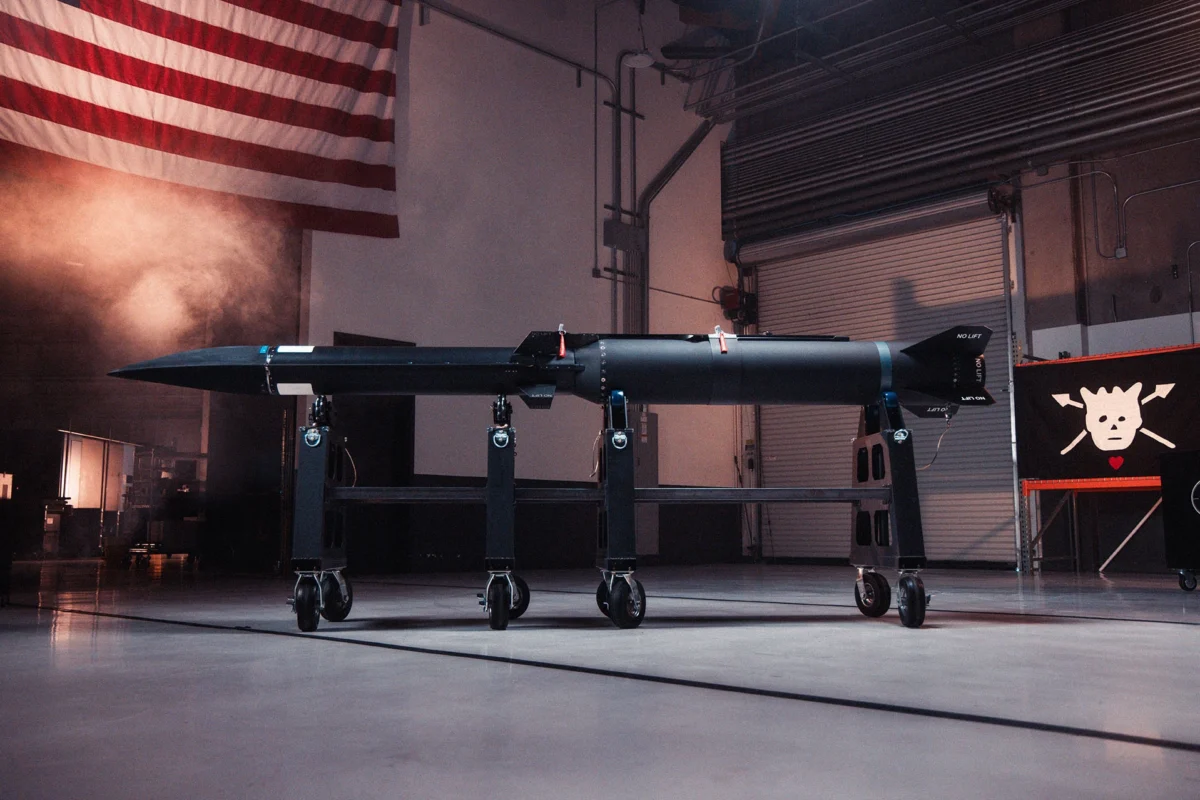
Castelion has raised $1 billion in Series C financing at a $13 billion valuation, capital the company said will enable it to reach maximum production rate for its Blackbeard hypersonic strike missile and fund two further weapon lines.
The California-based company said the round combines $800 million in equity with $250 million in committed financing for a revolving credit facility. JPMorganChase’s Strategic Investment Group, Andreessen Horowitz and funds managed by Carlyle co-led the equity portion. Lightspeed Venture Partners, Lavrock Ventures, Altimeter, General Catalyst and Interlagos returned, joined by new investor T. Rowe Price Associates.
The Pentagon asked for private capital
The Department of Defense announced a production framework agreement with Castelion on May 13, 2026. Several of the new-entrant vendors it had signed would reach production scale without direct Department investment, the release said, describing a partnership model that rewards private sector capital.
The Department committed to awarding a two-year multi-year procurement contract for a minimum of 500 Blackbeard missiles annually once Castelion completes testing and validation, with options extending up to five years. It added that, to encourage the company’s self-funded facility expansion, it was seeking authorizations and appropriations to buy more than 12,000 missiles over five years.
As of that release, neither the procurement contract nor those appropriations were in place.
Blackbeard production expands in New Mexico
Castelion said it will commit hundreds of millions of dollars beyond the more than $250 million it has already put into Project Ranger, its 1,000-acre campus in Sandoval County, New Mexico.
The company said in the release that it has secured more than $500 million in US military contracts over the 18 months to the announcement.
Disclosed awards include $49.9 million from the Navy in February 2026, $105 million in April 2026 to integrate Blackbeard onto the F/A-18 Super Hornet, and a $23.4 million firm-fixed-price order in June 2026 for 50 pre-production prototypes and their shipping containers. Castelion said fielding is targeted for 2027.
Longer-range strike and missile defense come next
Part of the round funds a longer-range precision-strike weapon that Castelion said has been under development for several years and reuses Blackbeard components and manufacturing methods. A separate effort targets air and missile defense, aimed at greater magazine depth at lower cost.
Both enter a field that is filling quickly. Lockheed Martin unveiled its Next Generation Glide Body on June 24, 2026, designed for lower-cost production, and has a flight demonstration planned for 2027. Colorado-based propulsion company Ursa Major has pitched its HAVOC missile on a similar affordability argument.