
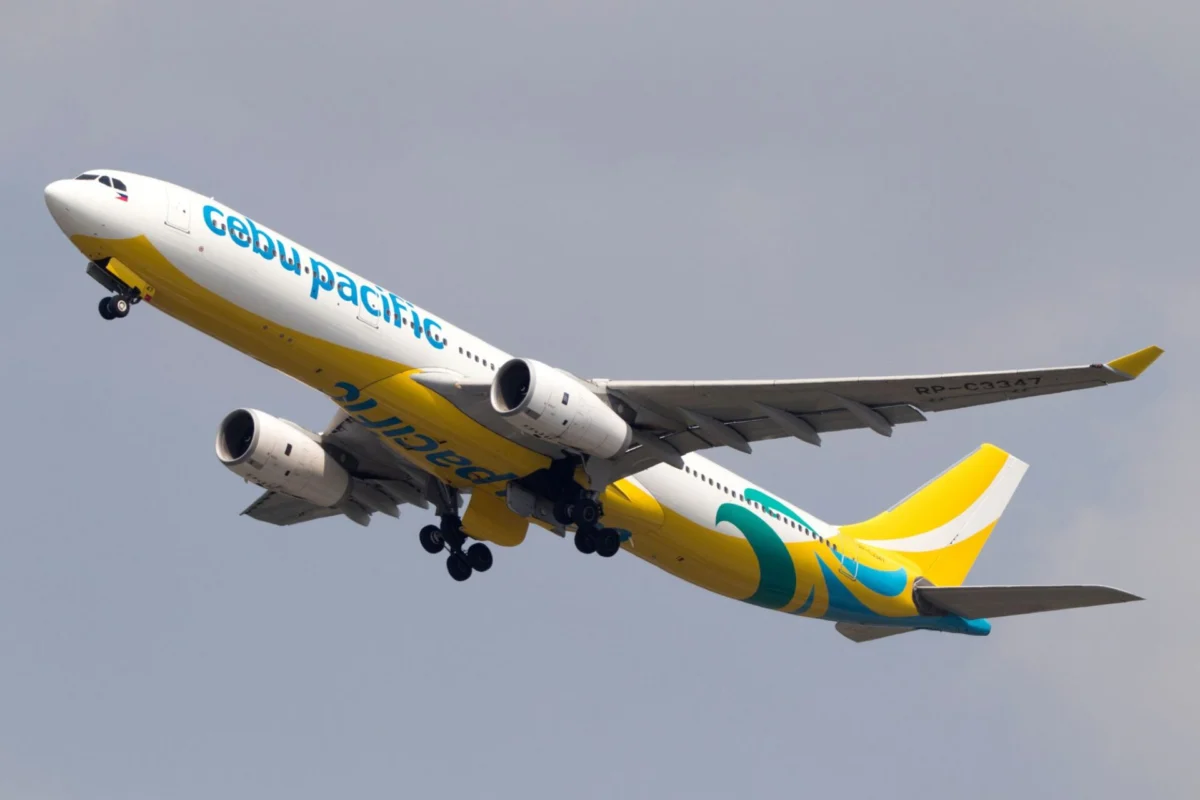
Cebu Pacific posted a 10% year-on-year increase in total revenue for the first quarter of 2026, buoyed by higher seat capacity and steady passenger demand across domestic and international markets.
The Philippine carrier reported total revenue of PHP 33.3 billion (US $595 million) for the quarter, carrying 7.5 million passengers, an 8% increase from the same period last year. Seat load factor held at 83.7%, reflecting stable demand and effective capacity deployment.
Revenue growth across the board
Passenger revenue climbed 6% to PHP 22.5 billion (US $402 million), while ancillary revenue rose 19% to PHP 9 billion (US $161 million), driven by improvements in ancillary yields.
The cargo business also expanded, with revenue up 8% to PHP 1.8 billion (US $32 million), supported by additional widebody capacity.
EBITDA rose 26% to PHP 8.4 billion (US $150 million), while operating income jumped 54% to PHP 3 billion (US $54 million). Cost discipline and improved efficiencies helped offset higher operating costs tied to fleet and capacity expansion.
Core income before tax reached PHP 1.3 billion (US $23 million), up from PHP 325 million (US $5.8 million) a year earlier. However, Philippine Peso depreciation at the end of the quarter resulted in non-core foreign exchange losses of PHP 1.8 billion (US $32 million), pushing the airline to a net loss of PHP 400 million (US $7 million), compared to a net income of PHP 466 million (US $8 million) in the prior year.
Cebu Pacific ended the quarter with 101 aircraft in its fleet and over PHP 23 billion (US $411 million) in cash.
A cautious approach ahead
CEO Mike Szucs said the airline is taking a more measured stance given the current operating environment.
“As we navigate a more volatile operating environment amid higher fuel prices, we are taking a more cautious and measured approach focused on margin protection, prudent capacity deployment, and liquidity preservation,” Szucs said.
He expressed confidence in the airline’s ability to manage through the uncertainty, pointing to its experience navigating the pandemic without external assistance.
“We’re a very solid airline coming off very strong financial results. We’ve got a lot of financial resilience,” Szucs said. “We have to keep our eye on the end game. The end game is, there’s a great future for the Philippines, and a great future for Cebu Pacific.”
Investing in training
Before the quarter closed, Cebu Pacific opened its dedicated training facility for pilots and cabin crew in Parañaque City on April 27, 2026.
The Cebu Pacific Training Academy spans 1,685 square meters and is one of the first centralized, purpose-built aviation training centers in the Philippines. It is equipped with Airbus A330 and ATR door trainers, cabin mock-ups, slide trainers, classrooms, and a maintenance learning center. A ground equipment simulator is also planned.
Chief Operations Officer Javier Massot said the facility took three years to go from concept to completion. For a long time, he explained, the airline had to rely on shared facilities or partner equipment for training.
“This is a facility we can showcase globally, a place designed to make every cabin crew member, every mechanic, and every ground professional who passes through feel incredibly proud to be part of this airline,” Massot said.
The academy supports the airline’s broader push to develop homegrown aviation talent. Cebu Pacific revived its Cadet Pilot Program in 2024 in partnership with Airworks Aviation, and as of April 2026, it has produced its second batch of pilot graduates.