
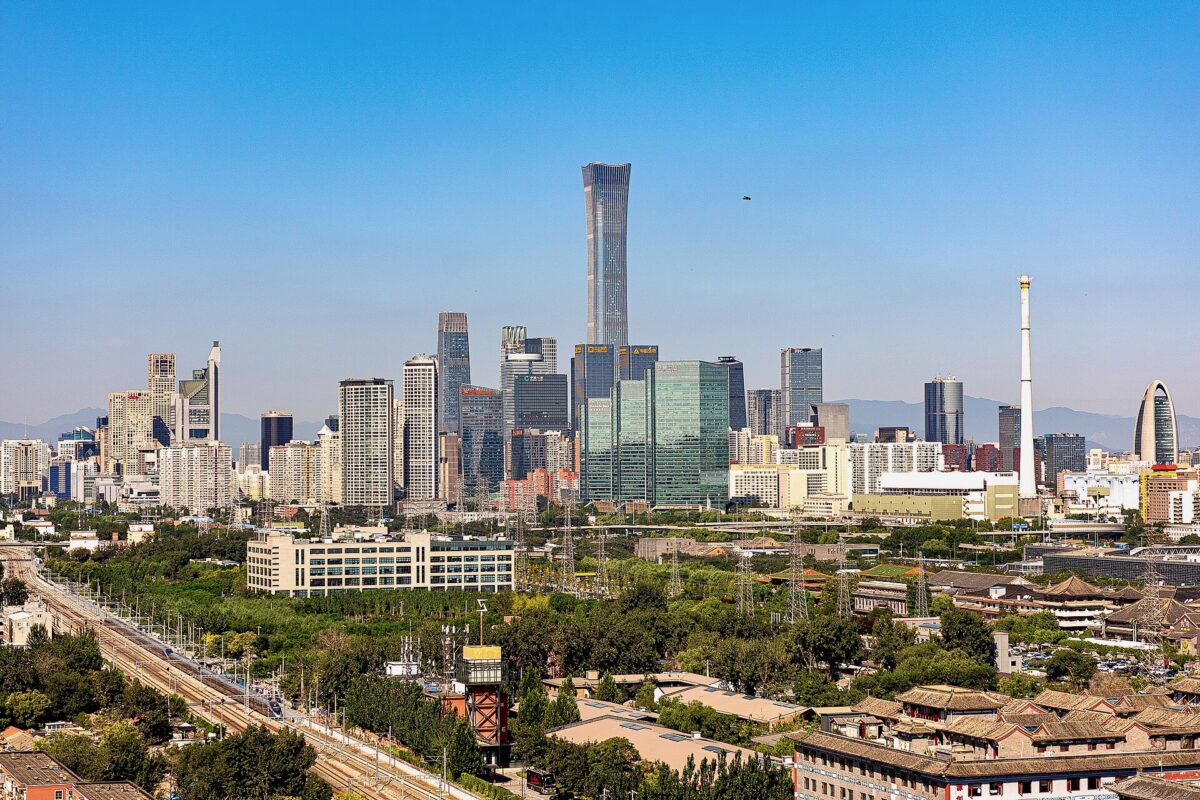
China will impose sweeping restrictions on flying around Beijing starting on September 20, 2026, nearly three months after a light aircraft struck the capital’s tallest building, killing the pilot and injuring 13 people.
The restricted airspace extends 300 kilometers from Beijing in every direction, covering more than 280,000 square kilometers from the surface to unlimited altitude. A Chinese aviation policy summary says general aviation activities within the zone will require approval, with requirements covering communications, aircraft identification and security reporting.
Airline flights will continue, the Chinese government said. The permanent restriction also permits approved business flights and military, customs, police and fire-rescue operations.
The zone includes Beijing, Tianjin and much of Hebei province, extending into neighboring regions and the Bohai Sea. Permitted aircraft must follow approved flight plans, obtain clearance for deviations and maintain two-way radio contact with air traffic control. They must also carry equipment allowing continuous electronic identification and tracking.
The restrictions follow a June 26, 2026, crash into the 108-story CITIC Tower in Beijing’s central business district. Authorities said the 66-year-old pilot left his approved flying area and lost contact with the suburban airport from which he had departed.
Some sightseeing flight companies suspended operations after the crash. China already tightly controls access to its airspace, with the military retaining primary authority over its allocation. A smaller permanent no-fly zone covers Beijing’s political center, prohibiting even regular airline flights.
Beijing has separately adopted restrictions on drones that prohibit them from being kept or flown anywhere in the city.
Under revised municipal regulations taking effect November 15, 2026, possessing or storing drones and their core components will be prohibited throughout Beijing’s administrative area. The rules also prohibit transporting drones into the city and selling or renting them to individuals or organizations there.
Exceptions are available following a security assessment for specified activities, including disaster response, training, research, manufacturing and agricultural work. Flights conducted under those exceptions remain subject to national regulations.
Violators of the drone flight prohibition face confiscation of the aircraft and fines of up to 10,000 yuan ($1,500).