
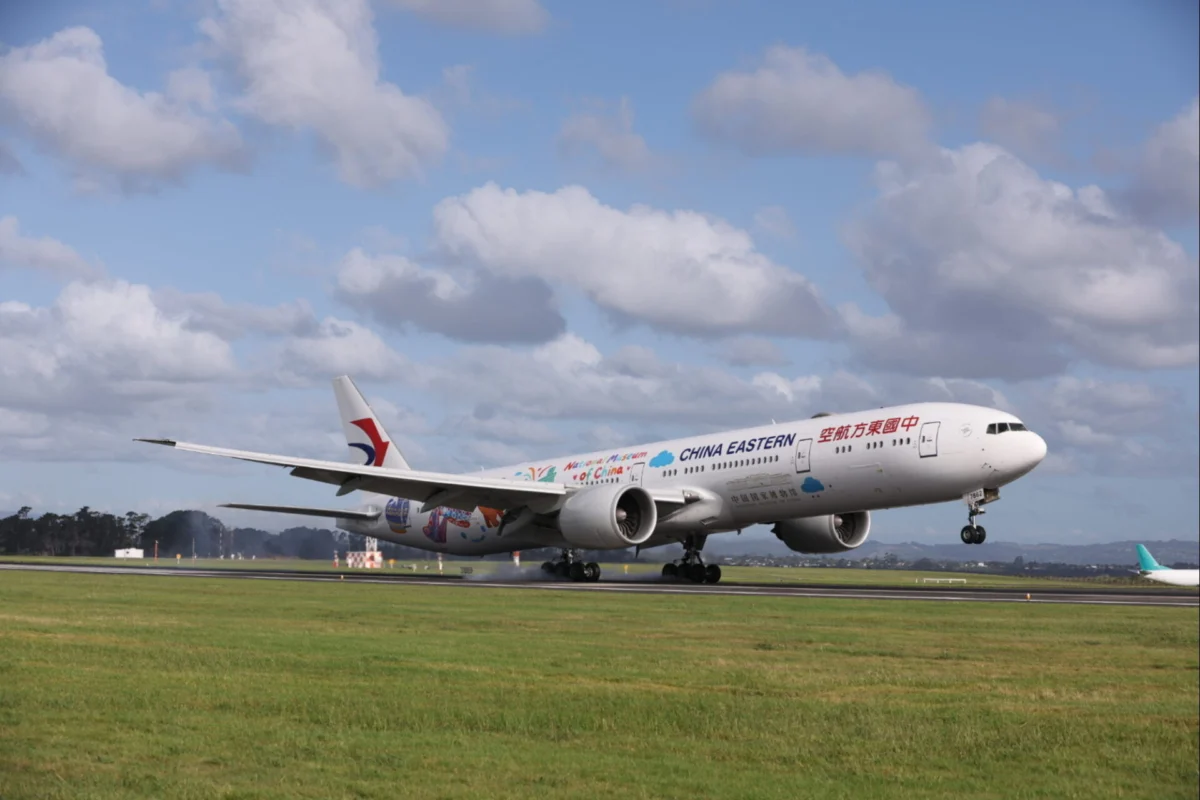
China Eastern Airlines has introduced the longest intercontinental flight in the world, linking Shanghai and Buenos Aires via a journey that spans nearly half the globe.
The route not only establishes a new record for the longest commercial flight but also reduces travel time between China and South America by more than four hours.
In a statement issued on December 5, 2025, China Eastern Airlines announced that the flight had arrived in Buenos Aires successfully on December 4, 2025.
“Our Shanghai–Auckland–Buenos Aires route will make travel between China, New Zealand, and Argentina easier, transport specialty goods to new markets faster, and build a bridge for cultural dialogue among the three countries,” the carrier said.
The flight was operated using a Boeing 777-39P(ER), registered as B-7882, operating as Flight MU745 from Shanghai, China (PVG) to Buenos Aires, Argentina (EZE), with a stopover in Auckland, New Zealand (AKL). The aircraft showcased a special livery featuring China Eastern Airlines’ inaugural ‘National Museum of China’ themed design.



According to data from FlightRadar24, the aircraft completed the 9,346-kilometre flight from Shanghai to Auckland in 10 hours and 53 minutes, landing at 18:12 local time. It then proceeded on the lengthy 10,334-kilometre flight leg to Argentina, arriving in Buenos Aires at 16:45 local time after an 11 hour 22-minute transoceanic flight.
The two flight legs from Shanghai to Buenos Aires via Auckland took around 25.5 hours, including a scheduled two-hour stop in Auckland. It is estimated that the return flight from Buenos Aires to Shanghai should take around 29 hours.
“This is a strategic and important connection for New Zealand because it deepens our aviation links with China and re-establishes our direct access to Buenos Aires, Argentina,” Auckland Airport Chief Executive Carrie Hurihanganui said in a statement, welcoming the new flight.
In 2025, around 94,000 passengers traveled between New Zealand and South America. The air trade between these regions amounted to NZ$129 million in the year ending October 2025, marking an 11% increase on the previous year.