
China’s fighter jet manufacturers are seeing a sharp rise in sales following the 2025 India-Pakistan conflict, where Chinese-built aircraft were credited by Pakistan with playing a decisive role in aerial combat.
The sales jump was reported by Bloomberg on April 29, 2026.
AVIC Chengdu Aircraft., the company behind the J-10CE fighter jet, posted revenue of 75.4 billion yuan (US$11 billion) in 2025, a 15.8% increase from the previous year. Profits climbed 6.5% to 3.4 billion yuan (US$497 million). Both figures are the highest in the company’s history.
The momentum has continued into 2026, with first-quarter sales jumping nearly 80% compared to the same period last year.
The conflict that changed perceptions
Analysts trace the sales surge to the May 2025 clash between India and Pakistan, which lasted roughly four days and marked a rare real-world test of modern Chinese military hardware.
The conflict was triggered by Indian strikes targeting alleged militant infrastructure following a civilian attack in Pahalgam. Pakistan responded with aerial intercepts and counter-strikes, escalating the confrontation into a multi-domain engagement.
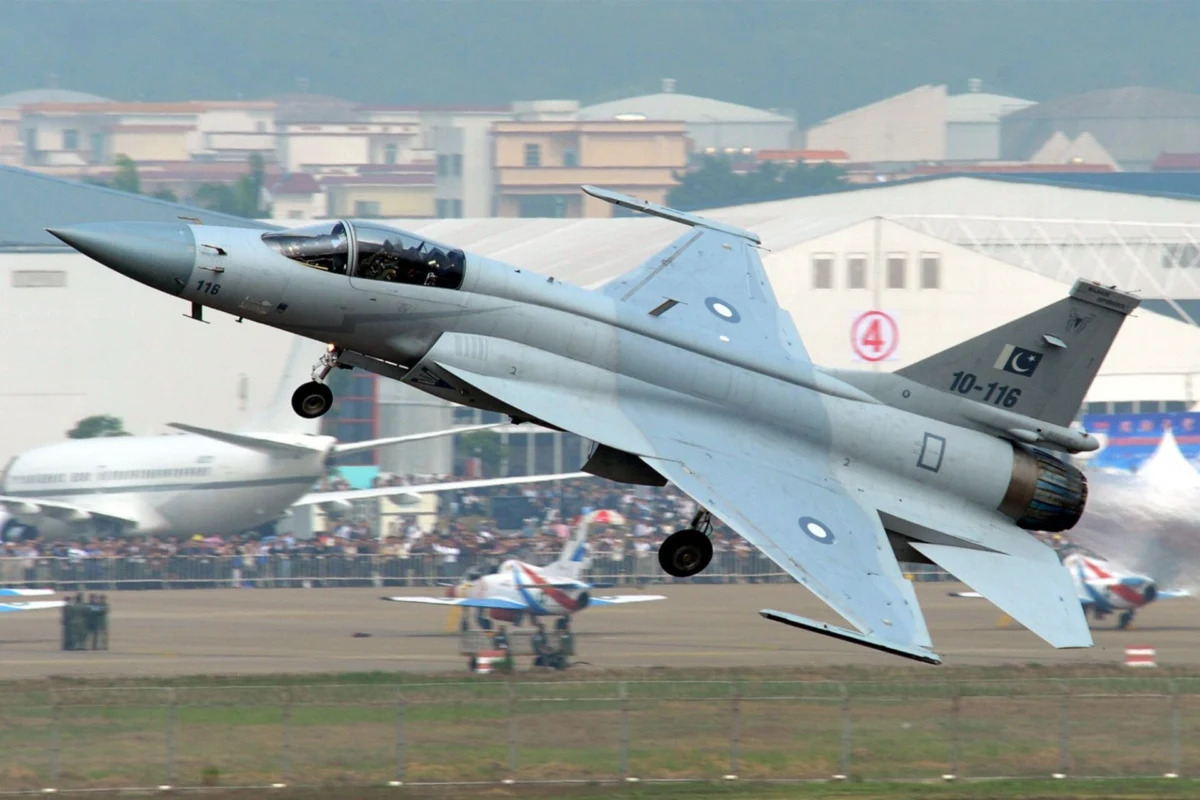
Pakistan credited the Chinese-built J-10CE and the jointly produced JF-17 Thunder with playing a key role in aerial engagements. Islamabad claimed multiple Indian aircraft were shot down, including French-made Dassault Rafales. India disputed those claims and said it also inflicted damage on Pakistani aircraft, which Pakistan denies.
In January 2026, China officially confirmed that the J-10CE had achieved its first combat victory.
Growing interest from developing nations
The conflict drew attention from countries looking for alternatives to Western fighter jets. Indonesia, Iraq, and Bangladesh have reportedly all shown interest in acquiring Chinese-made aircraft, particularly the JF-17.
The appeal lies in a combination of factors: competitive pricing, flexible financing, and, now, combat credibility. For nations with limited defense budgets or those seeking to avoid political strings attached to Western arms deals, Chinese platforms are becoming an increasingly attractive option.
The J-10CE, equipped with PL-15 beyond-visual-range missiles, is being marketed as a cost-effective platform capable of challenging more expensive Western aircraft in long-range engagements.
Scaling up production
AVIC Chengdu attributed part of its growth to a restructuring that consolidated its core aircraft manufacturing operations, improving efficiency and increasing production capacity.
The company is expanding its facilities in Chengdu to meet rising demand, including for advanced platforms like the fifth-generation J-20 stealth fighter.
AVIC Shenyang Aircraft, which produces the J-35 stealth fighter, has also reported increased revenues and is preparing to ramp up output at a new facility.
Challenges remain
Despite the strong numbers, uncertainties persist. The combat claims from the 2025 conflict remain contested and lack independent verification.
Political considerations, including US sanctions on both AVIC Chengdu and AVIC Shenyang, may hinder the willingness of some countries to buy Chinese systems.
Western manufacturers could also respond with pricing adjustments and intensified marketing, particularly in the mid-tier fighter segment where cost-performance ratios matter most.