
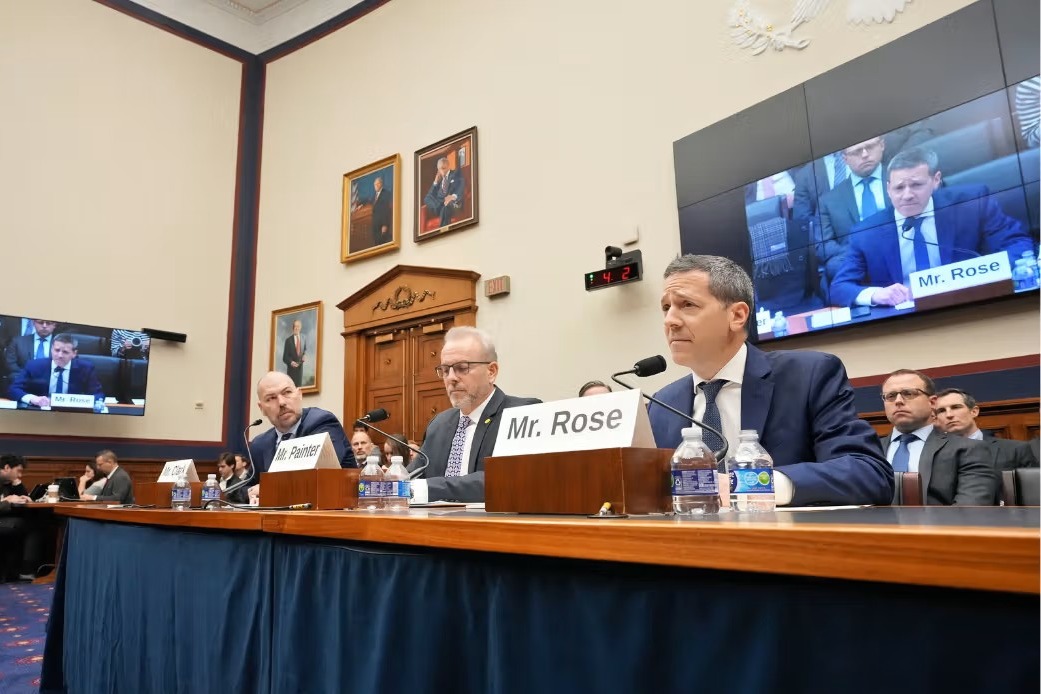
A US House Transportation and Infrastructure Committee hearing on advanced air mobility has reopened a long-running debate over how ADS-B data is used, with lawmakers and industry leaders urging Congress to place new guardrails around aircraft tracking.
At the center of the discussion is the Pilot and Aircraft Privacy Act (PAPA), a bill strongly backed by the Aircraft Owners and Pilots Association (AOPA) that would restrict ADS-B use to safety functions and prohibit airports or other entities from relying on the data for fee collection or law-enforcement actions unrelated to aviation safety.
The issue surfaced during testimony from Robert Rose, CEO of Reliable Robotics, who told the House Aviation Subcommittee that wider adoption of ADS-B Out remains essential, particularly as autonomous operations expand and the FAA considers new requirements under emerging Part 108 regulating unmanned aircraft. Rose said ADS-B should remain focused on collision avoidance and traffic awareness, not airport economics.
“I don’t think it should be used for fee collections,” Rose told lawmakers. “It should be used primarily for safety and collision avoidance and situational awareness in the cockpit. I think it’s very unfortunate the conversation has shifted more toward fee collections.”
Concerns about tracking aircraft for billing purposes have grown in recent months as several airports have explored landing fees targeting general aviation traffic. Because ADS-B broadcasts an aircraft’s position and identity, some airports and third-party vendors have used the data to log arrivals and departures as part of fee-collection programs. Opponents argue that using a safety system to generate revenue undermines trust and may encourage pilots to reduce ADS-B usage, weakening a foundational element of the national airspace system.
Rep. Bob Onder (R-Mo.), an instrument-rated pilot and the sponsor of PAPA, pressed the point during the hearing. He said pilots are more likely to adopt and consistently use ADS-B when the system is not repurposed for financial or enforcement activities. Rose agreed, saying predictability and transparency are essential to promoting the safety uses of ADS-B.
Under PAPA, airports and government agencies would be barred from using ADS-B data to identify aircraft for charges or penalties. The bill would also prevent federal, state, or local officials from relying on ADS-B for investigative actions unrelated to aviation safety. Supporters say the measure would reinforce ADS-B’s original purpose while giving pilots confidence their broadcasts will not be used for unintended tracking.
AOPA President and CEO Darren Pleasance said the bill establishes a clear national policy that prevents a patchwork of state-by-state rules and keeps ADS-B focused on safety. “When the legislation becomes law, airports will still be able to collect fees — they just couldn’t use this safety technology to do so,” Pleasance said.
PAPA also includes transparency provisions for airports that impose landing or takeoff fees on general aviation aircraft. Public-use airports would be required to disclose how they manage non-airside expenses, what alternative funding sources they have pursued, and how any proposed fees could affect local pilots and aviation businesses.
In the Senate, a companion bill introduced by Sen. Ted Budd (R-N.C.) mirrors PAPA’s privacy and transparency provisions, signaling growing bipartisan interest in revisiting how aircraft tracking data is used as tracking technologies enter the national airspace.
Supporters say the legislation will help maintain pilot participation in ADS-B as the FAA evaluates new airspace integration rules. Critics, including some airport groups, argue that restricting access to ADS-B information complicates operational oversight and airport financing.
ADS-B, which stands for automatic dependent surveillance-broadcast, is a ground-based and airborne technology that supplements or replaces radar for ATC and which can provide onboard graphical depictions of other air traffic to pilots. The technology has been mandatory in most airplanes in the US since 2020.