
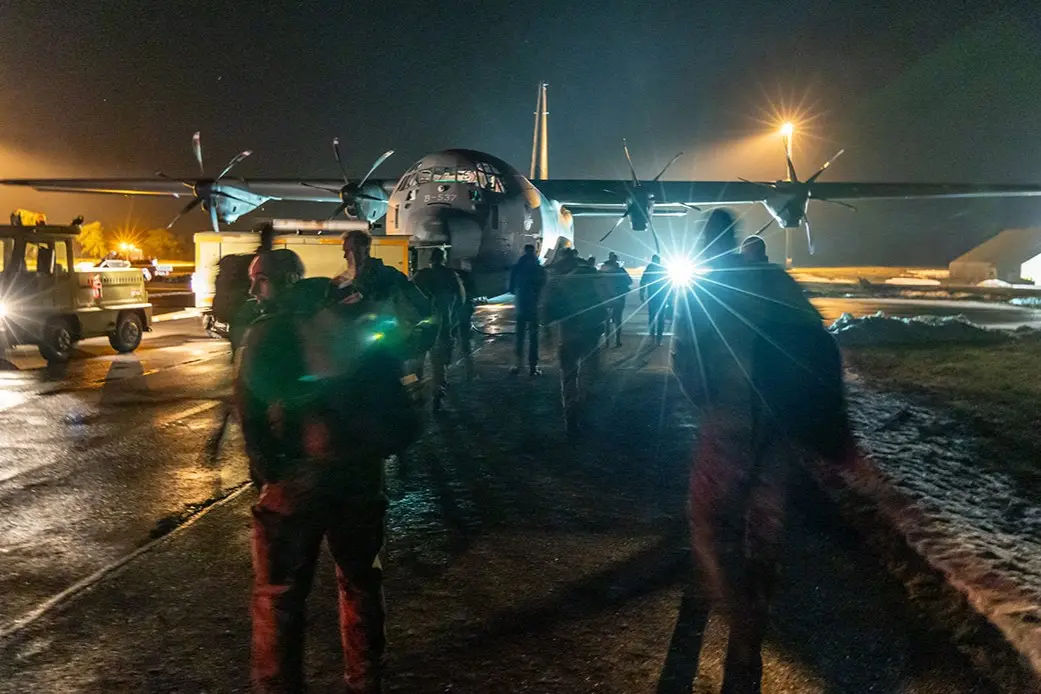
European countries have begun airlifting reconnaissance teams into Greenland under Danish leadership, with C-130 Hercules transport aircraft flying the first contingents into Nuuk on January 14, 2026, amid what one source described as a “political emergency” over the island’s future.
Two Danish C-130s landed late on January 14 at Nuuk airport, carrying Danish soldiers and the first European personnel, including five French troops. By the morning of January 15, the multinational group had gathered at the headquarters of Denmark’s Joint Arctic Command (Arktisk Kommando) in Nuuk to assess the conditions for a possible wider allied deployment.
Normally focused on maritime pollution prevention, fisheries inspection, search and rescue, hydrographic surveys and support to scientific missions, the Nuuk-based command is now coordinating a reconnaissance mission that will map out infrastructure, airlift needs and logistics for sustained operations in Greenland’s polar environment.
European airlift flows through Denmark
According to the German Defense Ministry, a 13-strong German reconnaissance team was scheduled to fly to Karup Air Base in Denmark on January 15, 2026. From there, European personnel continued together to Greenland the next day, using Danish and allied airlift.
French mountain infantry soldiers spotted in #Nuuk #Greenland.
— Tom Antonov (@Tom_Antonov) January 16, 2026
via @BFMTV pic.twitter.com/YlOGAc9XrU
European contributions remain small in this initial reconnaissance phase, with Germany sending a 13-person team, France deploying around 15 troops from the 27th Mountain Infantry Brigade, Norway contributing two soldiers and Finland two liaison officers. Sweden has dispatched several officers, the exact number of which has not been disclosed, while the Netherlands and the United Kingdom are each assigning a single naval or military officer, and Estonia has signaled participation without yet specifying the size of its contingent. The composition reflects a reconnaissance-heavy footprint aimed at surveying infrastructure, logistics and operating conditions in Greenland as allies prepare for a potential larger deployment later in the year.
During his New Year address to the armed forces on January 15, 2025, French President Emmanuel Macron said that the initial French detachment in Nuuk would be backed “by land, air and sea assets,” indicating that Paris is prepared to commit additional aviation and naval support if the mission expands.
Operation Arctic Endurance
The current reconnaissance deployment is framed as a precursor to the Danish-led ‘Arctic Endurance’ exercise, planned with NATO allies and positioned as a follow-on to the recent ‘Arctic Light 2025’ drills. For Denmark and its partners, the focus is on proving that allied airlift and support aircraft can operate reliably from Greenlandic airfields and, if necessary, more austere sites.
Greenland’s rugged terrain, sparse infrastructure and long polar night place a premium on reliable transport aircraft, tactical airlift planning and search and rescue coverage. Any larger deployment would likely require a mix of C-130 and A400M-type aircraft, supported by maritime patrol and surveillance platforms to monitor the surrounding air and sea approaches.
European cold-weather expertise

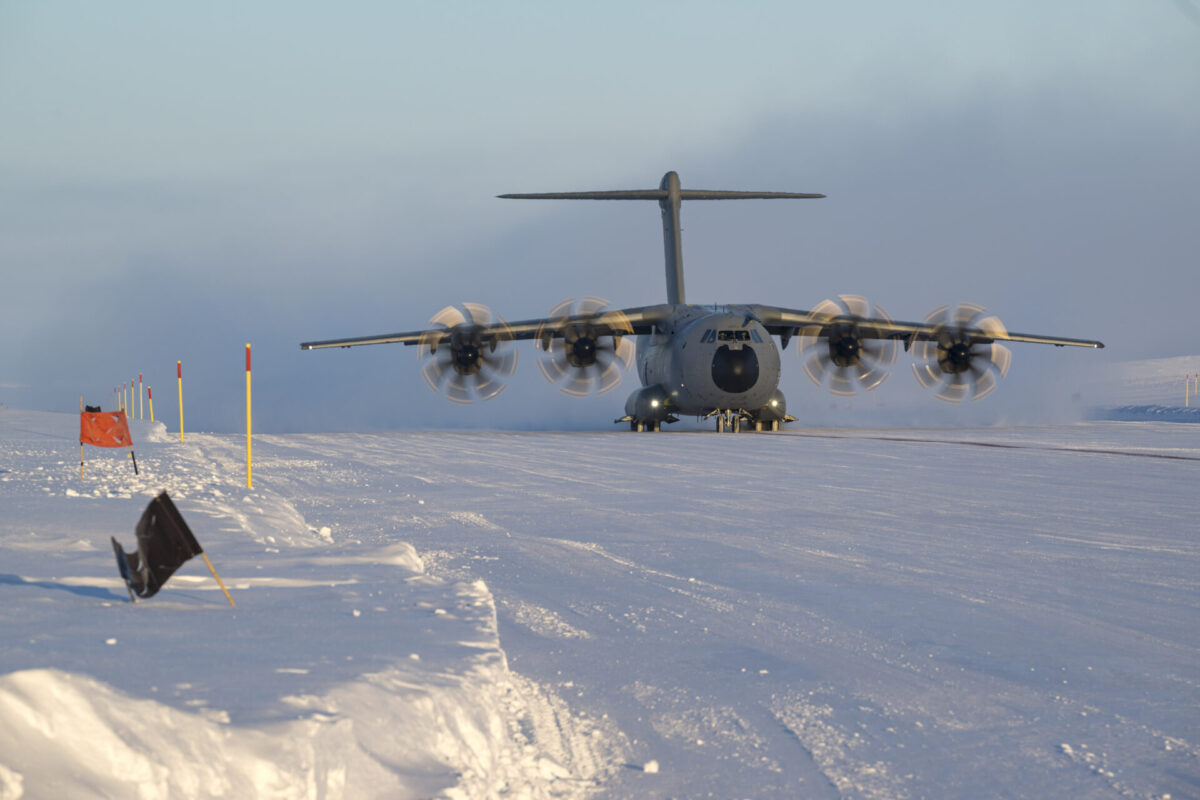
The French troops arriving in Nuuk belong to the 27th Mountain Infantry Brigade, which has built expertise in cold-weather operations over the past decade during deployments and exercises in the High North, including previous activity in Greenland.
French forces have already increased their Arctic aviation options. On March 9, 2025, the A400M Atlas was certified to operate in Greenland after a campaign of trials at Station Nord, where crews practiced landing on ice runways and validated procedures for extreme cold.
While French fighters have never operated from Greenland, the French Air and Space Force has previous experience in the region. A Mirage 2000-5 detachment deployed to Iceland in 2008 to launch NATO’s Icelandic Air Policing mission.
Other contributors to the Nuuk mission bring comparable Arctic credentials. Norway and Sweden routinely run cold-weather drills above the Arctic Circle involving fast jets, helicopters, and tactical airlift, while Finland has long adapted its fighter operations and runway maintenance to harsh winter conditions and is folding those requirements into its F-35 transition.
Germany’s transport and mountain units have participated in winter exercises in northern Norway and Iceland, gaining practical experience in logistics and airfield support in sub-zero environments. Denmark itself has long operated in Greenland and the Faroe Islands and hosts specialized units such as the Sirius Dog Sled Patrol, which trains year-round in extreme Arctic conditions and represents a unique local reconnaissance capability.
Political urgency over Greenland’s status
European capitals and Copenhagen have framed this collective expertise not only as preparation for a possible larger deployment but also as a demonstration to international audiences, including the United States, of their capacity to protect the Arctic region and uphold Greenland’s security.
The acceleration of the mission followed a high-level meeting in Washington on January 14, 2026, between senior representatives of the United States, Denmark, and Greenland. Participants reported “fundamental divergences” during the talks. Shortly afterwards, US President Donald Trump again stated his intention to bring Greenland under US control for “security” reasons, specifically to establish the so-called ‘Golden Dome’ multi-layer missile defense system for the United States. Copenhagen and Nuuk have rejected that position.