
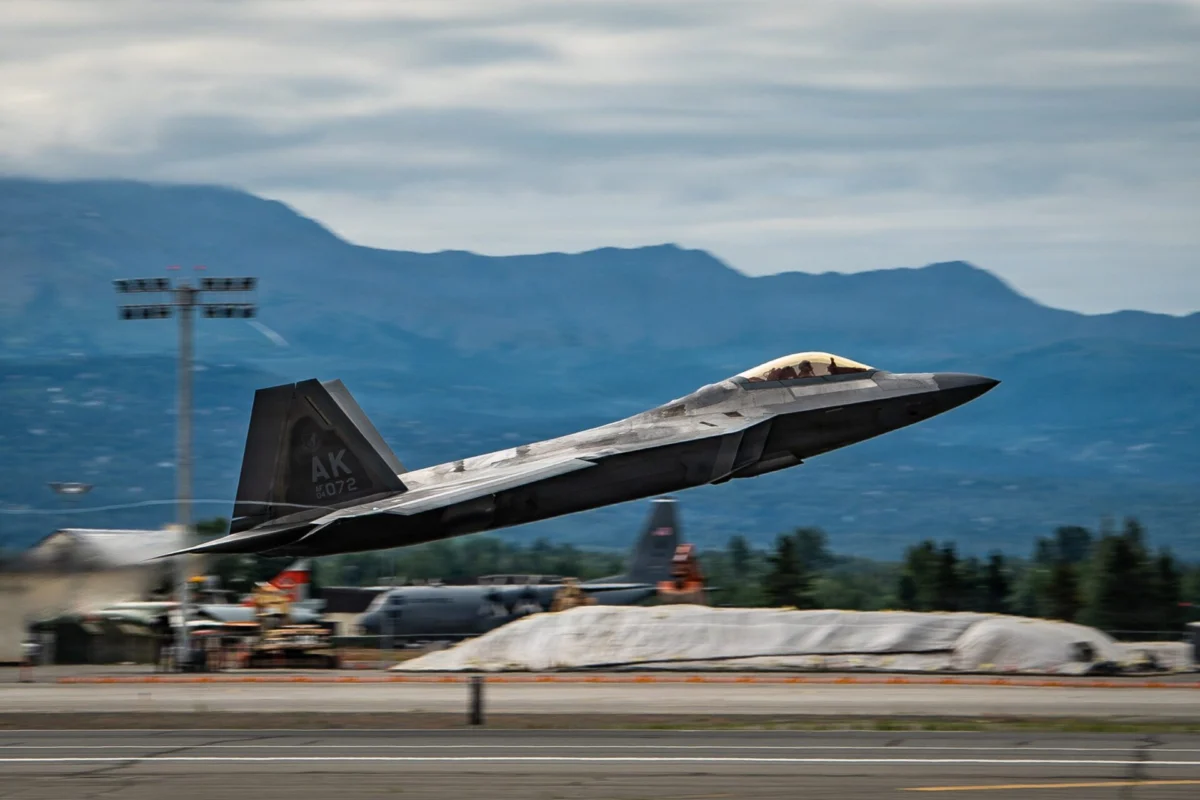
The US Air Force has presented its highest flight safety award to an F-22 Raptor pilot who landed a stealth fighter on its belly in the Middle East after a main wheel assembly separated from the aircraft on takeoff.
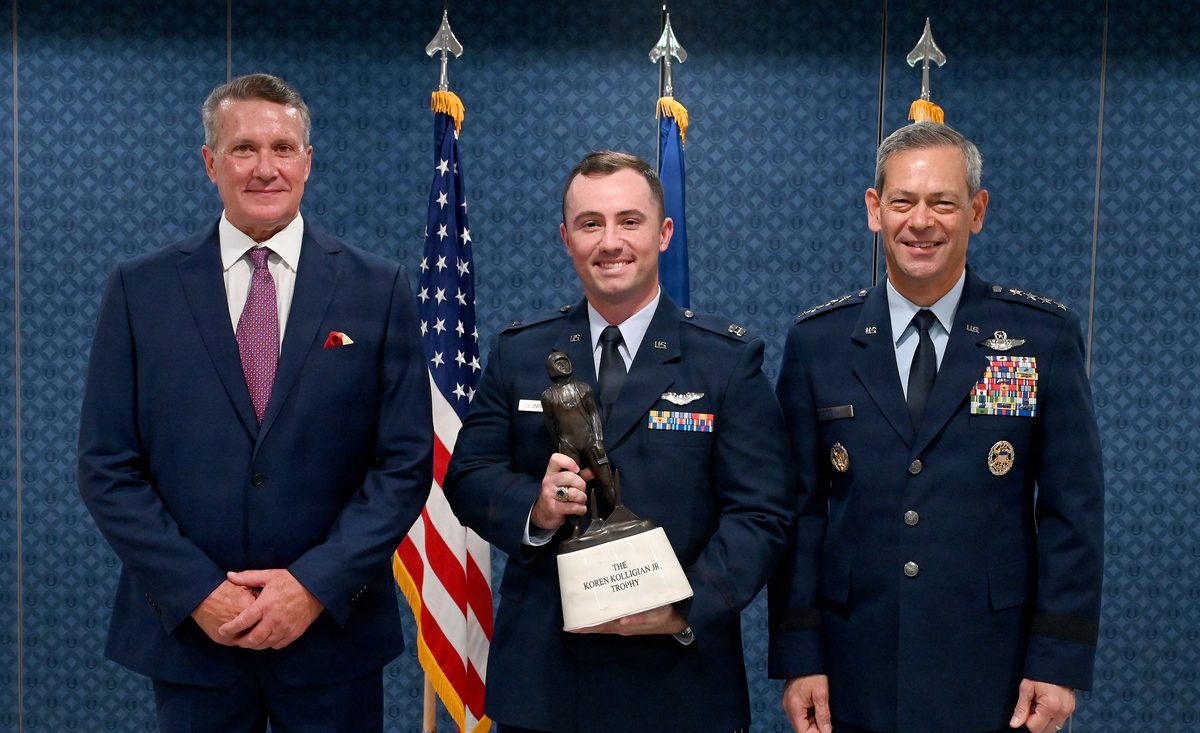
US Air Force Chief of Staff General Ken Wilsbach presented the 2025 Koren Kolligian Jr. Trophy to Captain Michael Cloninger, of the 90th Fighter Squadron, 3rd Operations Group, during a ceremony at the Pentagon on September 8, 2026.
The Koren Kolligian Jr. Trophy is the US Air Force’s most prestigious flight safety award and the only one presented by the service’s chief of staff. The award is named after First Lieutenant Koren Kolligian Jr., a US Air Force pilot whose T-33 Shooting Star disappeared off the California coast on September 14, 1955.
His family established the trophy in his memory to recognize exceptional airmanship in emergencies, particularly when aircrew avert an accident or limit loss of life, injuries, or aircraft damage.

Wheel assembly separates after takeoff
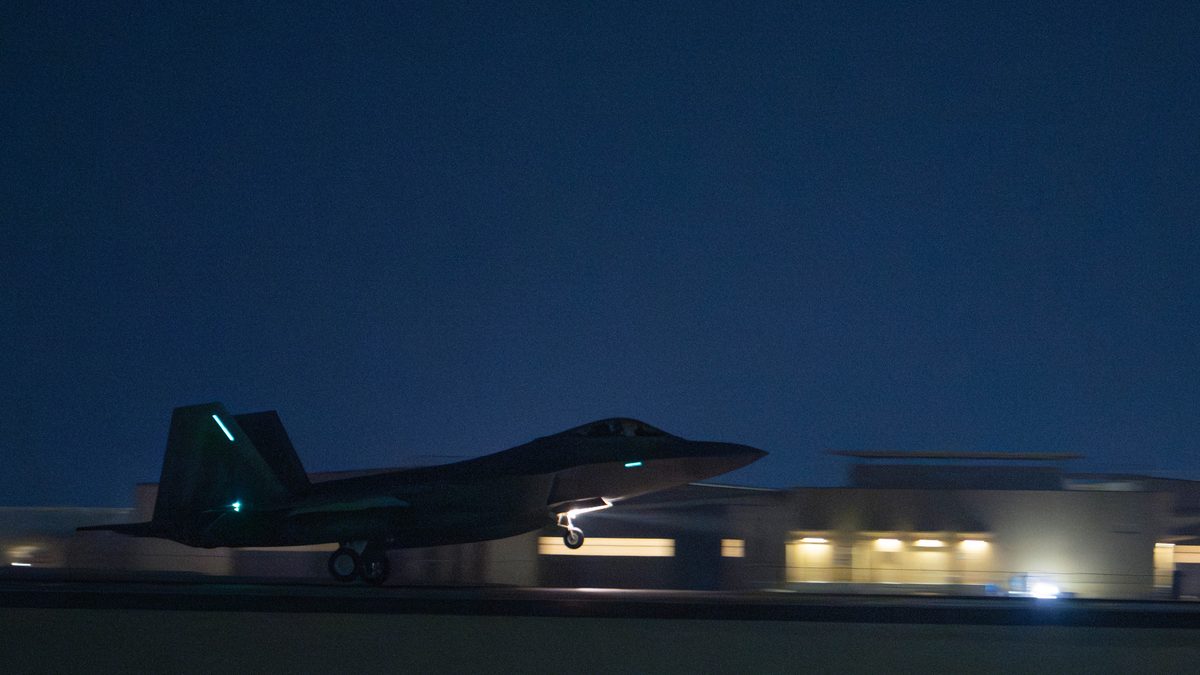
On September 18, 2024, while deployed to the US Central Command area of responsibility, Cloninger was flying as number two in a four-ship formation conducting a memorial flyover marking the anniversary of the Battle of Britain. Immediately after takeoff, the F-22’s right main wheel assembly departed the aircraft.
The flight discontinued the mission and remained close to the airfield. Cloninger assumed navigation and communication lead, slowed below gear speed and lowered the landing gear, and his flight lead confirmed that the entire right main wheel assembly was missing.
An emergency with no checklist
No written procedure covered the failure. Cloninger selected the gear-up landing checklist, ruling out an asymmetric touchdown on one main wheel and one bare strut.
He flew for about an hour to burn fuel while coordinating with the tower, crash response and the operations supervisor, then made a low approach using the emergency alternate flap setting before flying a shallow, on-speed approach and a centerline touchdown.
The service said the touchdown prevented a post-landing fire. Cloninger shut down both engines and carried out an emergency egress.
Wilsbach said the pilot had faced a failure he could not see, with no warning from the aircraft, while carrying a full combat load, and “flew the aircraft all the way through the emergency.”
Cloninger credited his wingmen and ground personnel, saying he would not have been standing at the ceremony without their help handling communications and working through the checklists.
An unprecedented F-22 recovery

The aircraft was flown out of theater after diagnostics, an outcome the US Air Force described as an unprecedented recovery for a belly-landed F-22. The service put the value of the airframe at $156 million. It has not published an accident investigation board report.
The F-22 fleet cannot be replenished with new-production aircraft. Production ended in 2011, and 178 F-22s were in service as of January 2025, when Lockheed Martin was awarded a contract to fit new infrared defensive sensors to the type.
Landing gear failures have also occurred on the aircraft before, including a tire blowout during takeoff at Kadena Air Base, Japan, in October 2024.
The USAF release does not identify the deployment or the base involved. The 90th Fighter Squadron is based at Joint Base Elmendorf-Richardson, Alaska, from where roughly a dozen F-22s deployed to the US Central Command area of responsibility in August 2024.