
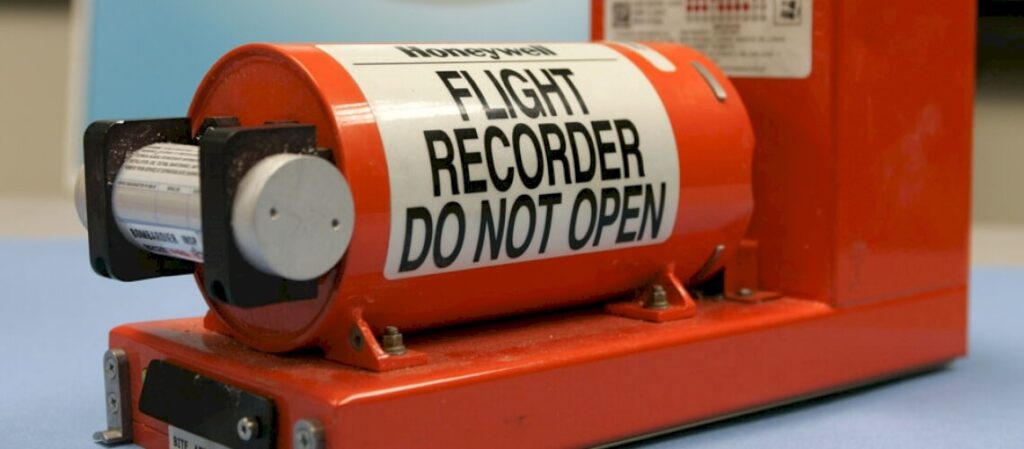
The Federal Aviation Administration has published a final rule requiring most newly manufactured large aircraft in the United States to be equipped with cockpit voice recorders capable of storing at least 25 hours of audio, a significant expansion from the long-standing two-hour standards.
The rule applies to aircraft manufactured after May 16, 2025, and operated under Parts 91, 135, 121, and 125. It covers airplanes with a maximum certified takeoff weight of at least 59,525 pounds and 29 or fewer passenger seats, capturing a wide range of business jets and larger turbine aircraft.
In issuing the rule, the FAA said the expanded recording duration will give investigators more complete data following accidents and serious incidents, particularly on long-duration flights where critical events may occur well before the final two hours of operation. The agency also said the change aligns US requirements more closely with international standards that already mandate longer CVR recording times.
The final rule follows a December 2023 notice of proposed rulemaking that sought to increase the minimum CVR recording duration for newly manufactured aircraft. It also satisfies a directive laid out in the FAA Reauthorization Act of 2024, which mandated 25-hour CVRs for Part 121 aircraft and transport category airplanes with 30 or more passenger seats, including all-cargo and combi variants.
While Congress also directed the FAA to establish a retrofit requirement for existing aircraft, the agency stopped short of doing so in this rulemaking. The FAA said it plans to further study the costs and labor implications of retrofitting in-service fleets, noting that industry estimates show retrofit expenses could be nearly six times higher than installing the equipment during production.
For business aviation, the rule primarily affects new-delivery aircraft rather than those already in service. Operators ordering new large-cabin or super-midsize aircraft will see 25-hour CVRs become standard equipment, while existing fleets will not face an immediate mandate to upgrade.
The National Business Aviation Association said it supports the FAA’s approach. Doug Carr, NBAA Senior Vice President for Safety, Security, Sustainability, and International Operations, said the rule will provide valuable safety insights while avoiding the significant cost burden a retrofit mandate would place on operators. NBAA also encouraged members to consider voluntary upgrades as part of future avionics modernization efforts.
The FAA addressed privacy concerns raised during the comment period by emphasizing that federal law prohibits the agency from using CVR recordings for enforcement actions or certificate penalties. Once an investigation concludes and the recorder is returned to the owner or insurer, the FAA has no authority over how the data is handled.
The move to longer-duration cockpit recordings reflects lessons learned from several high-profile accidents in recent years, where limited CVR data complicated investigations. By expanding recording capacity on new aircraft, regulators aim to improve accident analysis while limiting the impact on existing fleets.