
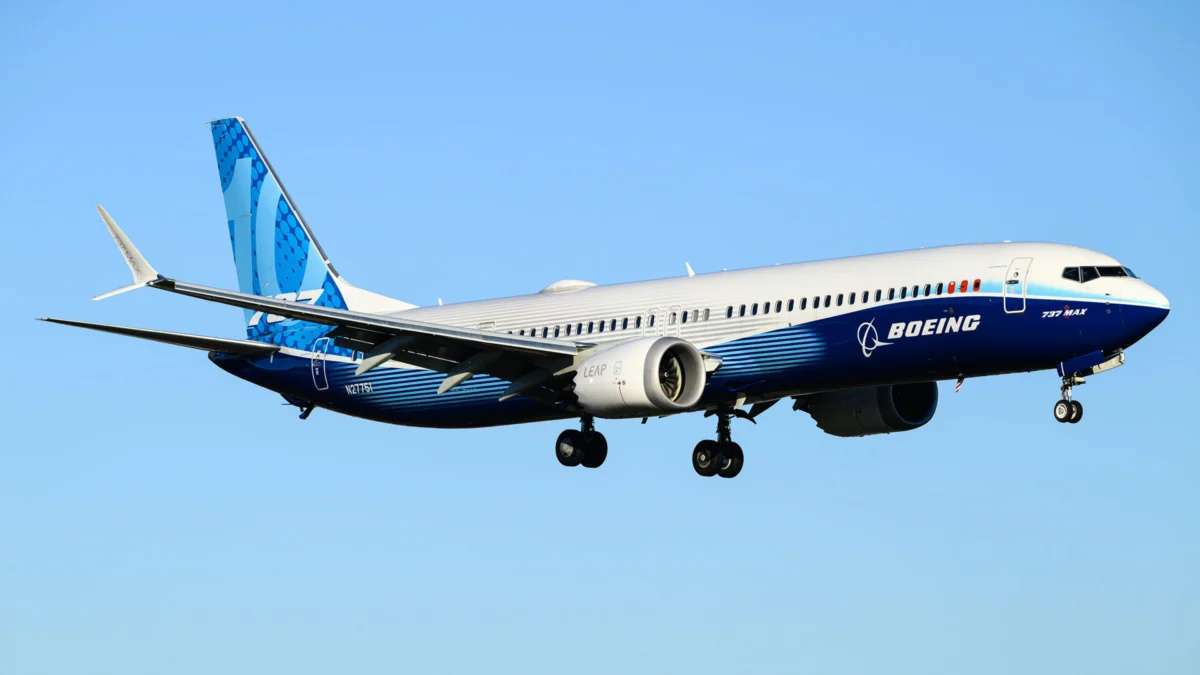
The US Federal Aviation Administration (FAA) said a software problem affecting some Boeing 737 MAX aircraft does not pose a flight-safety risk, removing a hurdle that had delayed certification of the MAX 10, the largest variant in the family.
The agency’s Corrective Action Review Board reached the conclusion on October 2, 2026, after examining the problem, which the FAA said can leave pilots without automated flight guidance during a specific go-around scenario.
The FAA said it found that “pilots retain full control of the aircraft and the indications to the flight crew are clear and unambiguous.”
Boeing disclosed the issue on September 26, 2026, saying it had notified operators and was developing a software update. The FAA said the problem could increase pilot workload during a go-around.
The problem can occur during a go-around if pilots change the missed-approach route programmed into the flight management computer. The aircraft’s vertical navigation mode, known as VNAV, can disengage, requiring the crew to intervene to maintain the correct altitude.
Boeing said the autopilot continues working even if VNAV disengages. The FAA’s concern was the additional workload for pilots during the maneuver.
FAA Administrator Bryan Bedford said the agency would hold off certifying the MAX 10 while it assessed the software.
United Airlines, Alaska Airlines, American Airlines and Ryanair are among the carriers awaiting the MAX 10. Lufthansa Group also exercised options for 20 of the aircraft in September 2026.
Before the FAA’s ruling, United and Southwest had asked Boeing to deliver new MAX aircraft with an earlier version of the software, according to The Wall Street Journal.
WestJet, which already operates aircraft with the affected software, said it had experienced no related in-service issues.