
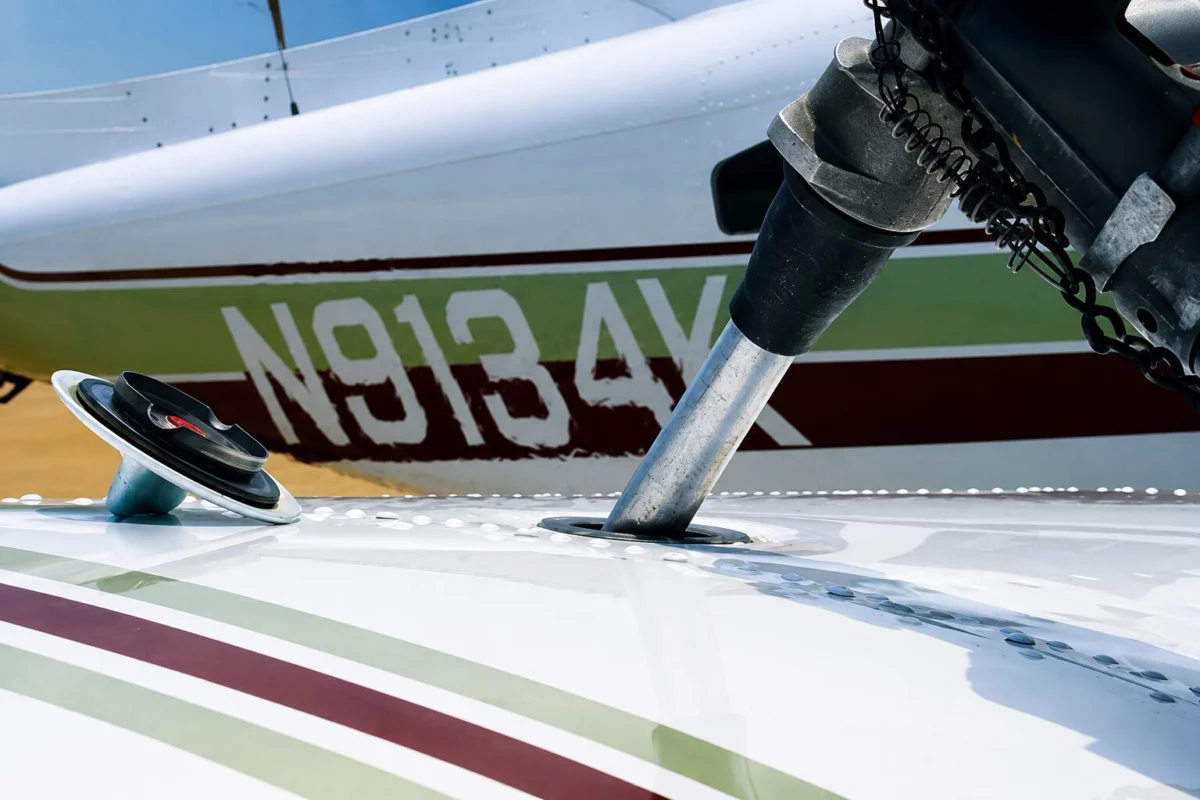
The Federal Aviation Administration (FAA) has released its final plan for eliminating leaded aviation gasoline across the US, keeping a 2030 deadline even as major questions remain over fuel selection, cost and needed aircraft modifications.
The 72-page plan lays out a four-phase transition from 100LL to unleaded avgas. It calls for leaded fuel use to end outside Alaska by December 31, 2030. Alaska would have until the end of 2032 because of its remote airports, limited storage and difficult fuel-distribution network.
The FAA has not set firm start dates or detailed schedules for the final two phases, which cover the nationwide transition and the later changeover in Alaska. The agency expects to publish an updated plan in late 2027 after completing the first phase.
Phase 1 will compare three high-octane unleaded fuels: General Aviation Modifications Inc.’s G100UL, Swift Fuels’ 100R and LyondellBasell and VP Racing Fuels’ UL100.
The FAA said testing will examine engine performance, detonation resistance, material compatibility and fuel composition. It will also study what happens when each unleaded fuel is mixed with 100LL or with a competing unleaded product.
The FAA expects to complete that work in spring 2027. Phase 2, scheduled to run through mid to late 2028, would expand use of approved fuels and allow aircraft owners, airports, flight schools and fuel suppliers to gain operating experience.
Each fuel developer supports mixing its product with 100LL in an aircraft tank, though none currently supports mixing its fuel with another company’s unleaded avgas.
The plan also makes clear that approval of an unleaded fuel will not automatically clear every aircraft to use it without further action.
At a minimum, aircraft may need a new fuel placard, revised operating information and a logbook entry. A mechanic or repair station would generally have to complete those changes on aircraft with standard airworthiness certificates.
Some aircraft could require additional modifications involving ignition timing, pistons, fuel-system materials or other engine hardware.
The approval process will vary by fuel. G100UL and 100R already hold supplemental type certificates covering different portions of the piston fleet. UL100 is seeking a broader fleet authorization through the FAA’s Piston Aviation Fuels Initiative (PAFI), while Swift has also entered 100R into that program.
The FAA said it expects the market to determine which fuel or fuels ultimately replace 100LL.
That approach has drawn concern from the Aircraft Owners and Pilots Association (AOPA), which argues that the FAA may need to play a larger role in choosing a practical nationwide solution.
Aircraft owners could also face expenses for STCs, mechanic work or hardware changes, while airports may need to provide temporary tanks, fuel trucks or other equipment to offer both 100LL and an unleaded replacement during the transition.
Airports able to store only one grade of avgas may need to switch fuels on a coordinated date rather than gradually. The FAA said airports should not be required to install additional permanent tanks solely to support the transition.
Fuel producers will need enough capacity to replace about 180 million gallons of annual 100LL demand.
The FAA identified cost, liability and schedule as the plan’s main risks. Fuel prices, aircraft modifications, supply outside an aircraft’s home airport and compatibility between competing fuels have yet to be settled.
The agency plans to begin rulemaking during Phase 2 to establish unleaded avgas standards and create the regulatory framework for ending leaded-fuel sales.
FAA Deputy Administrator Chris Rocheleau called the 2030 deadline “aggressive” during a forum at EAA AirVenture 2026.
“I can tell you with confidence we’re not going to set an arbitrary date that says, ‘well, this is what it says,’ without making sure that whatever we’re going to put in those aircraft is safe,” Rocheleau said.
The FAA and aviation industry launched the Eliminate Aviation Gasoline Lead Emissions initiative in 2022 with the goal of safely removing leaded fuel from the piston-aircraft fleet by the end of 2030. The agency says 100LL must remain available during the transition for aircraft that still require it.