
Finland’s new F-35A Lightning II fighters will arrive with fewer capabilities than originally agreed in the country’s procurement deal, and the Finnish Air Force will have to carry out significant upgrades at its own expense, the head of Finland’s F-35 program told Finnish daily Helsingin Sanomat in an article published on April 9, 2026.
The issue stems from persistent delays to the F-35’s Block 4 upgrade, a sweeping modernization of the aircraft’s software, sensors and weapons systems that Lockheed Martin originally claimed would include more than 75 major new capabilities. In September 2025, the US Government Accountability Office (GAO) estimated that Block 4 would not be completed before 2031 at the earliest, representing a five-year slip from the original timeline.
The number of planned capabilities has since been reduced so that the program can in fact be completed.
Retrofits at Finland’s expense
Henrik Elo, the head of Finland’s F-35 program, told Helsingin Sanomat that new features would be added to Finland’s aircraft as upgrade packages become available. Some upgrades will be installed before the fleet reaches full operational capability, which is planned for 2030, but others will follow well after that milestone.
Elo suggested that the final retrofits could extend beyond the middle of the 2030s, with a more precise schedule still to be determined. The upgrades will span software to hardware, he said.
Finland will not receive compensation from Lockheed Martin for its jets requiring post-delivery retrofits due to the Block 4 delays. The same applies to engine modernizations that will also be needed. Helsinki will bear the cost of both.
Elo declined to put a figure on how much the retrofits would come to, but indicated they could be covered in part by the existing F-35 project budget and in part by the fleet’s operating and maintenance funding. Finland’s F-35 deal, finalized in February 2022, covers 64 aircraft and has been valued at approximately 10 billion euros ($9.4 billion), including weapons and support.
Engine modernization adds another layer
The delays do not stop at avionics and software. Block 4’s new capabilities demand more electrical power and cooling capacity than the current Pratt & Whitney F135 engine can provide. An entirely new engine was initially considered, only to be dropped on cost and schedule grounds, in favor of an engine core upgrade (ECU) to the existing powerplant.
That ECU is not yet in production. In its September 2025 report, the GAO declared that it would not enter production before 2031, meaning that some Block 4 capabilities requiring the upgraded engine will be deferred even further, potentially to 2033 or later.
Finland’s Air Force therefore faces two overlapping modernization efforts after its fleet reaches operational capability: completing the Block 4 software and hardware retrofits, plus upgrading all of its engines.
A familiar pattern for F-35 customers
Finland is far from the only customer affected by this issue. The Block 4 delays and the underlying problems with the Technology Refresh 3 (TR-3) hardware package have rippled across the global F-35 fleet.
The GAO reported that all 110 F-35s delivered by Lockheed Martin in 2024 had been late, by an average of 238 days, largely because of TR-3 integration issues. A January 2025 report from the Pentagon’s Director of Operational Test and Evaluation found that no combat-capable TR-3 aircraft had been delivered to the US military through the end of fiscal year 2025.
In Switzerland, rising costs linked to the F-35 program forced the government to cut its planned order from 36 aircraft to approximately 30 in March 2026. This came after Bern concluded that it could not enforce the fixed price it believed had been agreed with Washington.
Block 4 costs have grown from an original estimate of $10.6 billion to $16.5 billion as of 2021, with a further $6 billion in overruns identified since. The Pentagon has narrowed Block 4’s scope to focus on capabilities that can realistically be delivered by 2031 without depending on the engine upgrade.
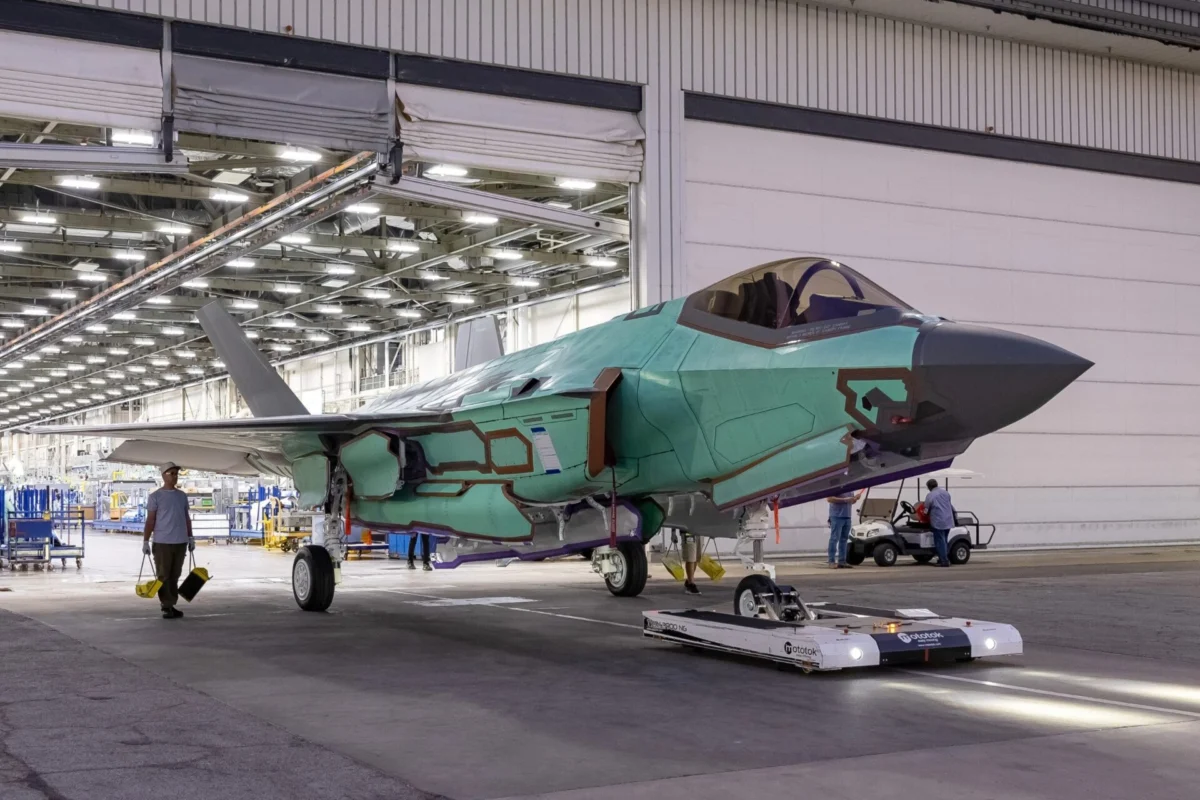
Finland’s first F-35A, designated JF-501, was rolled out in December 2025 and arrived at Ebbing Air National Guard Base in Arkansas for pilot training earlier this year. All 64 Finnish jets are being built in the TR-3 configuration. The first aircraft are expected to arrive on Finnish soil in 2026, with initial basing planned at Rovaniemi in Lapland.
Finland selected the F-35A in December 2021, choosing Lockheed Martin’s offering over bids from Boeing, Dassault, Saab and the Eurofighter consortium. The aircraft are intended to replace Finland’s legacy fleet of F/A-18C/D Hornets, which are to be phased out between 2025 and 2030.