
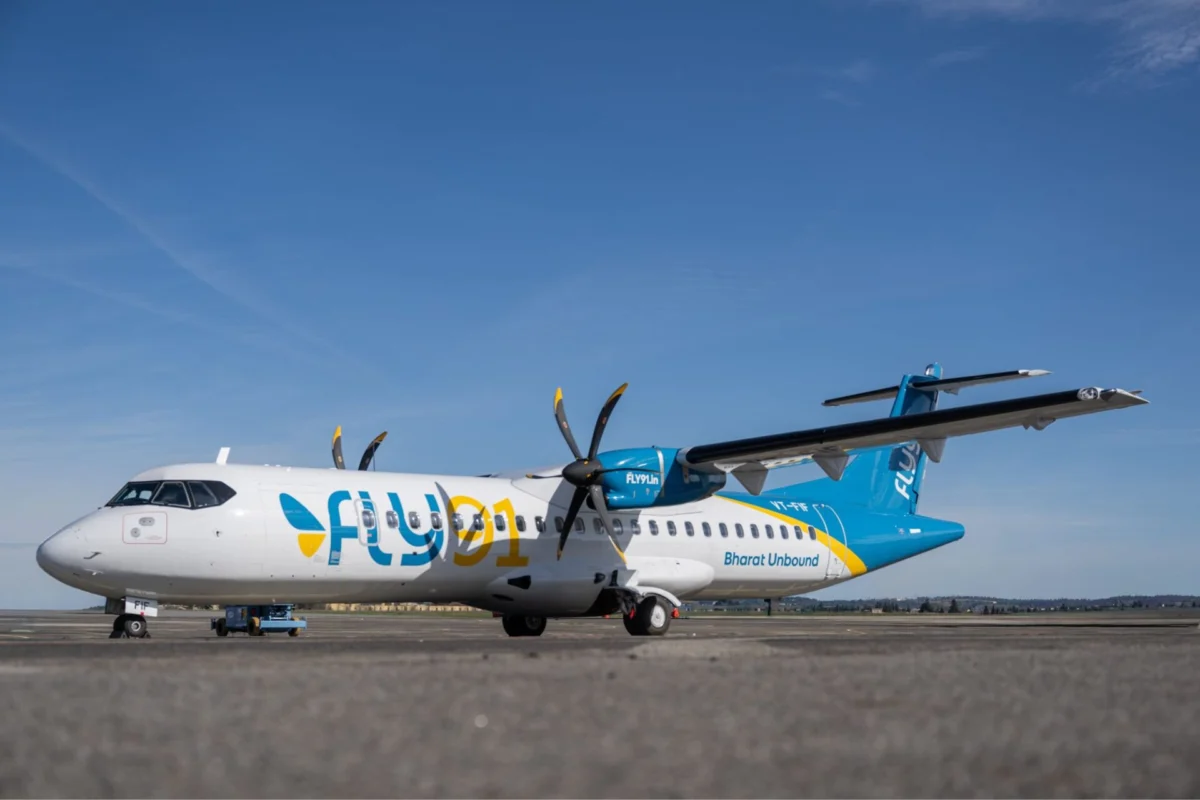
Indian regional carrier FLY91 has placed a firm order for 40 ATR 72-600 aircraft in a deal valued at around $1 billion, marking the largest ATR order in nearly a decade and the biggest ever placed by a regional airline.
Deliveries are scheduled between 2027 and 2032, and will grow the Goa-headquartered airline’s fleet from six aircraft to 60 within five years.
The order, announced on September 3, 2026, also lifts ATR’s total order intake for 2026 to 54 aircraft, already surpassing the manufacturer’s total net orders for the whole of 2025 with more than three months still left in the year.
A bet on India’s untapped regional market
The deal comes less than three years after FLY91 launched operations and reflects the airline’s confidence in what remains a largely untapped market.
According to ATR’s own Mobility Monitor data, approximately 4.6 billion intercity journeys are made across India each year, but only around 3% of those are currently by air, highlighting the scale of the opportunity for regional aviation.
FLY91, officially registered as Just Udo Aviation Private Limited, currently operates more than 280 weekly flights connecting 13 destinations, primarily linking tier 2 and tier 3 cities across states including Maharashtra, Karnataka, Andhra Pradesh, and Kerala, as well as the Lakshadweep Islands.
The airline was built around a single premise, according to founder, Managing Director, and CEO Manoj Chacko: that India needs a focused, dedicated regional aviation network connecting emerging cities directly and efficiently.
“This 40-aircraft order is the catalyst for our next phase of expansion,” he said. “The ATR 72-600 offers the ideal operating economics for our network.”
Lower emissions, lower costs: why the turboprop fits India’s regional playbook
In a market where fare affordability is critical and fuel represents a significant share of operating costs, the ATR 72-600 is positioned as a workhorse for short regional routes.
ATR, a joint venture between Airbus and Leonardo, says the turboprop emits 45% less CO2 than similar-size regional jets, a key consideration as India scales its regional connectivity ambitions.
ATR CEO Nathalie Tarnaud Laude said the company was proud to support FLY91’s next phase of development, noting that the expansion aligns closely with the Indian government’s ambition to strengthen regional connectivity through its UDAN program.
“The ATR 72-600 combines unmatched economics, efficiency, and reliability, enabling airlines to offer affordable fares while connecting millions of passengers to opportunities across India,” she said.
ATR aircraft are currently flown by around 200 airlines in more than 100 countries and open an average of 120 new routes every year, according to the manufacturer.
Government backing for regional growth
India’s Union Minister for Civil Aviation, Kinjarapu Ram Mohan Naidu, framed the order within the country’s broader aviation strategy, calling regional connectivity “a fundamental pillar of India’s aviation growth story.”
He said investments of this scale in regional capacity will play a vital role in bringing more tier 2 and tier 3 cities into the national economic mainstream, particularly as the government rolls out its next phase of the UDAN regional connectivity scheme, known as UDAN 2.0.
ATR estimates the expanded regional network could support up to 35 million additional passengers as connectivity continues to grow, representing millions of Indians for whom air travel has never been a realistic option before.
The investment behind the airline
Harsha Raghavan, Chairman of FLY91 and Managing Partner of Convergent Finance, the airline’s lead investor, said the order represents a defining milestone.
Convergent Finance, an investment management and advisory firm, has backed FLY91 from its founding, driven by what Raghavan described as the convergence of two powerful opportunities: India’s growth story and the potential of regional aviation.
“We believe regional connectivity will be a critical enabler of India’s next phase of growth, linking emerging economic centers, businesses, and communities across the country,” he said.