
AeroTime columnist Ann Cederhall is an instructor with IATA on Airline Distribution Strategy and with Aeroclass on Airline Retailing, Ann is a frequent speaker and panelist at industry events. She has authored numerous highly regarded articles and white papers in the travel industry press. As one of the owners of the consulting firm LeapShift, Ann brings an extensive track record of delivering business value in project and product management roles worldwide.
The views and opinions expressed in this column are solely those of the author and do not necessarily reflect the official policy or position of AeroTime.
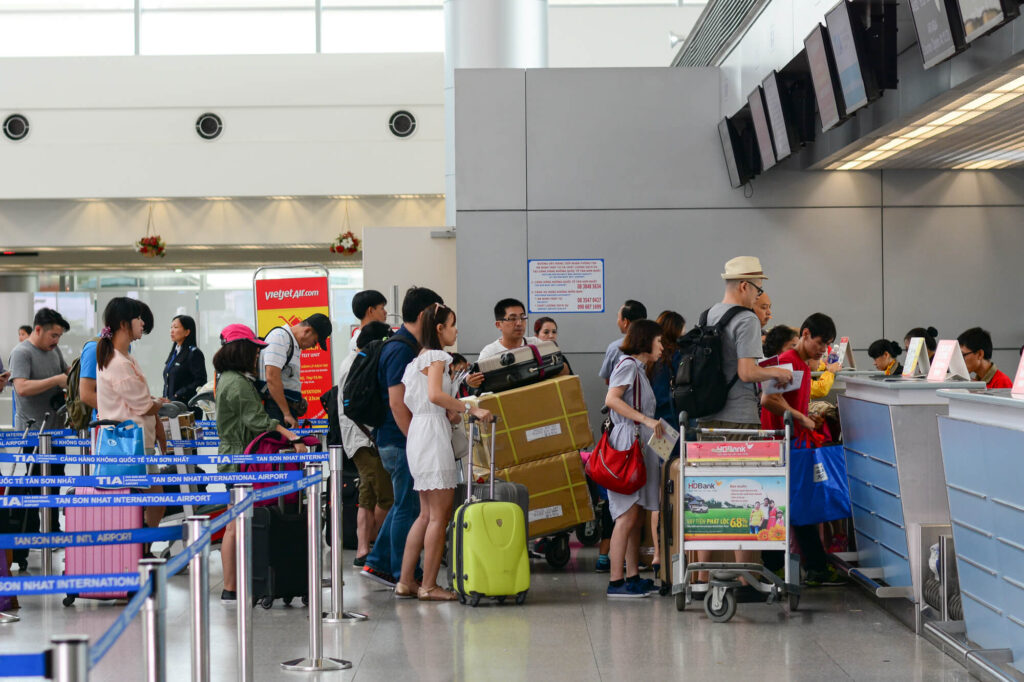
While everyone talks about AI as the future of travel, a crucial segment remains firmly stuck in the past and feels like an episode of ’That 70s Show’. That element is group bookings, adeep, dark corner of the travel industry which desperately needs modernization. I often wonder about those families where more than nine travel. They must have a wealth of information to share about the hurdles and challenges they have experienced. But groups aren’t just large families traveling together; they also include bachelor/bachelorette parties, company offsites, sports teams, and affinity clubs. All these customers are currently funneled into a broken, often manual process.
If you test most traditional airline websites, a request for 10 or more people triggers an immediate roadblock. Most airlines stop at nine passengers (strangely American Airlines stop at seven). This cutoff is rooted in outdated Passenger Service System (PSS) and Global Distribution Systems (GDS) limitations, forcing the traveler into a separate “group entry”. This is where the customer experience becomes dire. You are typically forced to submit a tedious form that asks irrelevant questions like “group name” (does any casual customer understand the ‘why’ behind that?). Worst of all, some airlines respond with the staggering estimate: “We will get back to you within two days!”
At least four North American airlines have managed to automate the process, but they are the exception. Across the industry, one consistent complaint from travel agents is that airline group desks are chronically understaffed.
Two days just for a quote! In today’s instant commerce environment, that time lag guarantees that the sale will be lost. While some low-cost carriers, such as easyJet (up to 40 bookings) and Ryanair (up to 25) have worked around these limits, for most airlines, the process remains slow, manual, and utterly unoptimized.
With today’s technology you have all the data you need to make a decision whether to say yes or no. Isn’t that a minimum ask from an airline, to say yes or no to a group request in real time? The opportunity is clear: modernizing group bookings isn’t just about automation; it’s about unlocking massive, easy revenue currently lost to antiquated systems.
I recently asked several travel communities what people do when booking for a party larger than nine. The answers revealed a frustrating, fragmented landscape. Many rely on calling an agent, some risk missing discounts by booking individually, and most agree they need individual payment options – a crucial need, especially for insurance purposes, which is where a solution like Hands In comes in, well, handy (I couldn’t resist the pun).
It is abundantly clear that group bookings represent both an area ripe for massive improvement and an untapped revenue opportunity for retailers.
The myth of group risk
Airline Revenue Management often dismisses groups as being “too big a risk.” But what are these perceived risks, and are they truly unavoidable?
When I ask, I consistently hear the following:
Financial leakage: Risks linked to inventory loss from late cancellations or reductions in group size, making seats difficult to resell.
Suboptimal pricing: Group quotes are provided far in advance, leading to inaccurate forecasting. This results in the airline frequently underpricing or overpricing the commitment.
Administrative drag: Group sales involve a high administrative burden due to manual processes for handling deposits, tracking name changes, and managing contracts. This stems directly from traditional airline reservation systems not being designed for this complexity.
Slow response times: The reliance on manual processes means getting a simple group quote can take days or even weeks, a staggering delay in today’s instant commerce world.
The path to profit: Automation is the answer
Hearing these issues confirms that the underlying technology is outdated, making groups an overlooked opportunity. To me, this is low-hanging fruit because every single challenge above can be solved with automation.
Here are mykey recommendations for transforming this segment:
- Implement technology and automation
- Optimize with orchestration: Introduce an Order Management System (OMS) to orchestrate and optimize the Group Management Systems (GMS) and other revenue systems.
- Deploy Group Management Systems (GMS): Implement GMS to instantly automate quoting, enable real-time inventory management, and facilitate digital contract management.
- Bypass legacy: It is essential to bypass the GDS entirely and ensure that groups are booked directly via the airline’s own channels.
Structure policy for protection
Financial safety nets: Implement a robust penalty structure featuring non-refundable deposits, tiered payment schedules, and clear penalty clauses for attrition.
Dynamic pricing: Allocate inventory based on demand by offering time-sensitive quotes and steering groups toward low-demand flights, offering customers attractive alternatives.
By combining efficient automation with strong, financially sound contractual policies, airlines can finally transform group travel from a perceived high-risk liability into a stable, predictable, and highly profitable revenue stream.
The unlocked opportunity: Beyond legacy group bookings
Airlines are currently leaving an enormous amount of money on the table by not effectively tapping into this side of the business. Modernizing group travel is not just about efficiency; it’s a dual opportunity to significantly drive revenue growth and deeply enhance customer loyalty by fixing a process neglected for decades.
Achieving this requires the strategic use of orchestration via an Order Management System (OMS). The OMS is critical because it removes the outdated Passenger Name Record (PNR) constraints. It allows the airline to put all “split PNRs” (individual bookings that belong to a group) into a single, cohesive order. This structure allows the airline to treat customers as individuals while still managing them as a group.
With an OMS, the airline can leverage a marketplace model to integrate a seamless group portal directly into the booking path. This enables powerful personalization.
Individual upselling: Easily offer targeted upsells like seating requests, comfort packs, travel insurance, or eSIMs to each person.
De-homogenization: Stop treating the group as a single, homogenous entity and recognize the unique needs and value of every traveler.
Redefining the “group”
This transformation also forces us to address an important question: What truly constitutes a “group”? Why are we bound by narrow, 50-year-old definitions?
A group is any constellation that generates shared revenue or loyalty. Imagine the promotional opportunities for travelers going to the same destination from various origins! This setup is ignored by legacy systems but represents immense potential.
Airlines could facilitate new revenue models, such as offering a gift from the host (like a bottle of champagne or an amenity pack on arrival) purchased within the group’s overall order. Even offering a small discount or a promotion to recognize the loyalty of a simple 10-person booking could fundamentally differentiate the airline and create a powerful marketing hook.
It is time for airlines to put significant focus and investment into this area.
The path is clear: by prioritizing automation and driving efficiency in group bookings, airlines can immediately tap into this, forging a robust and highly profitable revenue stream.