
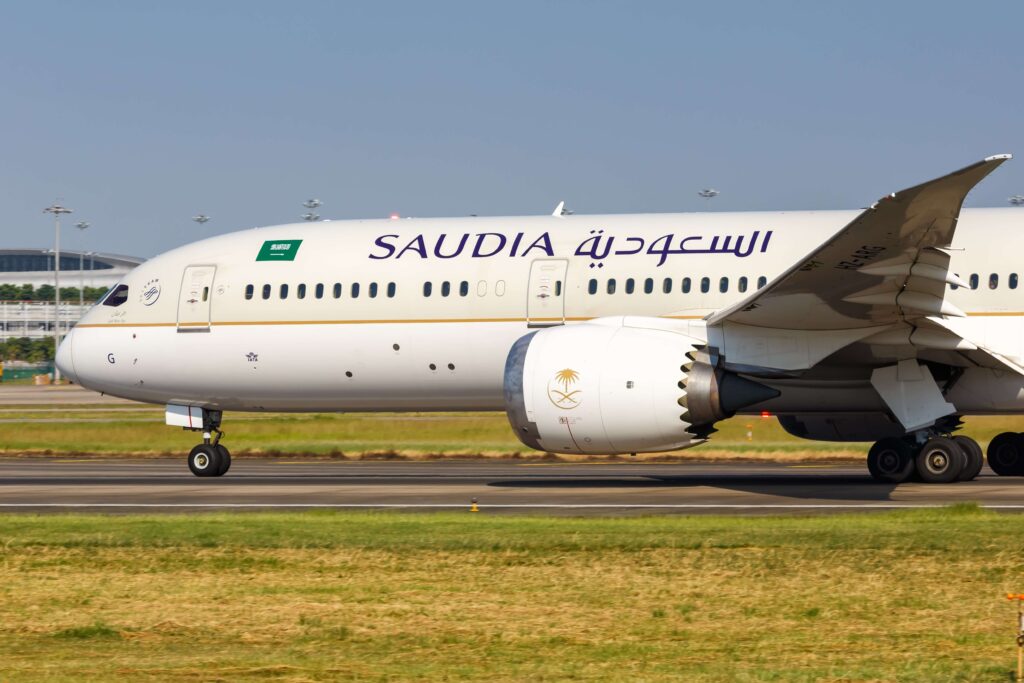
Yemen’s Houthis warned airlines against using Saudi Arabian airspace on October 5, 2026, as renewed fighting in Yemen added to the risks facing commercial aviation across the Middle East.
The Houthi-run Humanitarian Operations Coordination Center said Saudi skies would become a “theater of operations” for its armed forces, according to a statement reported by the group’s Saba news agency. Reuters separately reported that the group said Saudi airspace would remain unsafe as long as what it described as Saudi aggression continued.
The warning did not identify specific airports, routes or a timetable for military action.
The statement followed the launch of a Saudi-backed offensive against Houthi forces. Coalition spokesman Maj. Gen. Turki Al-Maliki said 100 fighter jets participated in the opening hours of Operation Dawn of Yemen and claimed that 324 targets had been destroyed.
The European Union Aviation Safety Agency (EASA) had already issued new guidance for Saudi airspace on September 30, recommending that operators avoid a defined portion of the Jeddah Flight Information Region at all altitudes and exercise caution elsewhere in the region.
EASA said Houthi missile and drone attacks had expanded beyond southern and southwestern Saudi Arabia, reaching areas around Riyadh, Tabuk and Yanbu. It warned that those attacks, along with air-defense activity, exposed civilian aircraft to misidentification, interceptions and falling debris.
EASA urged airlines to review the risks before flying and be ready to change their plans with little warning.
US and Israeli strikes on Iran on February 28, 2026, and subsequent Iranian retaliation have prompted temporary airspace closures and restrictions across the region. EASA continues to recommend against flights over Iran at any altitude, citing the potential for renewed military action and the risk that air-defense forces could misidentify civilian aircraft.
The agency also recommends avoiding Jordanian airspace at all altitudes. Its separate Gulf advisory tells operators to avoid airspace over waters within the Bahrain, Kuwait, Doha and Emirates flight information regions, except where necessary for airport arrivals and departures. It also advises against flights over Gulf of Oman waters within the Muscat flight information region west of longitude 58 degrees east.
Iran’s own international air connections have also come under pressure from US sanctions. On September 8, the US Treasury announced sanctions targeting the remaining active Iranian airlines and warned companies providing support to the sector that they could face US action.
International flights at Tehran’s Imam Khomeini International Airport fell 42% following the September 23 sanctions compliance deadline, AFP reported on October 1, citing Flightradar24 data. Some connections, including services to China and Turkey, continued.
Iran responded to the US sanctions by threatening neighboring airports. Mohsen Rezaei, secretary of Iran’s Supreme National Security Council, said on September 23 that countries cooperating with US efforts to stop Iranian flights could see their own airports prevented from operating.
Iraq announced on October 2 that it had secured a US sanctions exemption allowing Iranian airlines, excluding Mahan Air, to operate 40 daily flights to and from Najaf International Airport. Baghdad had sought the exemption to accommodate religious pilgrims and people traveling for medical treatment and education after sanctions disrupted flights.