
What happens when an airport loses its main hub carrier, its next largest airline and almost all of its domestic connectivity in a short stretch of time?
In the last decade, Albrecht Dürer Airport Nürnberg (NUE), an airport which serves as a gateway to the rich Bavarian region of Franconia, has had to find out the answers to these questions.
Air Berlin, the main airline based at the airport, collapsed in 2017 after years of financial difficulties and the progressive downsizing of its hub operations at Nuremberg.
Next to go was the second largest operator at the airport, Germania Airlines, which had four aircraft based in Nuremberg. The airline went out went out of business just as it was stepping in to fill the gap left by Air Berlin.
Then, in 2020, just as traffic was returning to previous levels, the COVID-19 pandemic hit, taking away some key domestic routes (which have never come back) and collapsing traffic numbers.
And, yet, despite lacking a “home airline” to fall back on, Nuremberg Airport has still managed to bounce back. In 2025, the airport registered its highest-ever turnout, with some 20 operators carrying four-and-a-half million to and from 60 destinations.
A strategy of diversification has managed to attract a mix of airlines, while, at the same time, the airport has leveraged some of its unique advantages to become also one of the largest hubs in Europe for medical air services. These include its capability to operate around the clock, which is a rare occurrence in Germany, and its central location.
AeroTime traveled to Nuremberg Airport to meet with its Managing Director, Michael Hupe to learn more about its successful turnaround and the ways a relatively small airport can compete with industry giants in its vicinity such as Munich (MUC) and Frankfurt (FRA).

A story of resilience
Hupe is an industry veteran who, prior to becoming head of Nuremberg Airport in November 2013, held senior financial roles at Fraport and spent more than a decade as CEO of Dresden Airport (DRS). When he took on his current responsibilities, Nuremberg Airport was already beginning to feel the first tremors of what would become a prolonged crisis.
Air Berlin, which accounted for around 60% of traffic, was in the process of restructuring its business due to struggling to straighten its finances.
Air Berlin had established a winter hub at Nuremberg in the late 1990s, making the airport its most important hub after Palma de Mallorca (PMI). Under this model, aircraft arrived in the morning from destinations across Germany, and then flew passengers to the Mediterranean, the Canary Islands, Egypt, and other sun-and-sea destinations. The same aircraft then returned in the evening, taking the holidaymakers back to their airports of origin.
However, as Air Berlin’s finances deteriorated, it began scaling back the Nuremberg hub, closing it down permanently in 2013, with the airport losing around one million passengers, almost a quarter of its traffic. Air Berlin ended up collapsing entirely, shutting down its operations in 2017, right after its main shareholder Etihad Airways withdrew financial support. Nuremberg lost another million passengers almost overnight.
Adding insult to injury, less than two years later, in February 2019, Germania, then the airport’s second-largest operator, also filed for bankruptcy, taking away another 500,000 passengers a year.
Fast-forward to April 2026 and the airport is not only handling more passengers than ever, but it has set its sights on new routes that could bring not just quantitative but also qualitative growth. This would open up whole new regions, including the Nordic countries and the Middle East.
The Nuremberg comeback story appears far from finished. So, how did the airport bounce back?
“In Air Berlin times, it was very difficult for other leisure carriers to step into this market, but shortly after they went bust, other airlines stepped in,” Hupe said. “This was the case of SunExpress, TUI, Corendon Airlines and, more recently, Marabu Airlines. This worked quite well and after the pandemic, we were able to attract some additional airlines.”
“We also have Eurowings,” he continued. “But they have a shortage of aircraft, so we will see the aircraft based here leave by the end of April.”
One of the airlines that stepped in to fill the gap left by Air Berlin was Ryanair. The Irish low-cost carrier soon became the largest single airline at the airport by number of passengers.
In fact, just days before this interview took place, Ryanair’s CEO, Eddie Wilson, and its CCO, Jason McGuiness, held a press conference in Berlin in which they lambasted German airports in general for their perceived lack of competitiveness. However, the pair did recognize that some airports had done a better job than others. Was Nuremberg one of those?
“We kept our price level during the pandemic. We also reinvented our list of charges, which is public and non-discriminatory as it has to be, and devised support mechanisms based on the number of passengers transported,” Hupe said. “We have an incentive scheme for new routes, for instance. So, if Ryanair is setting up new routes, as they just did with Morocco, they get a substantial reduction on our airport charges for up to five years.”
He added: “If they [the airlines] have a good mix of new and well-performing routes and they are increasing the number of passengers; they can keep their fee levels stable.”
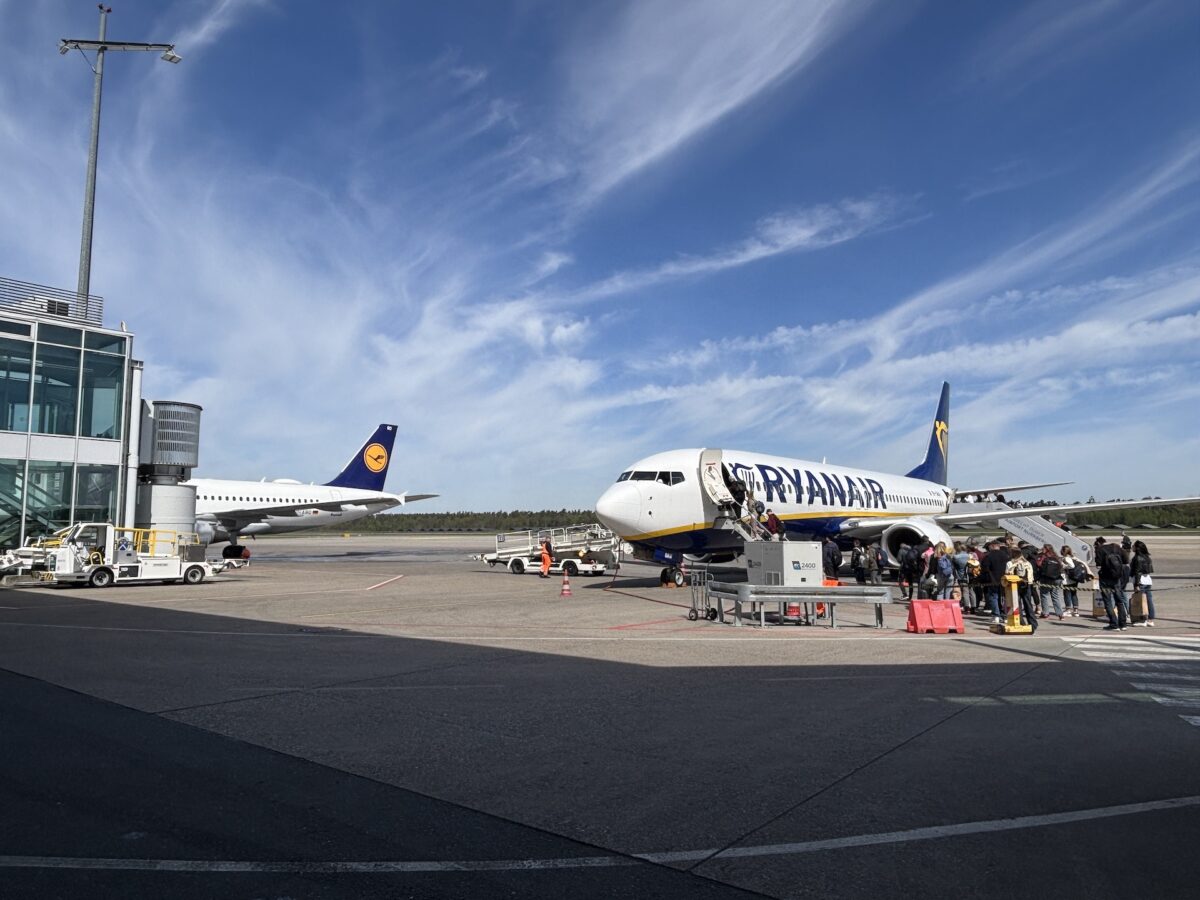
Hupe also mentioned the work of other airlines such as Wizz Air in developing the VFR (Visiting Friends and Relatives) market at Nuremberg.
“What developed pretty well in the last couple of years are low-cost routes driven by the VFR market. This is something we didn’t see some 10-15 years ago,” he said. “I wouldn’t say it has been a traumatic shift, but our focus has shifted to this market from business-driven and classical leisure traffic.”
He added: “We have quite a close-knit network, for instance, to southeastern Europe. We’re serving five Romanian airports, as well as Varna (VAR), in Bulgaria. Wizz Air is serving Tirana (TIA) and Chisinau (RMO) with A321 aircraft and filling it to 99%, so they are doing a very good job.”
Turkish routes are also important for Nuremberg. In addition to the thrice-daily service Turkish Airlines operates to its Istanbul hub (IST) and Pegasus’ year-round service to Istanbul – Sabiha Gökcen Airport (SAW), a number of additional Turkish destinations, serving both the leisure and diaspora markets, are operated during the summer.
Two hubs too close for comfort
Nuremberg Airport serves a sizable catchment area of around five million and an economy with a fair number of large international businesses, which includes household names such as Adidas, Puma, and Siemens as well as one of the largest trade show venues in Germany. But it also has to contend with the fact that Lufthansa’s two largest hubs, Frankfurt and Munich, are within driving distance.

Until 2020 Lufthansa operated an intra-Bavarian service between Nuremberg and Munich, a mere 170 km away, mainly with feeder traffic in mind.
As of April 2026, the only scheduled feeder route operated by Lufthansa at Nuremberg is the five-daily connection to Frankfurt.
The German flag carrier often visits Nuremberg to carry out another special type of mission: flying the German National football team to its international engagements after training at the grounds of official sponsor Adidas, located in nearby Herzogenaurach.
This, however, falls short of Hupe’s expectations.
“I think we are underserved,” he said. “We have certain disadvantages, of course. One is that we are so close to Munich, and we also see, for political reasons, there is no possibility of getting this route back. So, why do I say it’s underserved? I see that, especially from the Lufthansa Group.
“I think KLM, Air France and SkyTeam are doing a good job. We have four dailies to Amsterdam, three to Paris. So, there is good connectivity to these two airports, but we have a single hub link for the Lufthansa Group.”
Hupe went on to explain how before the pandemic, Nuremberg was connected to four or five of Lufthansa Group’s hubs.
“For instance, the quickest connection to London was via Dusseldorf with Eurowings, but we lost the Dusseldorf (DUS) route, which was also a typical point-to-point domestic route,” he said. “We also lost Zurich (ZRH) and Vienna (VIE), and the main reason is that neither Austrian Airlines nor SWISS have currently the small aircraft to serve this route on this sort of frequency, which makes hub connectivity feasible.”
The executive was clear about the reasons for the gap.
“Looking at the hub connectivity into Zurich and Vienna, what’s missing is 76-seater aircraft,” he continued. “Currently, the smallest possible aircraft on the route to Zurich would be at least an A220, and that’s already double the size of what we had had in the past. This makes it difficult to generate enough frequencies to have short transfer times.”
The lack of long-haul connections also limits the amount of cargo that goes through Nuremberg.
“We have the disadvantage that larger cities in Germany or Europe, which are served by passenger widebody aircraft. They can mix passengers with belly loads, for instance,” Hupe said. “For cargo operators it’s much more flexible to serve Munich or Frankfurt than to set up a pure cargo operation here, but we have had some discussions in the past, and maybe some time in the future it will work for us.”
While, at the time of writing, the Middle East was still reeling from the conflict in Iran, the region still holds promise for an airport like Nuremberg. In this regard, the main obstacle to welcoming carriers from the UAE does not appear to be the lack of demand, but bilateral rights.
“We already had services to Dubai and Abu Dhabi. This was mainly driven by two operators, but they stepped out of the business some two years ago,” Hupe said. “It’s a matter of traffic rights to most of these countries. The points of entry in Germany from Abu Dhabi and Dubai are limited to four airports and these are already covered by Frankfurt, Munich, Dusseldorf, and then either Berlin or Hamburg.”
“On the other hand, German carriers do not face this restriction and would be able to fly to these destinations,” he added. “We are in talks with Condor to see whether it would make sense in two to three years.”
The air ambulance hub
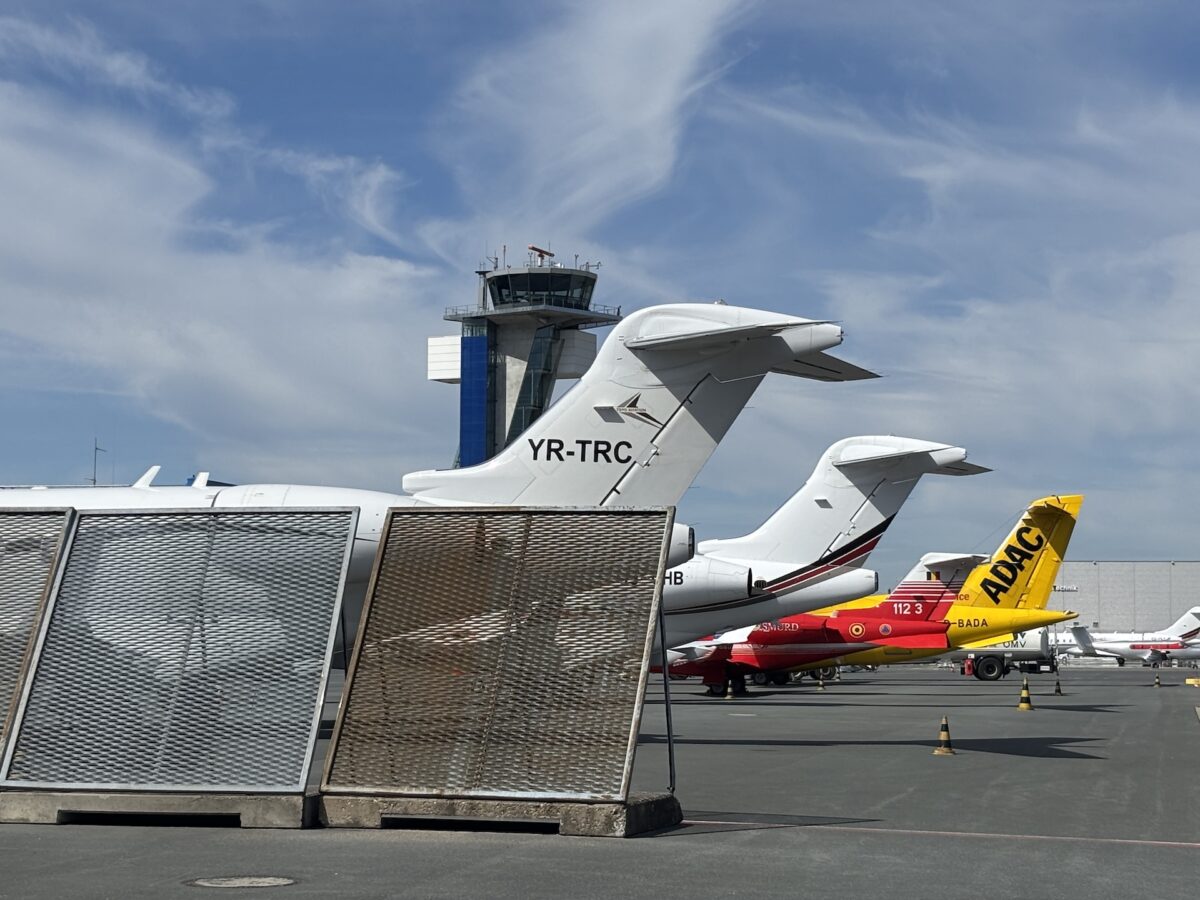
Regardless of what happens with Nuremberg’s long-haul goals, there is one specific area in which the airport is a leader thanks to its ability to operate 24/7: medical air services.
The airport is the main base for Aero-Dienst medical repatriation and air transportation services. Aero-Dienst operates a fleet of medically-equipped aircraft on behalf of ADAC (Allgemeiner Deutscher Automobil-Club), an organization with millions of members in Germany, which acts as the country’s largest automobile club and provides services to its members such as medical insurance.
Also based at Nuremberg Airport is FAI Aviation Group, which, in addition to an executive aviation and a maintenance, repair and overhaul (MRO) business, also operates an active air ambulance service using Bombardier Challenger 650 aircraft.
[AeroTime is planning the publication of an in-depth feature about FAI Aviation – ed. note]
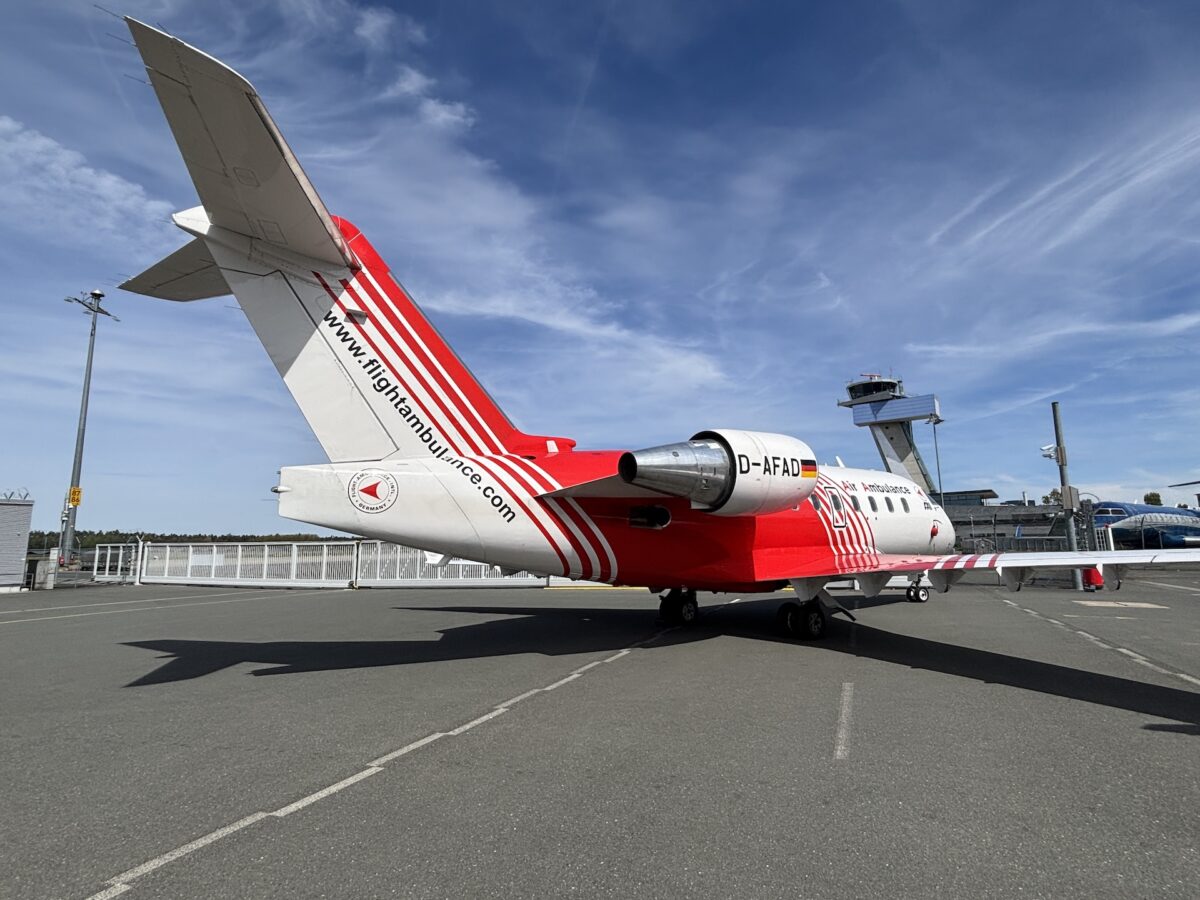
A third medical air services operator, DRF, is also based at the airport, from where it operates a fleet of medicalized helicopters in support of emergency services.
“One of the reasons they are here is the possibility of having a 24-hour operation. They have to be in the air within two hours whenever the call comes,” Hupe said. “Aero-Dienst are known as ‘The Yellow Angels’ [due to the yellow livery of its aircraft – ed. note], and here in Nuremberg, they really have wings.”
“Then there are also FAI Aviation and DRF. Here they have enough space to set up their maintenance basis and hangars, so they invested a lot here,” he added. “They bring additional movements to the airport and help stabilize our business.”
These are not the only MRO activities at Nuremberg; Ryanair also has a two-bay hangar for its Boeing 737 aircraft. The Irish low-cost airline benefits from Nuremberg’s relative closeness to some of the carrier’s other bases, Hupe explained.
He added: “It’s very flexible for them to have this maintenance base here and serve aircraft which are based in the vicinity, within an hour of flight or so.”
Blue Ocean Strategy
When talking about the future growth and development of the airport, Hupe likes to talk about what he defines as “Blue Ocean Strategy”. The concept is borrowed from a popular 2005 business strategy book authored by W. Chan Kim and Renée Mauborgne.
But what does Blue Ocean Strategy mean in the context of Nuremberg Airport?
“Well, if you’re looking at the setup here in our region, you realize that unfortunately we have the two largest German airports within one-and-a-half hours, whether by plane, by train or by car,” Hupe said. “Our location between these two airports will not change. But if you want to make the best out of it, you have to realize that, unless you are a member of the Lufthansa Group or Star Alliance, competition at these two airports will be very intense.”
“Whether you look at the volume of passengers, number of flights or networks at both of these airports, 70% is driven by Star Alliance airlines,” he continued. “If you’re a third-party airline, in my opinion, it’s not strategically very wise to fly against these airlines on this kind of route.”
In this context, Hupe added, an airport like Nuremberg provides airlines with an opportunity to grow in an environment that is relatively sheltered from this competitive pressure.
“If you’re looking at an airport which also serves a great area, with less or no competition and proven market demand, you’d better come to our Blue Ocean,” he said. “You have a lot of sharks in the ’Red Oceans’ like Frankfurt and Munich.”
According to Hupe, these airports are “Red Oceans” because attempts to compete head-on with the dominant carriers often end in a bloodbath.
Hupe explained that the airport is talking to an airline in Greece which is interested in growing in Germany. “We told them, ‘Why are you going to fly against Aegean [Star Alliance member – ed. note] and Lufthansa? Generating a profit will be challenging!’.”
He added: “Infrastructure at Munich and Frankfurt is built to support network airlines. If you’re looking for point-to-point services, the infrastructure over there is not customized for you. Our service is much quicker; you’re not wasting time, taxiing, waiting for passengers, for the transfer baggage. We are much more efficient for point-to-point airlines than going to Frankfurt.”
“For instance, if you have a pushback here you can take off in three or four minutes,” he continued. “In Frankfurt, your taxiing time is no less than 10-15 minutes. And if you’re lucky, you may be number five in the sequence. It’s much more efficient operating out of Nuremberg. It gives you much more productivity.”
The Blue Ocean approach is a key component of Nuremberg Airport’s pitch to new airlines.
“We have already mentioned our charge structure and incentives, which give you a great upside in setting up a new route,” Hupe said. “From the competition side, here you can set up your own price scheme, and you can be number one in those new markets.”
The German Aviation Landscape
Hupe believes that Germany is still far from being fully competitive when it comes to the current airport fee structure.
“We are in a relatively bad position when it comes to charges. If it comes to cost per departing passenger, we’re around €15 to €20 more expensive than, for instance, Prague,” he said. “I am just talking about official fees, like taxes, security fees, and air traffic control (ATC). Fees have doubled since the pandemic and those are charges that don’t depend on us, depend on the regulation.”
“What happens is that the higher these fees are, the less we can ask from the airlines, so, they put a lot of pricing pressure back on us,” he added. “Because of that, it’s not possible to raise airport passenger charges in Germany, only to a very small extent. As you can imagine, personnel are getting more and more expensive, fuel gets more and more expensive, also for us, for the energy we consume at the airport.”
At this point in our conversation, we looked at the other side of the runway where a large array of solar panels covers part of the airport’s side perimeter. Hupe, who has a background in industrial engineering, has a strong interest in this project.
“We cover four to five times our demand, so everything else is pushed to the energy network,” he said. “Our plant has a peak production of about 13 megawatts, while on a sunny day we only need 2.5 to three megawatts for our own needs. At the moment any surplus has to be put into the general net, but we will be adding batteries by the end of this year so that we can use this energy even during nighttime.”
Hupe also plans to use peak solar power production to store energy by heating up water.
“That would make a lot of sense because in the morning or at night we need a lot of energy to heat up the terminals,” Hupe said. “This would make fantastic use of power. This is something we’re talking about in two or three years from now.”
When it comes to the actual physical capacity of the terminals, Hupe thinks the airport can do with the current facilities for the time being. Instead, he said he prefers to concentrate on optimizing the current facilities and streamlining processes at any potential bottlenecks.
“In the summertime, we have slot coordination for night flights because passport control and baggage reclaim areas are the current bottlenecks,” he said. “Security checks were a bottleneck half a year ago, but we have new technology installed, an investment made by the State of Bavaria, and it no longer is. We are also looking to add a fourth baggage belt and are already looking for additional space for kiosks, for counters and for passport control.”
Hupe said he fears that any major physical change at the airport may entangle the airport in red tape and endanger the agile, 24/7 operational set up, which has proved to be a successful formula for constant growth.
“We are not able to increase the size of the terminal significantly because as soon as we are getting the planning permission for that, our operating license will be changed,” he added. “We have to optimize within the structure we currently have.”
The airport CEO highlighted several possibilities to do this.
“The main issue is how to distribute traffic throughout the day. You can push down the peaks and broaden the operations, which is much more efficient when it comes to staffing and gives you great upside regarding passenger numbers.”
The airport has also invested in an enlarged duty-free area and new catering facilities with extra natural light. Some of the additional space has been utilized to highlight local specialties, including a small indoor beer garden.
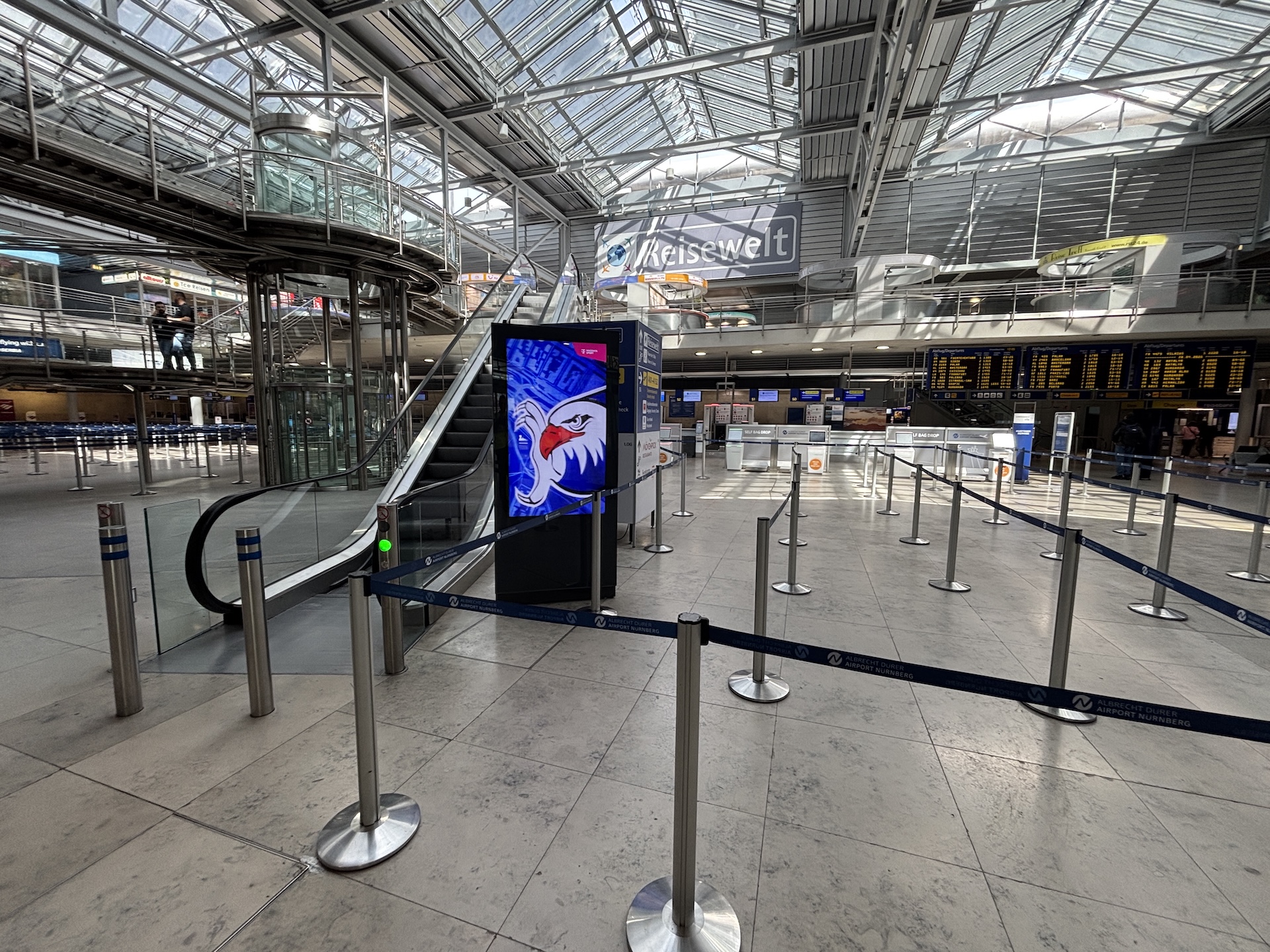
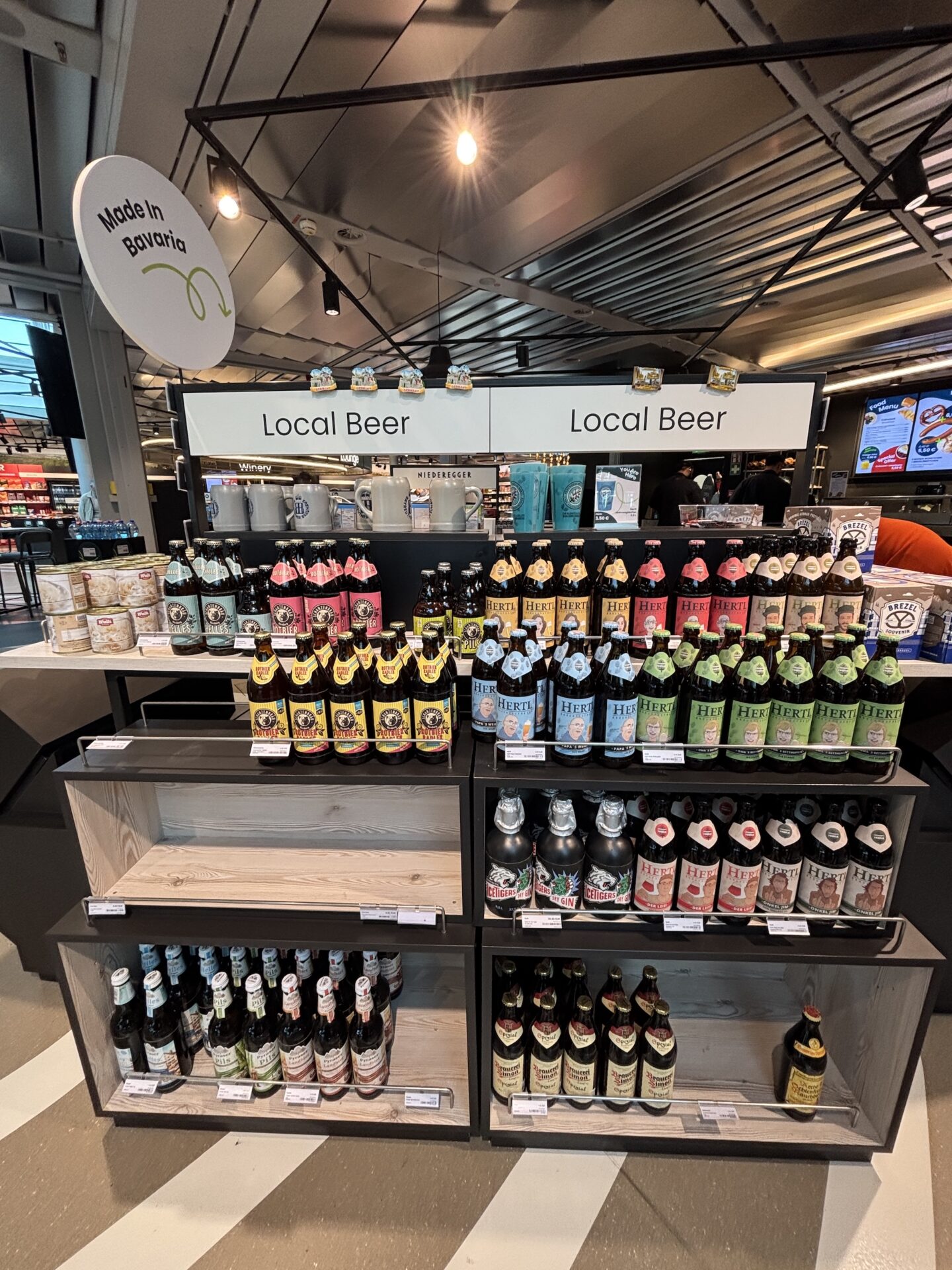
“We are cooperating with the German tourism board and the Nuremberg tourism board, with the tourism boards of Franconia and Bavaria and with companies in the tourism industry,” Hupe said. “We run campaigns about local food and beverages. We set up press conferences, and work with bloggers, journalists, and influencers at the new destinations served from the airport. The purchasing power in Turkey, in Romania and so on is increasing. We show them a great city.”
“10 years ago, the hotel business in Nuremberg was completely driven by business travelers, mainly because of the trade fairs and exhibitions, but also big businesses, like Adidas, Puma and so on,” he added. “But we have now become more of a tourist destination, for instance, for Italians or people from Spain, who come to see our famous Christmas market.”
“We’re also much more seasonal because we no longer have that much domestic traffic, which was quite stable throughout the year,” he continued. “We are working on that, and I think we are in a good position because a lot of people have already seen Paris, London or Vienna, so now they go to cities like Krakow or Nuremberg.”
So, what are the next goals for Nuremberg Airport?
“I would say 6,500,000 passengers per year can be relatively easily handled within our existing infrastructure,” Hupe said. “We still have a good upside, as long as travel does not get much more expensive due to increased oil prices [at the time of our interview oil prices had experienced sudden spikes due to the conflict in the Middle East – ed. note]. Hopefully, this is going to flatten out. We have some untouched potential for VFR business.”
A hypothetical end to the war in Ukraine could unlock another source of growth for Nuremberg Airport, which has sizable populations of people with Ukrainian and Russian roots living in its catchment area.
“Before the pandemic, we had four or five flights a week to Ukraine, and the demand will increase because many Ukrainians will stay here,” Hupe said. “We’re talking about at least daily flights to Kyiv, Lviv, and other cities. And a daily flight brings about 100,000 passengers a year.”
“I would assume that we would have the same number of passengers for Russian destinations as well,” he added. “So [that] would give us at least an upside of 300,000 passengers or more.”