
The launch of Riyadh Air has garnered considerable attention from across the world.
But as Saudi Arabia’s ambitious new carrier prepares for its public debut (the carrier having already operated a limited number of flights for company staff), a little known and truly innovative aspect of this project is coming to the fore.
As soon as Riyadh Air begins to take online bookings, the carrier’s prospective customers will be able to experience a new and promising approach to airline distribution and retailing.
At the heart of this experiment is FLYR, a technology company founded by Alexander Mans, a Dutch entrepreneur based in the United States. The company has spent years working on ways to disrupt the travel tech industry.
What makes FLYR’s approach particularly intriguing is its bold claim to eliminate the need for the traditional Passenger Service System (PSS).
The PSS, offered by companies such as Amadeus, Sabre and other smaller players, has been the backbone of airline technology infrastructure for decades, serving as the central system that manages customer bookings, seat assignments, check-ins, and countless other passenger-related functions.
Now, with Riyadh Air as its flagship customer, FLYR has the opportunity to prove its vision of PSS-less travel commercialization at scale.
Recently, AeroTime sat down with Sam Chamberlain, FLYR’s Chief Product Officer to gain a better understanding of what the company is building for Riyadh Air’s grand launch and what it could mean for the future of airline distribution.
“It all really comes down to the fact [that] airlines have been very constrained by the technology they have been using for decades,” Chamberlain said. “When you hear us talk about these constraints, [it is] the PSS that really is the center of the bottleneck.”
The systems currently used by most carriers were designed at a time when the airline business model was a lot simpler, when airlines were selling flights and little else.
“The rest of digital commerce and retail in any adjacent or other industry has changed a lot over the last few decades,” Chamberlain said. “Retailers have been able to sell things in different ways. They’ve been able to maximize profits and margins by retailing more intelligently, and through many channels. Previously, airlines have never been able to do that.”
Airlines were once pioneers in digital retailing, but following that early start, they became stuck with legacy systems. These systems are structured around flights, which makes sense because that was (and to a large degree, still is) the airline’s core business. However, the PSS was conceived at a time when the competitive landscape was significantly less dynamic.
Forget about ancillary and third-party service retailing. Even if we just focus our attention on the airlines’ core offering – the flight – it turns out that traditional booking systems are not that good at handling dynamic pricing.
“Fares are based on a discreet and limited number of possible price points, with each fare class being linked to one of the 26 letters in the alphabet,” Chamberlain explained. “Even if the airline wanted to sell a few dollars more or a few euros more than the price that they had decided, it would be very difficult to do without planning. This is because of the framework, the systems, and the distribution limitations.”
So why didn’t the industry move to more dynamic systems?
“Legacy vendors had reasons not to advance this technology too much, because they also offer the GDS [Global Distribution Systems, a platform which is similar to a PSS but used by travel agents on behalf of customers – ed. note], so they have never been incentivized to modernize these systems,” Chamberlain said. “It is true that there have been initiatives by organizations like the International Air Transport Association (IATA) to introduce new technology standards, such as NDC (New Distribution Capability) and One Order, which defines the concept of a single record of order for anything the airline sells, regardless of the channel it is sold through. These, in theory, provide airlines with more retailing capabilities, but adoption has been slow.”
Likewise, Chamberlain acknowledged that some PSS platforms, particularly those designed with low-cost carriers in mind, are better at handling modern airline retailing and ancillary service offerings.
“That shows that airlines, even when new technology options are available, have been conditioned to act slowly and take minimal risks,” said Chamberlain,
He went on to add that, even then, distribution incumbents have little enthusiasm when it comes to rolling out new distribution technologies because they prefer tickets to be sold through legacy channels, which have historically been their cash-cows.
Riyadh Air: a clean-sheet opportunity
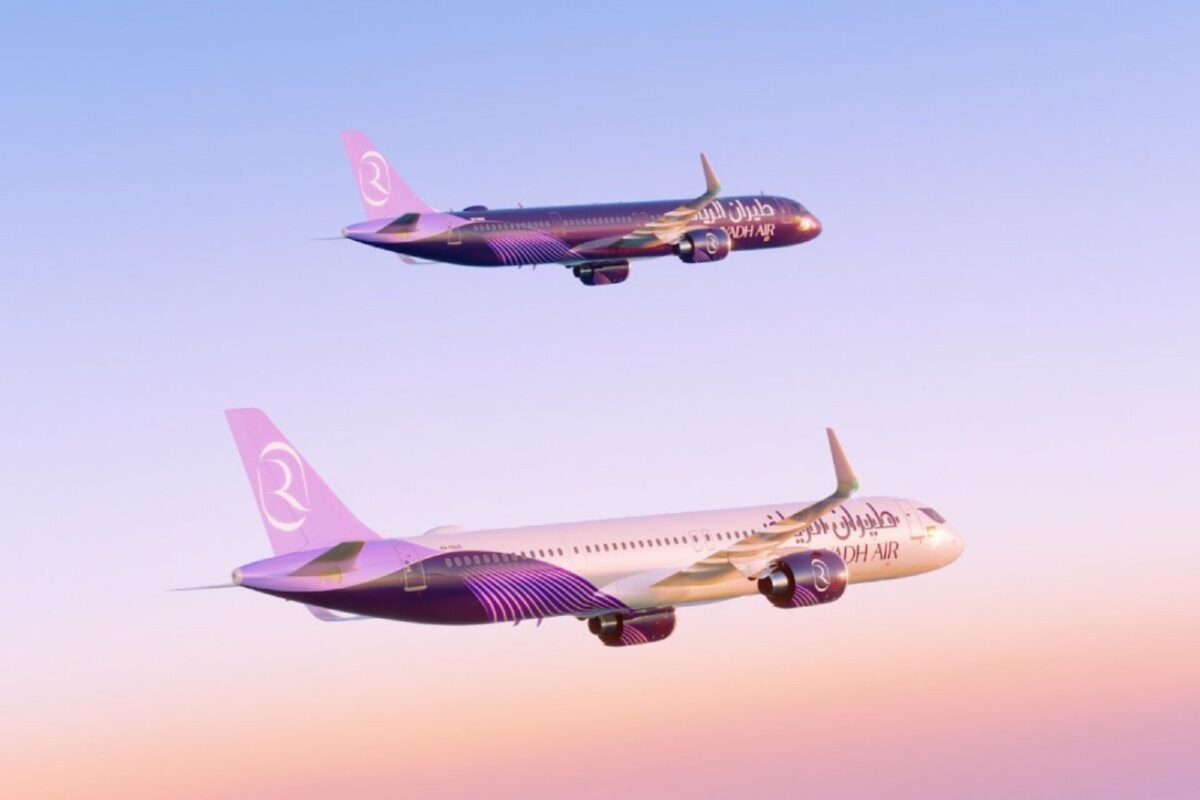
This is why the launch of a new, ambitious full-service carrier like Riyadh Air has provided FLYR with the opportunity to roll out its vision from scratch, and on a grand scale.
At this point in the conversation, Chamberlain outlined the key elements of the PSS-less system predicated by FLYR.
“The value comes first from flexibility, from the ability to sell anything, whether it’s an airfare, an ancillary product offered by the airline, or third-party services. These can be sold along with the airfare. For example, a ticket for an event or a trip to the zoo. It could be anything, really,” he said. “The offer and order systems that are now replacing the PSS are built in a way to allow the airline to sell anything.”
As usual when talking about digital retailing, Amazon is discussed as a benchmark.
“If you shop on Amazon, you are possibly familiar with the idea of putting something in your shopping cart. You might come back to it later. You might even share that with somebody and say, ‘here’s what I want to buy, and you should buy the same thing’. But you have never been able to do that with an airline,” Chamberlain said. “Our idea of flexibility means you’re not constrained to buy a plane ticket in just one transaction. You can buy something and save it in your cart. You can then share that cart. You can invite others to buy something as well.”
Chamberlain illustrated this point with an example.
“Let’s say you’re booking a trip from Lisbon to Madrid for your family, but your brother and his family want to come as well. However, they want to book their own trip separately. You can share your shopping cart, and they can book their trip through the same order. They can even take a different flight. Or let’s say you’re going to treat yourself and fly business class, but you want to put the kids in economy. You can do that, because you have this flexibility.”
“And then there is the idea of personalization, which has been around for a long time, but has been very difficult for airlines to implement,” he continued. “Prices are published through ATPCO [Airline Tariff Publishing Company, a clearinghouse and pricing data provider for the airline industry – ed. note], so even if an airline wanted to personalize, it would still be left with those prices.”
The ‘Offer and Order’ approach
Chamberlain reiterated that, with the ‘offer and order’ approach used by FLYR, airlines can manage their prices much more dynamically and offer true personalization.
“Personalization is not just that your price from Lisbon to Madrid is going to be €200. It’s also the idea of knowing your customer, knowing the intent of travel, understanding the context of which you book your trip, and saying, ’This guy is traveling from Lisbon on Monday morning, and is coming back on Tuesday evening. There’s a good chance he’s going on business. Let’s make sure he has Wi-Fi included so that he can work on the flight. Let’s make sure he can use the lounge when he arrives so he can get ready for his meetings’. The airline can then put together an offer that is €200 or whatever the price, and it includes those things on the fly in real time.”
Chamberlain also explained that with this technology, because of the way order records are kept, factors such as disruption have become easier to manage. It also makes it possible for artificial intelligence (AI) agents to take control of booking management autonomously.
Since the AI agent will know about your preferences, it will be able to rebook you if, for example, your flight is cancelled. But the same AI agent will also make sure you have your preferred seat and that you’ve got the amenities and ancillaries that you wanted. It will even be able to manage services related to that trip but offered by other vendors, such as event bookings.
“This delivers a better experience to the passengers, and it allows the airline to unlock new opportunities,” Chamberlain said. “For example, airlines in alliances or joint ventures will be able to cross-sell each other’s services far more easily, because it will be possible to include everything in a single order.”
To illustrate this point, Chamberlain returned to the topic of the Riyadh Air project. He highlighted how, even though the Saudi carrier has been able to begin from nothing, it does not exist in a vacuum, and not all of its partners will necessarily be onboard with this new technology.
“I said a lot about the limitations of PSS and GDS platforms, but they are still a very important mechanism of distribution, and they will be for years to come,” he said. “And a new airline like Riyadh Air needs distribution.”
For example, many airlines use systems that still rely on EDIFACT, an old teletype-style messaging exchange.
To solve this issue, FLYR has created something it calls a ‘legacy translator’, a piece of software that makes it possible to connect FLYR’s One Order platform to other legacy distribution systems.
“The legacy translator handles all of that,” Chamberlain said. “When an order is created in our system and there is a partner airline involved, the legacy translator takes care of making sure that a PNR [Passenger Name Record, the code that passengers currently receive when booking an airline ticket – ed. note ] is also created for that carrier. A traditional reservation is then created, and if a ticket is required, it can also be created seamlessly. However, both the passenger and the original airline they booked with are only dealing with the ‘offer and order’ system.”
Towards a post-PSS world?
Chamberlain was emphatic about the significance of what FLYR and Riyadh Air are trying to achieve.
“The important thing to note here is that Riyadh Air is the first full-service airline that is not relying on a traditional PSS in any shape or form.”
He continued: “You will hear other airlines talk about experimenting with moving towards ’offer and order’, but underneath is a PSS to either fall back to or to synchronize with. With Riyadh Air, there is no PSS whatsoever. It’s the first time proving the concept with a full-service airline which has joint ventures and relationships with other airlines.”
Chamberlain also holds strong views about the future of the industry and where this technology is heading.
“Legacy airlines can exist without a PSS. They would just need to get rid of it and replace it entirely. It’s a matter of time, and it’s a big thing.”
“Riyadh Air is an interesting and unique case,” he added. “We are both looking at greenfield opportunities. FLYR has no legacy baggage, we don’t have to worry about past investments in PSS tech. Other vendors, even if they’re going to build new offer and order systems, still have to divert a large share of their resources to maintaining and running legacy technology. We don’t have that fear and Riyadh Air doesn’t have that either, because they’re a new airline.”
FLYR understands that entrusting something as critical as digital order management to an entirely new tech platform is a big ask for most airlines. This is why it has embraced a modular design whereby different pieces of this software platform can fit with those of other vendors and deployed progressively over time.
“All airlines will tell you that nobody wants to stay with the PSS, but they are very apprehensive about making such a big move,” Chamberlain said. “That’s why it’s very important to us to find ways to make that move as pain-free and as risk-free as possible.”
According to Chamberlain, he envisages this happening gradually over time, with the two technologies running in parallel at the beginning to mitigate risk and make it more appealing for airlines to make the move.
“We’ve made it so that the risk is low, and the reward is high,” he said. “We will start demonstrating new use cases and opportunities and, bit by bit, airlines will switch more of their network into ‘offer and order’. They will take advantage of more use cases, more personalization, and more third-party retailing.”
“It could be in one year, it could be in five years,” he added. “The end state is that they won’t need the PSS anymore, because the offer and order ecosystem does everything that they need.”