
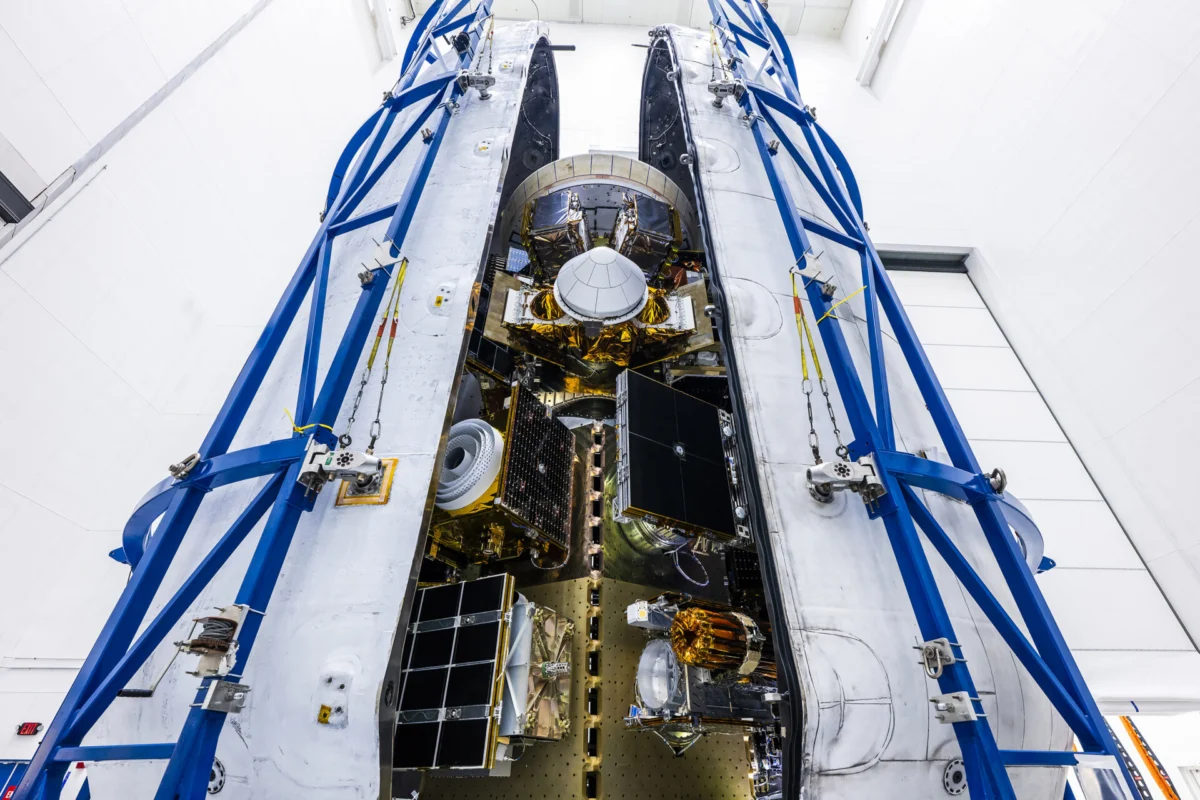
ICEYE confirmed on October 20, 2026, that four of its synthetic aperture radar (SAR) satellites had separated from a SpaceX Falcon 9 rocket flying the Bandwagon-5 rideshare mission from Florida.
In a post on X, the Finnish company stated that all four satellites had been deployed into orbit and that its team was working to establish first contact with each spacecraft.
ICEYE has not provided the satellites’ orbital parameters, and nor has it disclosed whether they will join its own constellation or serve dedicated customer missions.
Liftoff! https://t.co/283VxZH6Yc
— SpaceX (@SpaceX) October 20, 2026
Why ICEYE is using mid-inclination orbits
The Falcon 9 lifted off from Space Launch Complex 40 at Cape Canaveral Space Force Station on October 20, 2026, after SpaceX postponed an attempt the day before, citing unfavorable recovery weather.
SpaceX announced on October 17, 2026, that 32 payloads had been encapsulated for the mission, and later confirmed that the first stage had landed on the droneship A Shortfall of Gravitas.
SpaceX’s Bandwagon missions serve mid-inclination orbits, while its Transporter rideshares fly to sun-synchronous orbit. When two ICEYE satellites flew on Bandwagon-2 on December 21, 2024, the company said that mid-inclination orbits offered more than twice the collection opportunities of a polar orbit, at latitudes between 45 degrees north and 45 degrees south.
ICEYE targets production of 100 satellites a year
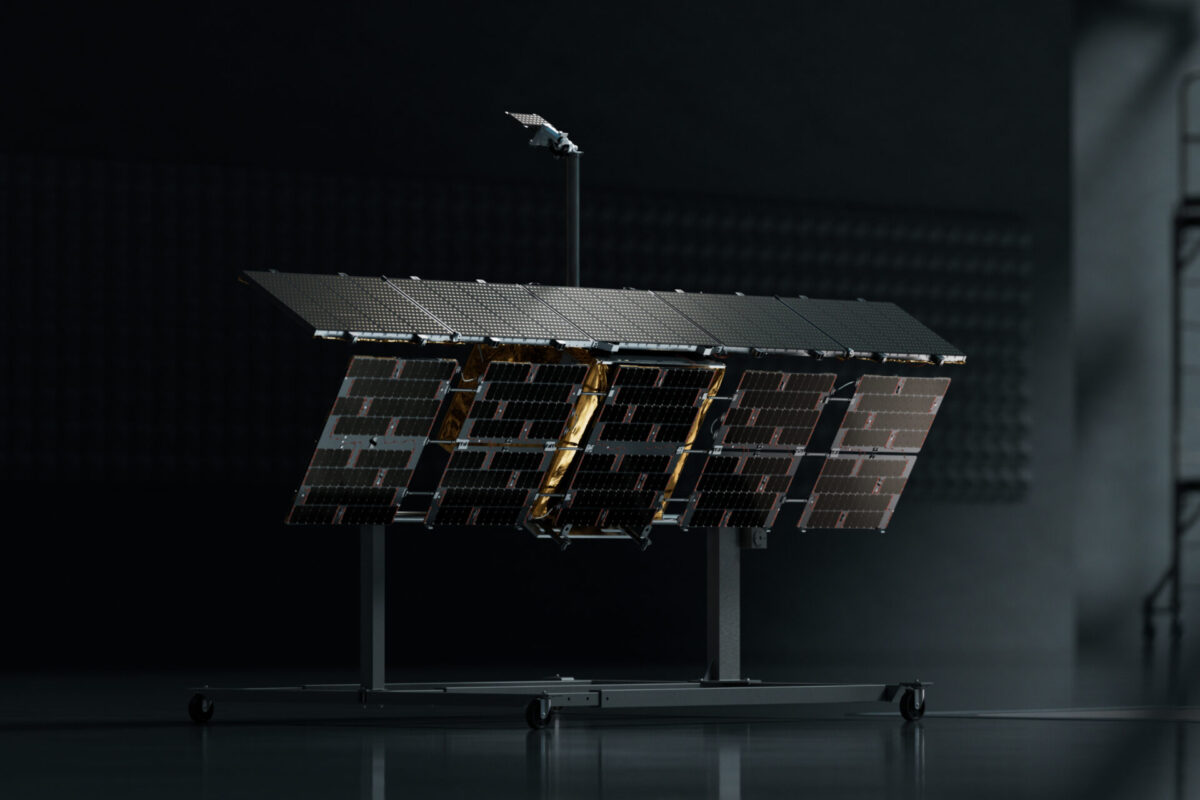
Bandwagon-5 follows ICEYE launches on SpaceX’s Transporter-17 rideshare on July 7, 2026, and Transporter-18 on October 1, 2026. ICEYE’s Transporter-17 release put its cumulative total at 76 satellites launched.
ICEYE aims to double its annual satellite production, from 50 to 100 units, supported by a matching launch cadence. The company has given different timelines for this target: its July announcement indicated 2027, whereas its announcement on June 9, 2026, of a Series F funding round exceeding €1 billion specified 2028.
ICEYE is also exploring launch capacity beyond SpaceX. On September 9, 2026, it signed a memorandum of understanding with Arianespace to study Ariane 6 launches for European government and institutional missions.
Launch follows Russian satellite’s close approach to ICEYE-X36
The deployment came two days after independent satellite trackers reported that Russia’s Cosmos 2612 military satellite may have passed within a few hundred meters of ICEYE-X36, a US-registered ICEYE radar satellite, on October 18, 2026.
An ICEYE US spokesperson told AeroTime that the company was tracking the situation and that its “constellation architecture is designed for continuity and resilience”.
Separately, ICEYE satellite imagery published by Frankfurter Allgemeine Zeitung and reported by The Times on October 19, 2026, revealed the construction of an apparent over-the-horizon radar near Gvardeysk in Russia’s Kaliningrad exclave. The installation features three antenna arrays, each roughly 500 meters (1,640 feet) long, illustrating ICEYE’s role in monitoring Russian military infrastructure.