
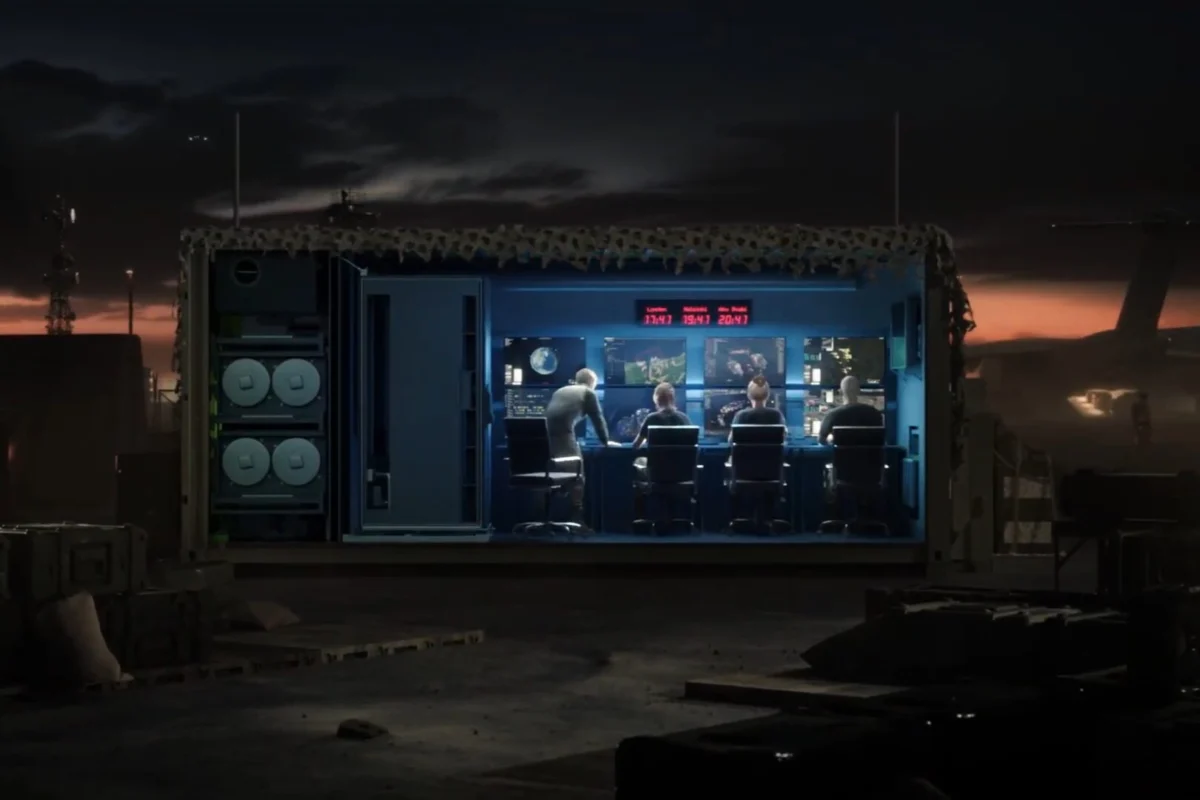
Finnish synthetic aperture radar (SAR) satellite operator ICEYE embedded a deployable ISR Cell at the core of a French Army infantry brigade during the ORION 2026 exercise in April 2026, the company said in a blog post on May 6, 2026. The deployment placed satellite tasking, downlink, and analysis directly inside a maneuver unit, marking one of the most concrete European tests to date of pushing space-based intelligence down to brigade-level decisions.
According to ICEYE, the cell operated alongside drone and other reconnaissance units to support targeting and fires coordination during Phase 4.2 of the exercise, contributing to the brigade’s sensor-to-shooter loop.
Inside ORION 2026

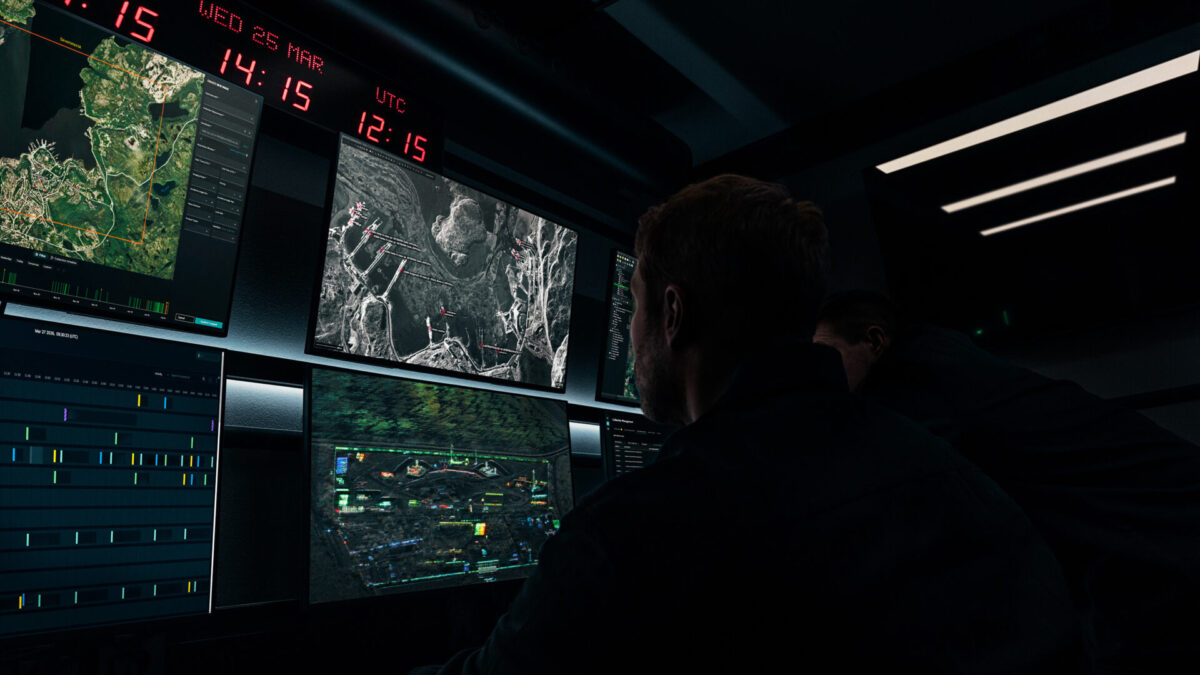
ORION 2026 was France’s largest military exercise since the Cold War, running from February 8 to April 30, 2026, with around 12,500 troops, 25 ships including the Charles de Gaulle carrier strike group, 140 aircraft, around 1,200 drones, and forces from 24 allied nations. Built around a fictional scenario in which France led a coalition to defend the country of “Arnland” against the expansionist “Mercury”, a thinly veiled stand-in for Russia, the exercise was structured into four phases.
Phase O.1 focused on operational planning, Phase O.2 on zone-superiority operations, and Phase O.4, where ICEYE was embedded, on a NATO-led deployment under an Article 5 collective defense scenario involving three multinational divisions.
Phase 4.2 within that NATO sequence concentrated on high-intensity, multi-domain land operations conducted under conditions of constant force relocation. President Emmanuel Macron, watching the final phase unfold in eastern France, described ORION 2026 as “a clear signal sent both to our allies and to our adversaries.”
Pulling space ISR to the tactical level

Tactical space-based ISR has been a stated priority of NATO armies for several years. Satellite imagery has historically been treated as a strategic input, tasked at the national level, processed in centralized ground stations, and delivered to operational commands on timelines measured in hours or days.
The US Army has been working to compress that timeline with its Tactical Intelligence Targeting Access Node (TITAN), a deployable ground station designed to ingest imagery from multiple satellite providers, run AI-assisted analysis, and feed targeting data to maneuver units, anchored in the wider Joint All-Domain Command and Control (JADC2) concept.
ICEYE’s ISR Cell is in effect a commercial European answer to the same problem, built around the company’s own SAR constellation. The system provides every level of command with direct access to satellite tasking, downlink, AI-assisted analysis, and secure on-site intelligence dissemination.
ICEYE said the cell maintained operations during ORION 2026 despite frequent command-post relocations and limited infrastructure, stress testing its ability to keep pace with a brigade in motion.
Building on the Ukraine track record
This deployment builds on a strong operational track record. ICEYE has provided SAR imagery to the Ukrainian Armed Forces since 2022, when Kyiv first gained access through a crowdfunded contract.
In May 2025, ICEYE partnered with Safran.AI, a subsidiary of France’s Safran Electronics & Defense, to apply AI-driven object detection and classification to its data for Ukrainian military intelligence. In January 2026, ICEYE expanded its support by agreeing to deliver a high volume of imagery to accelerate Ukrainian battlefield decision-making.
According to ICEYE, the ISR Cell has been tested in NATO exercises since 2024, including at NATO Tiger Meet 2025 in Beja, Portugal, where it was integrated into Portuguese Air Force operations.
The ORION 2026 scenario reflects a broader strategic shift. The French Air and Space Force and its allies have adopted Agile Combat Employment and forward deterrence postures that emphasize mobility and dispersal, recognizing that fixed command posts and centralized infrastructure are high-value targets in near-peer conflicts.