
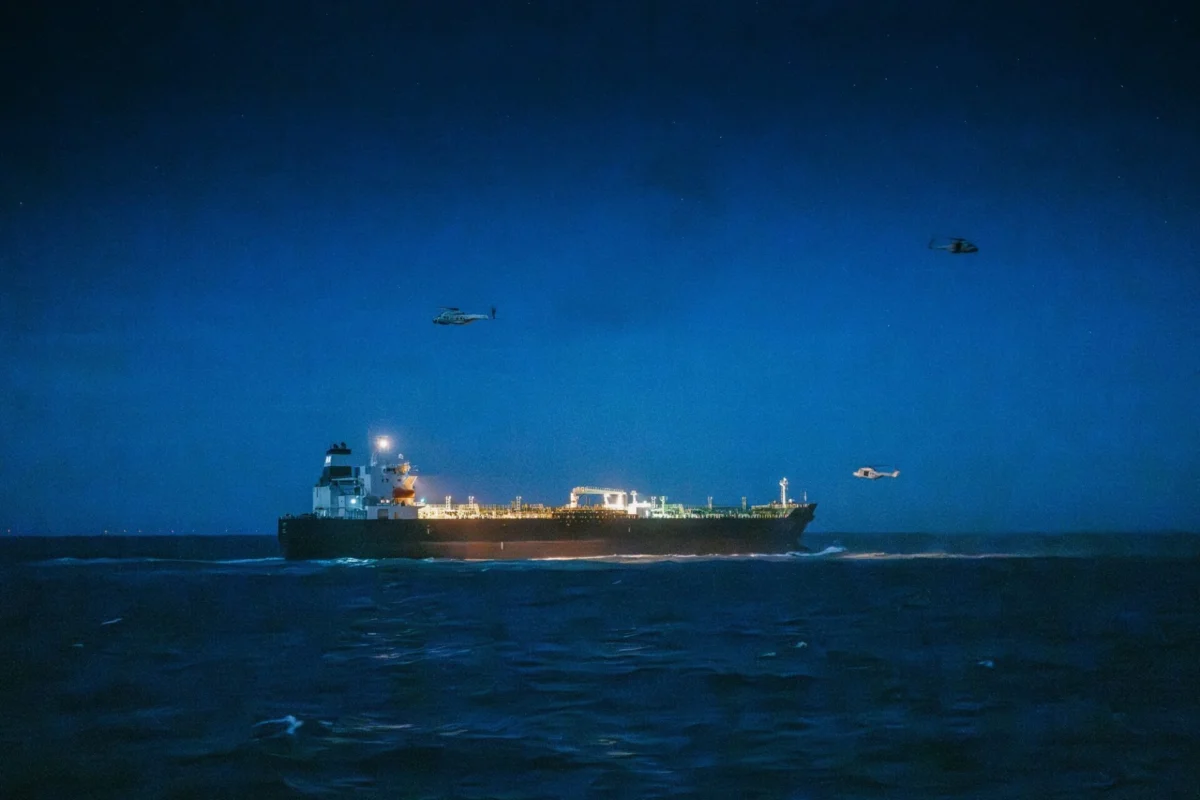
It is highly likely that the Kremlin conducted a drone campaign over Europe between August 2024 and February 2026, the International Institute for Strategic Studies (IISS) assessed in a report, which also finds that Russian-linked vessels and the shadow fleet likely served as launch and recovery platforms.
The campaign forced repeated closures of major hubs, including Copenhagen, Brussels, Munich, Oslo, and Vilnius airports.
144 incidents clustered around strategic sites
The report, led by IISS senior fellow Charlie Edwards, compiles a dataset of 144 incidents across 13 European states. Approximately 48% of sightings occurred over military facilities, 18% over civilian airports, and 26% over critical infrastructure such as ports and energy sites. Reported incidents jumped from an average of four per month to 22.5 per month between September and December 2025, with Germany alone recording 58 sightings.
The pattern was most pronounced around nuclear deterrence infrastructure: Kleine-Brogel Air Base in Belgium and Volkel Air Base in the Netherlands, both reported to host US B61-12 gravity bombs under NATO sharing arrangements, as well as the French ballistic missile submarine base at Île Longue, where five drones were detected on December 4, 2025.
The report stops short of claiming that every sighting was real or Russian-directed, noting that no European government has publicly described a coordinated Russian campaign. It argues that the aggregate pattern cannot be explained by misidentification, hobbyist activity, or opportunistic harassment alone.
Shadow fleet vessels as launch platforms

A subset of incidents likely involved drones launched and recovered from shadow fleet tankers, coastal freighters and smaller craft sailing close to European coastlines, at times with their AIS transponders switched off, the IISS assesses.
French naval commandos boarded one suspect vessel, the tanker Boracay, on September 28, 2025, finding two employees of a Russian private military company on board.
Danish media sources have previously suggested that the drones that caused four hours of flight disruptions at Copenhagen Airport (CPH) on September 22, 2025, might have been transported to Denmark by way of Russian ships.
The clearest confirmation came on February 26, 2026, when the Swedish military jammed a drone launched from the Russian signals intelligence ship Zhigulevsk toward the French aircraft carrier Charles de Gaulle during a port visit to Malmö, Sweden. It remains the only incident publicly attributed to a specific Russian platform.
A European response that misses the sea
The report concludes that Europe’s counter-drone architecture does not yet match the threat, with uneven detection, fragmented legal authorities and attribution too slow to support deterrence. Despite initiatives such as NATO’s Operation Eastern Sentry and new shootdown authorizations in Germany, Lithuania, and Romania, it warns governments not to “mistake activity for achievement.”
The European Drone Defence Initiative, commonly referred to as the “Drone Wall” and which aims for initial operational capability by the end of 2026, will only engage drones once they enter European airspace, as no mandate exists over the vessels that launch them.
As long as Russian-linked ships can loiter in international waters and deploy drones with impunity, the report concludes, the campaign’s primary enabling mechanism remains intact.