
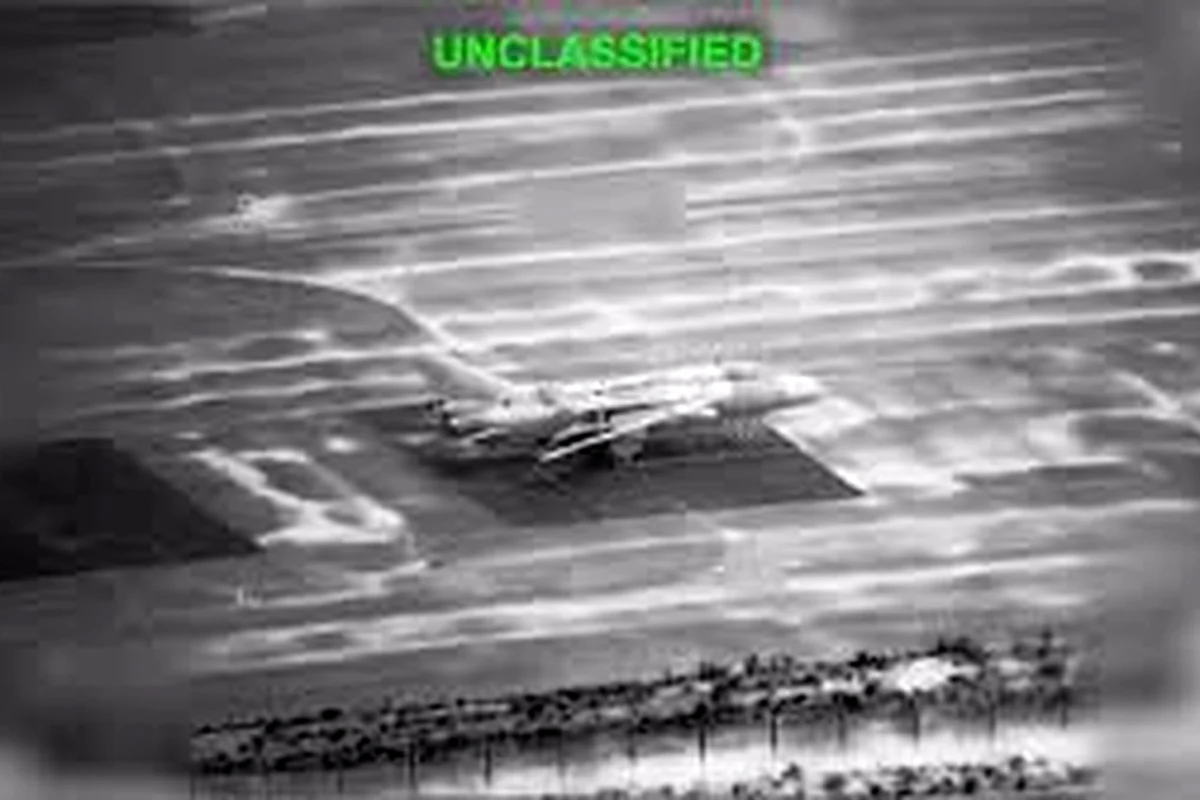
When US forces struck the IRIS Shahid Bagheri, an Iranian drone carrier, in the opening hours of Operation Epic Fury on February 28, 2026, the attack highlighted Washington’s focus on targets linked to Iran’s unmanned air operations.
US Central Command noted the strike came on the heels of Iranian claims that Tehran could sink a US aircraft carrier. CENTCOM posted on social media, the “only carrier that has been hit” was the Shahid Bagheri.
The strike followed sweeping US claims about Iran’s naval surface fleet. CENTCOM said Iran went from 11 ships in the Gulf of Oman to “zero” in two days, an assertion that US forces had eliminated Iran’s naval presence there at the outset of the operation.
Now, the opening salvos of the war are raising a parallel question: what remains of Iran’s ability to fight in the air, and how much of that fight must be conducted solely with drones rather than manned fighters and helicopters?
Iran’s beleaguered air force
Before the war, Iran relied on an aging fighter fleet constrained by sanctions and limited access to parts. FlightGlobal’s World Air Forces2025 listed 65 F-4s, 35 F-5s, 41 F-14s, 18 MiG-29s, 21 Su-24s, and 12 Mirage F1s in the Islamic Republic of Iran Air Force, plus a smaller number of tankers and special-mission aircraft. Iran has also received an unknown number of Yak-130 light attack aircraft in recent years.
Iran’s helicopter strength sits largely outside the air force. The directory lists the army as operating attack and lift fleets including AH-1Js and CH-47s, while the navy and Revolutionary Guard operate additional helicopters for maritime and govermental missions.
Iran does not field a modern airborne early-warning fleet that can manage a contested air battle the way US and Israeli forces can. FlightGlobal’s World Air Forces directory lists Iran’s tankers and a handful of special-mission aircraft, but it does not list an Iranian AEW platform comparable to the E-3 or E-2. US strike reporting has described Washington using stealth aircraft including B-2 bombers and F-35 fighters in the opening attacks. Israel has also released footage of strikes on Iranian fighters on the ground, underscoring the pressure on Iran’s ability to generate and protect sorties.
Iran’s most visible aviation punch so far has come without pilots. Gulf governments have reported repeated waves of one-way attack drones aimed at bases, ports, airports, and energy infrastructure. In the United Arab Emirates, a Defense Ministry spokesperson said air defenses detected 812 drones and intercepted 755, with 57 getting through and causing damage.
Kuwait said it intercepted 283 drones. A Bloomberg-compiled tally put the first two days of the war at 541 drones targeted at the UAE, 283 at Kuwait, 36 at Jordan, 12 at Qatar and nine at Bahrain. Combined with the UAE’s later figure, the publicly reported totals indicate at least about 1,150 drones launched at regional targets since February 28, with the overall number likely higher.
Drones best viable option
Public reporting has confirmed only a handful of losses of Iran’s manned aircraft. Israel said it destroyed an Iranian F-4 and F-5 at Tabriz as they prepared for takeoff, and released video of the strike. Israel has also released videos in June 2025 during Operation Midnight Hammer of it destroying a number of Iranian F-14s. Qatar’s Defense Ministry said its air defenses shot down two Iranian aircraft during attacks on the country, and Qatari state media identified them as Su-24s.
Satellite imagery and official statements have also pointed to strikes on the systems that allow an air force to fight. Reuters published satellite images showing damage at Konarak, including destroyed storage bunkers and damage around an air and naval complex, and images showing a destroyed radar system at Zahedan airbase. The same images showed damage at the Choqa Balk-e Alireza drone base.
Iran’s exact drone and missile inventory remains unclear, but analysts and Western officials have long described Tehran’s holdings in the thousands and say Iran continues to produce drones and related components. Even if strikes limit Iran’s ability to operate manned aircraft in a sustained way, drones remain cheaper, easier to launch, and simpler to replace. The drone totals reported by Gulf governments since February 28 suggest Iran can still mount large-scale unmanned attacks, keeping regional bases and infrastructure under threat.
US President Donald Trump said on March 3, 2026, that Iran’s military has been largely neutralized, several days after US strikes began. “They have no navy, that’s been knocked out,” he said. “They have no air force, that’s been knocked out. They have no air detection, that’s been knocked out. Their radar has been knocked out. Just about everything’s been knocked out.”
Even if Iran can still get some of its jets and helicopters airborne, the balance of capability argues against exposing them. US and Israeli forces operate with stealth aircraft and the kind of airborne battle-management support that Iran lacks. For the remainder of the war, Iran will likely be forced to rely on drones and missiles as its only option.