
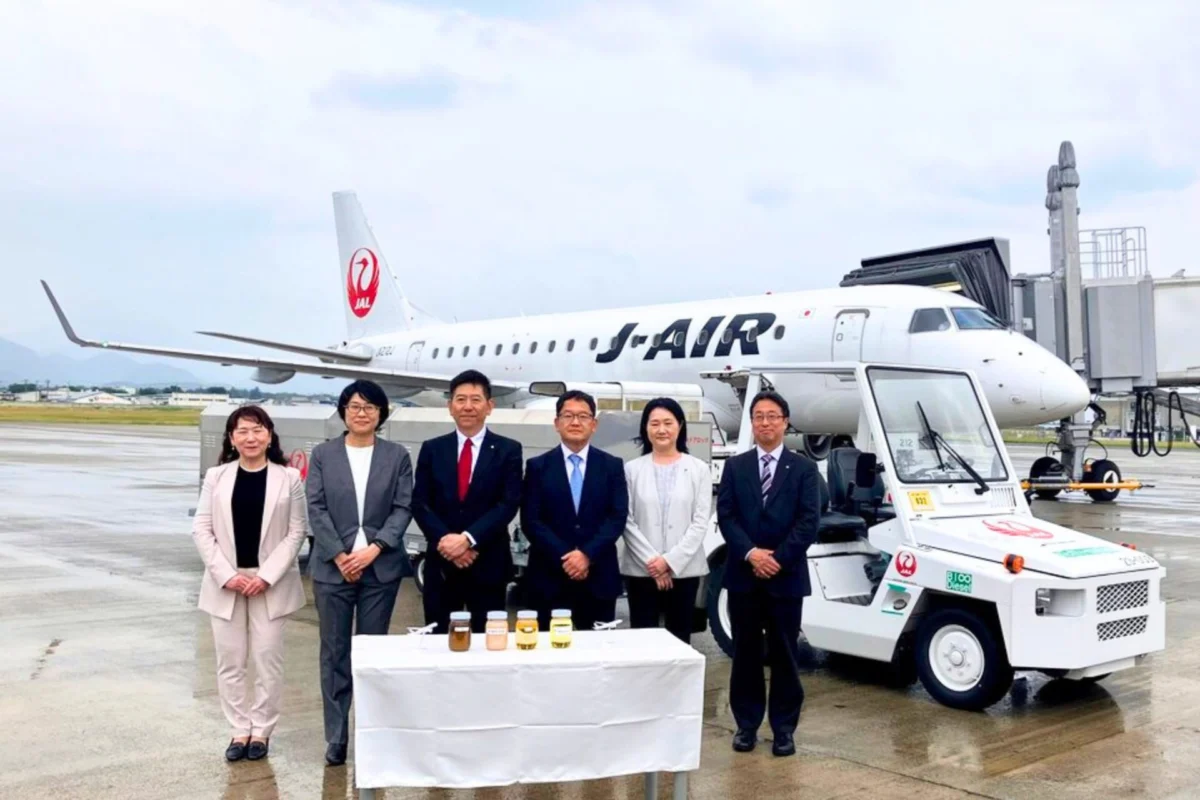
Japan Airlines (JAL) announced that it has begun a demonstration project at Yamagata Airport (GAJ) using biodiesel fuel made from byproducts of rice bran oil production. The fuel is being used to power one of the airline’s baggage towing tractors which move cargo and luggage containers around the airport.
The project started on May 28, 2026, and is scheduled to run until around the end of May 2027.
The fuel is produced from rice bran fatty acid, a non-edible byproduct left over when rice bran oil has been made. It is manufactured by Boso oil and fat, a company in the Showa Sangyo Group, using a technology called the Ion Exchange Resin Method, developed at Tohoku University. According to the companies in question, this marks the first time that biodiesel made with this method has been used at an airport.

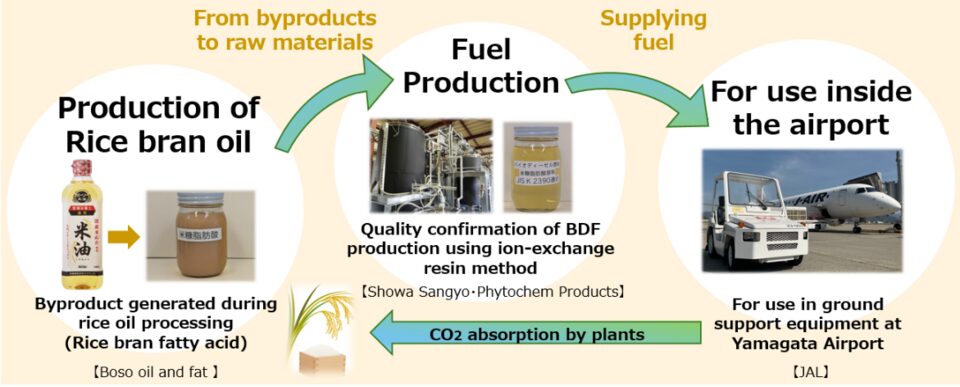
According to JAL, Yamagata Airport was chosen for two reasons. It sits in a basin, so it has large seasonal temperature changes that allow the fuel and vehicle to be tested in varied weather. It is also located near Tohoku University, where the technology was developed, making it easier for researchers to monitor the trial.
During the demonstration, the partners will evaluate how the tractor performs on the fuel under real operating conditions, check whether the fuel affects the vehicle, and assess how reliably the fuel can be supplied.
JAL already uses biodiesel made from used cooking oil at 23 airports across Japan. This project tests a different raw material, in this case one taken from a manufacturing byproduct.
The companies highlighted that, as global demand for biofuels grows, developing new sources of raw material can help to ensure a stable supply and support efforts to reduce carbon emissions.