
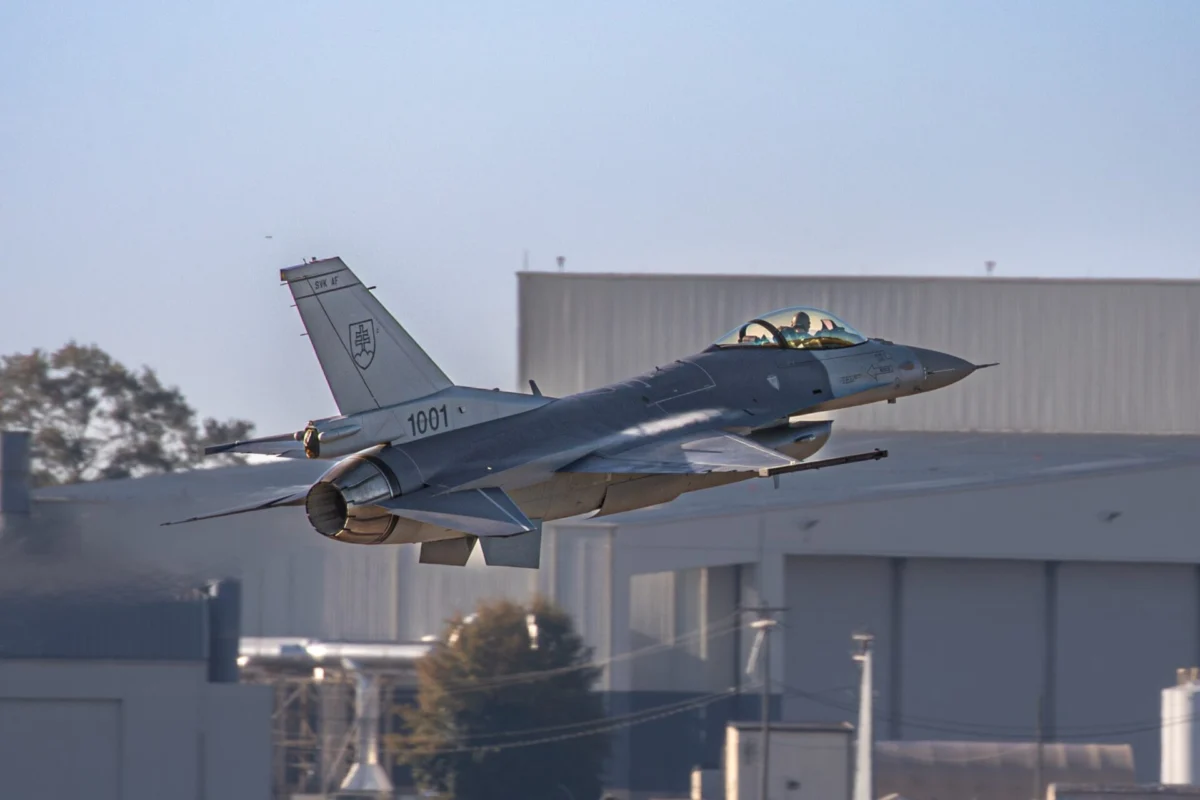
Lockheed Martin has finished production of all F-16 Block 70 aircraft for Bulgaria and Slovakia’s initial fleets, a milestone that marks a major step in both countries’ transition to modern, NATO-interoperable fighter capability.
Lockheed announced the completion on December 15, 2025, noting that every aircraft has passed US government acceptance through the Foreign Military Sales program.
The jets were built at Lockheed Martin’s Greenville, South Carolina, facility, home to the world’s only active F-16 production line. The deliveries move Bulgaria and Slovakia from planning to fielding their first modern 4.5-generation fighters at a time when both nations are upgrading aging air fleets and deepening participation in NATO air policing and collective defense operations.
Slovakia is the first country in Europe to field the Block 70 version of the F-16. The new jets replace its retired MiG-29s and give the air force a modern fighter that works seamlessly with NATO partners. Bulgaria is making a similar shift away from older Soviet-era aircraft, gaining fighters that plug directly into the same systems and procedures used across the alliance.
Lockheed Martin’s Mike Shoemaker, Vice President and General Manager of the Integrated Fighter Group, said the program reflects years of coordination between US government teams, industry, and the two partner nations. “With full F-16 Block 70 fleets now produced, both nations move from planning for next-generation airpower to demonstrating it in daily operations,” he said.
The Block 70 standard incorporates the APG-83 active electronically scanned array radar, which shares significant software and hardware commonality with the radar used on the F-35. The configuration includes conformal fuel tanks, a redesigned digital cockpit, a 12,000-hour service-life airframe, and the Automatic Ground Collision Avoidance System, which has been credited with saving multiple aircraft and crews since its introduction to the broader F-16 fleet.
By moving to the F-16, Bulgaria and Slovakia gain access to a large community of operators. More than 700 F-16s are already flying in Europe, supported by established training programs, maintenance networks, and logistics systems. Joining that network means both countries can train and operate to the same standards as other allies, making it easier to work together on joint missions.
The shift also strengthens existing industrial ties between the United States and Europe. The F-16 is built with parts from more than 530 suppliers in 12 countries, including companies in Slovakia and Bulgaria. Lockheed Martin says production in Greenville supports over 1,500 jobs in the United States and contributes to a shared supply chain that many NATO members rely on as they update their fighter fleets.