
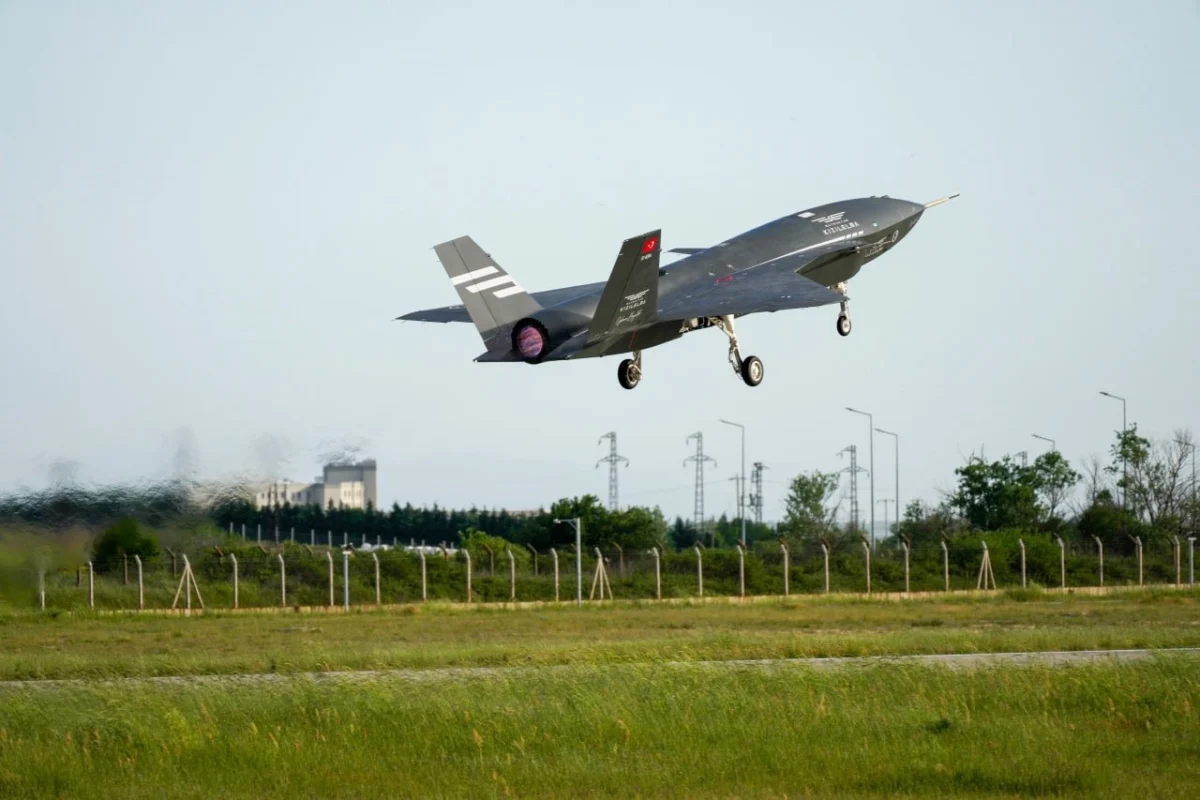
Leonardo and Baykar have completed the first live flight phase of their K-SWARM crewed-uncrewed teaming (CUC-T) program, with an Italian M-346 jet commanding a Bayraktar Kizilelma unmanned fighter through a series of autonomous formation maneuvers.
The two companies announced the milestone on June 22, 2026, confirming the campaign took place in May 2026 at Baykar’s flight and test center in Çorlu, Turkey.
The trials move K-SWARM, which is aimed at building interoperability between crewed and uncrewed aircraft, from simulation into live operation. They also fold the Kizilelma into the wider industrial relationship the two companies formalized through the LBA Systems joint venture unveiled at the 2025 Paris Air Show.
A trainer jet in the command seat
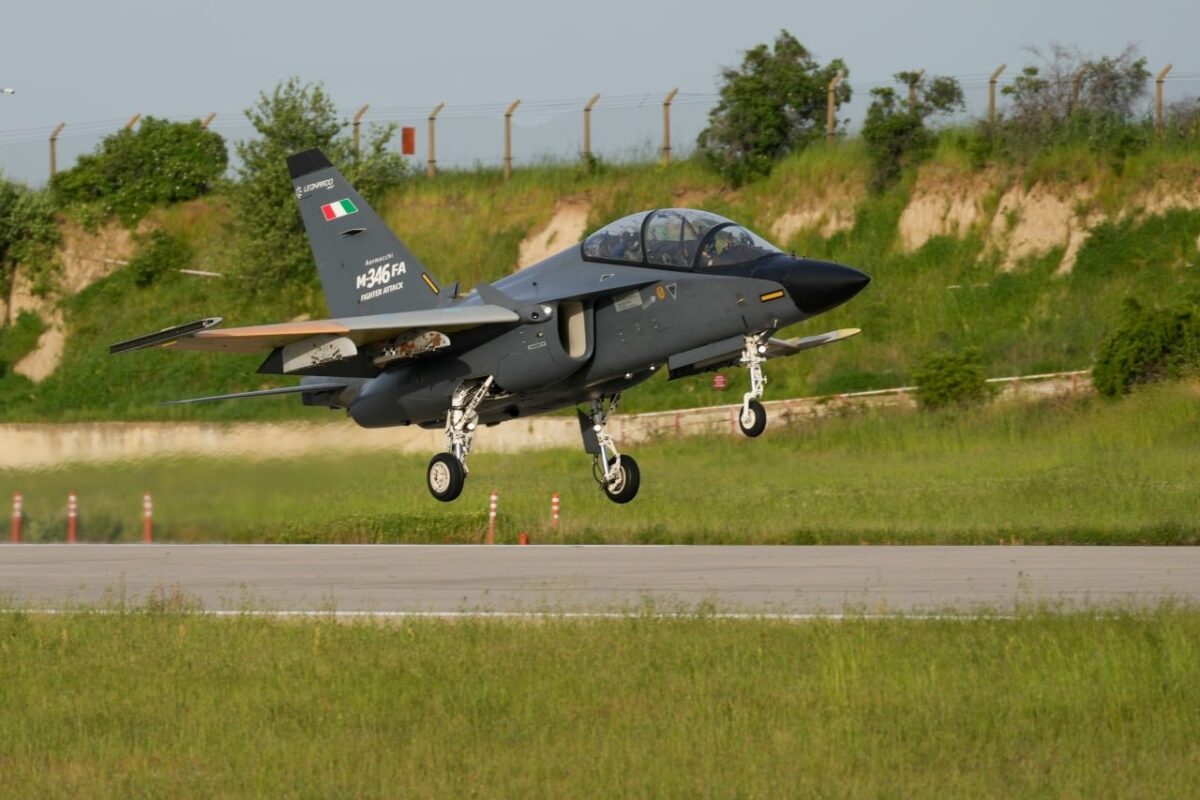
The campaign paired a Leonardo-owned M-346 Fighter Attack variant, serving as the controlling aircraft, with a single Kizilelma. An Italian Air Force T-346A served as the chase aircraft.
After an autonomous taxi and takeoff, the Kizilelma used Baykar’s Smart Fleet Autonomy algorithms, developed by the company’s Hardware-in-the-Loop Laboratory, to locate and rejoin the M-346 in flight.
The jet’s crew then assumed control of the drone through a newly developed onboard avionics suite and a dedicated CUC-T computing system, directing position changes, separations, and rejoins that the Kizilelma executed autonomously.
Leonardo developed the tactics, procedures, and algorithms at its Avionic and Flight Control Innovation Labs and its PC2LAB facility in Turin, validating them on an M-346 full-mission simulator in Venegono before live testing began.
Baykar integrated its autonomy software into the teaming architecture, while data passed between the two aircraft via a radio-frequency exchange system, synchronized and protected by Leonardo’s GCC Tactical Platform, a proprietary cyber defense layer.
A faster route into collaborative combat
The trials give Leonardo a flying crewed-uncrewed teaming demonstrator without waiting for a future loyal wingman design to mature, using instead an unmanned fighter already in production.
They also feed into Leonardo’s wider combat-air work. The company is one of three industrial partners in Global Combat Air Programme (GCAP), the UK-Italy-Japan program to field a sixth-generation fighter by 2035, alongside BAE Systems and Mitsubishi Heavy Industries. Like other sixth-generation fighter projects, GCAP is being built around a crewed aircraft operating with autonomous collaborative platforms.
For Baykar, the campaign embeds Kizilelma in a program led by one of Europe’s major combat-air companies, months after the drone completed its first beyond-visual-range missile test in December 2025 and secured its first export order, from Indonesia, in May 2026.
Both companies described the work as a first phase, with more complex K-SWARM trials planned in the coming months, including larger formations and eventual swarm tactics.
A wider European race
Leonardo and Baykar are not alone in pushing collaborative combat aircraft forward while the flagship crewed fighters remain a decade or more off. The divide is sharpest in continental Europe, where France and Germany abandoned their joint Future Combat Air System fighter on June 8, 2026, and each set off down a national path, with new aircraft not expected before the early 2040s.
Germany’s emerging Team Gen 6 effort already leans on uncrewed assets that are further along than the jet itself. Airbus unveiled the U760 Ravenstorm collaborative combat aircraft at ILA Berlin on June 9, 2026, and is adapting the Kratos XQ-58A as the U740 Valkyrie, which it aims to deliver to the German Air Force by 2029 with Eurofighter teaming in view.
In France, Dassault is advancing combat-drone work intended to pair with the Rafale, building on its nEUROn stealth-drone demonstrator and artificial intelligence partnerships with Thales and Harmattan AI.
As with the M-346 and Kizilelma, the near-term bet across these efforts is to pair autonomy with an aircraft already in service rather than wait for a clean-sheet fighter.