
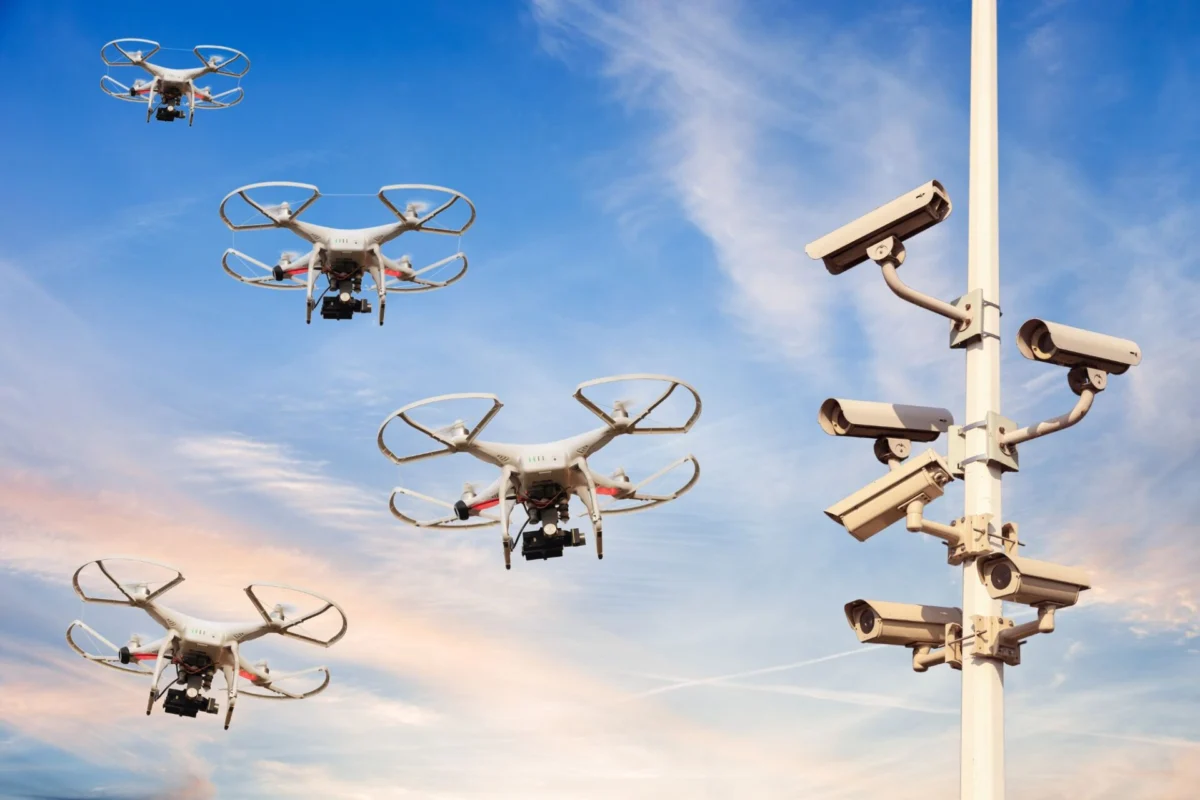
The Federal Aviation Administration (FAA) announced that federal, state, and local agencies carried out the most comprehensive airspace security and drone mitigation effort in US history during FIFA World Cup 2026.
The operation, whose results were shared by US Transportation Secretary Sean P. Duffy on July 22, 2026, resulted in the seizure of more than 700 unauthorized drones.
The effort is being positioned as a model for securing future large-scale events and infrastructure in the United States, including the 2028 Olympic Games.
How agencies tracked and stopped the drones
The FAA said it established no-drone zones through nearly 250 temporary flight restrictions covering every match venue, fan festival, team hotel, and training site tied to the tournament.
Officials warned drone operators ahead of time to leave their devices at home, cautioning that violators could face confiscation, fines, or prosecution.
Meanwhile, Ground Intercept Teams made up of federal and local personnel were stationed at venues to detect, mitigate, and enforce against unauthorized drone activity.
The FBI and the Department of Homeland Security seized more than 700 drones flying in restricted airspace across all 11 US host cities, treating each one as a potential threat.
Duffy said the effort reflected a broad government-wide approach to keeping the tournament safe for the more than a billion people who followed it worldwide, crediting the FAA’s partnership with the FBI and DHS in holding violators accountable.
Homeland Security Secretary Markwayne Mullin described the operation as a “total team effort,” pointing to the coordination among DHS components, the FBI, and other partners in removing drones from restricted airspace.
FBI Director Kash Patel called the counter-drone effort “unprecedented,” attributing the results to preparation carried out through the agency’s National Counter-UAS Training Center.
The operation involved close coordination among the White House Task Force on the FIFA World Cup 2026, the National Security Council, the FBI, DHS, the FAA, and state and local law enforcement agencies.
More than a year of preparation
According to the FAA, the operation was the product of more than a year of groundwork, including grant funding, legislation, and training provided to state and local law enforcement agencies in all 11 host cities through the FBI’s National Counter-UAS Training Center.
Much of that funding came from a counter-drone grant included in the One Big Beautiful Bill Act of 2025, which set aside $500 million for state, local, tribal, and territorial governments to procure counter-drone equipment. The first $250 million of that funding went to host cities and states ahead of the tournament, which DHS says was the fastest non-emergency, disaster-related grant the department has ever awarded.
The broader push to build out counter-drone capability traces back to June 2025, when President Trump signed two executive orders aimed at strengthening US leadership in drone technology and tightening security across national airspace. Congress followed in December 2025 with the Safer Skies Act, which extended counter-drone mitigation authority to state, local, tribal, and territorial law enforcement agencies that meet certain training requirements.
Officials said lessons drawn from the World Cup operation will help shape future counter-drone practices, with an eye toward protecting large public gatherings and critical infrastructure from similar threats going forward.