
Multiple unidentified drones repeatedly entered restricted airspace around one of Australia’s most sensitive military air bases recently, raising questions about how well the country can protect its F-35 fighters and other high-value aircraft from small unmanned aircraft.
The drones were reported over RAAF Base Williamtown and neighboring Newcastle Airport in New South Wales between July 11 and 13, 2026, according to Australian media reports. Australia’s Department of Defence has acknowledged the incidents, while Defence Industry Minister Pat Conroy said the broad reporting about the number of drones and the days they appeared was accurate.
Authorities have not identified the operators or indicated why the drones were there.
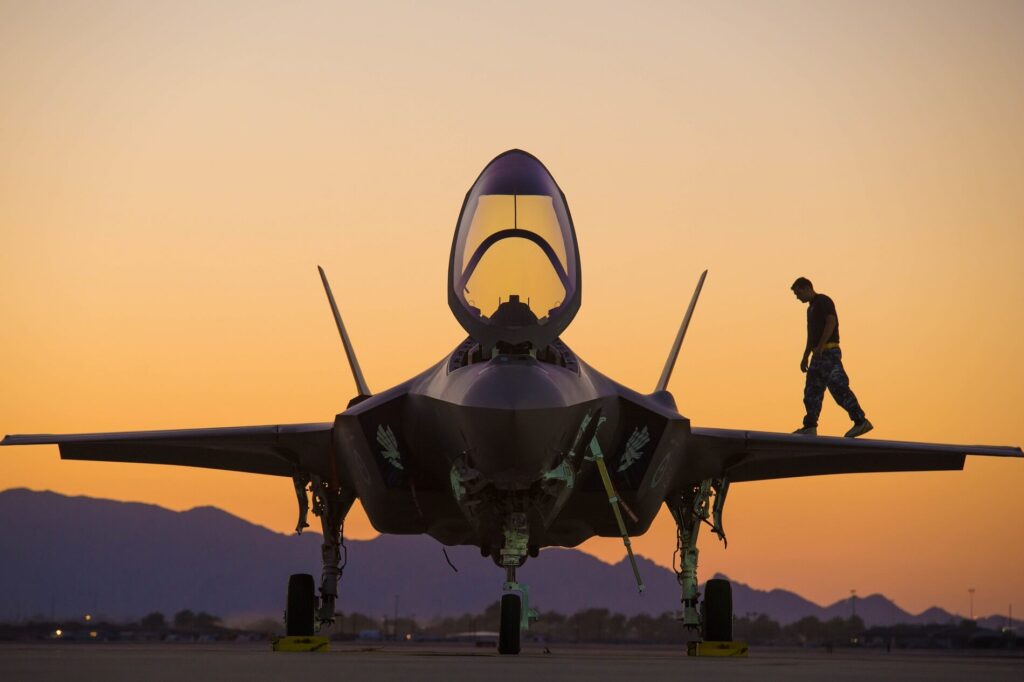
Williamtown, about 20 miles north of Newcastle, is Australia’s main fighter training base and houses most of the Royal Australian Air Force’s Lockheed Martin F-35A Lightning II fleet. The base also operates Boeing E-7A Wedgetail airborne early warning and control aircraft, Hawk 127 trainers and Pilatus PC-21 trainers. Newcastle Airport operates from the same airfield under an agreement with the Australian Department of Defence.
The Daily Telegraph, which first reported the incursions, said multiple drones were confirmed in restricted airspace during the three-day period. Personnel at Williamtown were reportedly instructed to close window blinds to prevent sensitive information from being viewed or photographed.
None of the drones was reported recovered or publicly identified. The incidents were referred to the New South Wales Police Counter-UAS Unit.
Conroy said on August 10 that the police investigation has since been completed, but he did not disclose its findings.
He also declined to say whether the drone activity disrupted military or civilian flight operations or what, if any, counter-drone measures were used.
“We have robust layered security measures to protect our personnel, our bases and our capabilities,” Conroy told ABC Newcastle.
Australia changed its Defence Regulations last year to give military personnel authority to seize, disable or destroy drones. Conroy said the government is also investing heavily in technology intended to detect and defeat unmanned aircraft.
The unexplained flights have prompted concern from Australian defense experts because small commercial drones can be used for surveillance as well as attacks against aircraft and infrastructure.
There is no public evidence linking the incursions to a foreign government or establishing that the drones were conducting surveillance.