
The National Aeronautic Association has announced the finalists for the 2025 Robert J. Collier Trophy, a list that provides a glimpse of some of the cutting-edge technologies where US aerospace is most notably advancing.
The nominees for the prestigious trophy, which traces its history to 1911, recognize commercial lunar landings, supersonic flight, new propulsion concepts, global climate data, urban drone delivery, and autonomous combat aircraft.
The Collier Trophy recognizes “the greatest achievement in American aeronautics or astronautics in the previous year,” with an emphasis on measurable improvements in performance, efficiency, or safety. Past winners include landmark programs such as the Apollo moon missions, the Boeing 747, and the Lockheed Martin F-22 Raptor.
This year’s finalists span both civil and military aviation, as well as space.
Firefly Aerospace’s Blue Ghost Mission 1 earned a nomination for achieving the first commercial moon landing and delivering 10 NASA payloads to the lunar surface. The mission represents a shift in how NASA conducts deep-space exploration, moving toward a commercial services model rather than government-owned hardware.
Boom Supersonic’s XB-1 demonstrator made the list for its successful supersonic flight campaign. While still a prototype, XB-1 marks a step toward reintroducing civil supersonic travel using modern materials and flight control systems, an effort aimed at succeeding where Concorde ultimately fell short economically.
Venus Aerospace was recognized for its rotating detonation rocket engine, an alternative propulsion concept that seeks to improve efficiency by harnessing continuous detonation waves rather than traditional means. If successful, the technology could influence both space launch economics and future hypersonic vehicles.
NASA’s Jet Propulsion Laboratory led the Surface Water and Ocean Topography (SWOT) mission team, another finalist. The satellite mission is conducting the first high-resolution global survey of Earth’s surface water, offering new insight into ocean circulation, sea level trends and freshwater resources.
Wing’s drone delivery team was nominated for expanding automated drone logistics in dense urban environments. The program focuses on safe, repeatable last-mile delivery, an area that has challenged both regulators and operators.
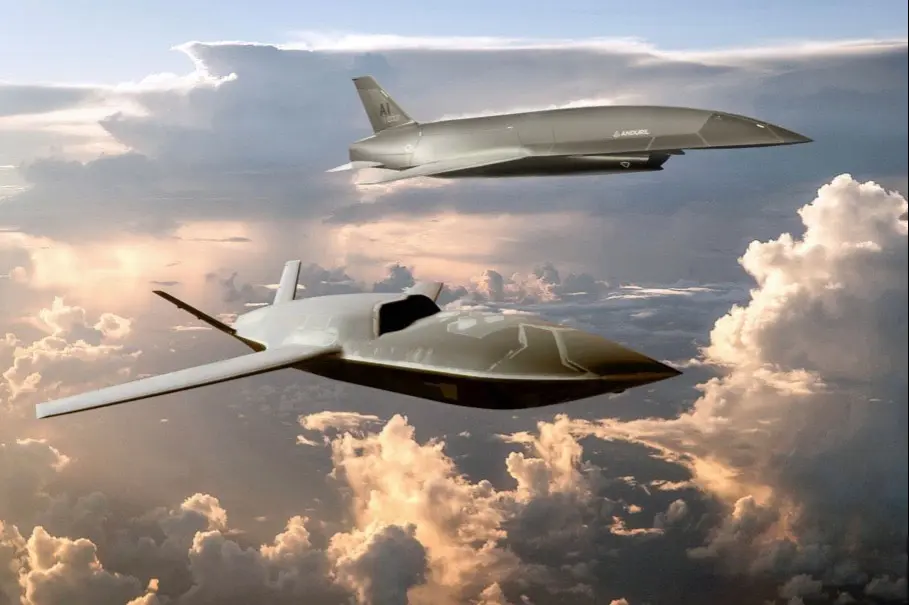
Anduril Industries’ YFQ-44A Collaborative Combat Aircraft rounds out the list. The semi-autonomous fighter prototype reflects the US military’s push toward pairing crewed aircraft with lower-cost autonomous systems capable of operating in contested environments.
The 2025 Collier Trophy winner will be selected March 12, 2026, in Washington, DC, with a formal presentation scheduled for June.