
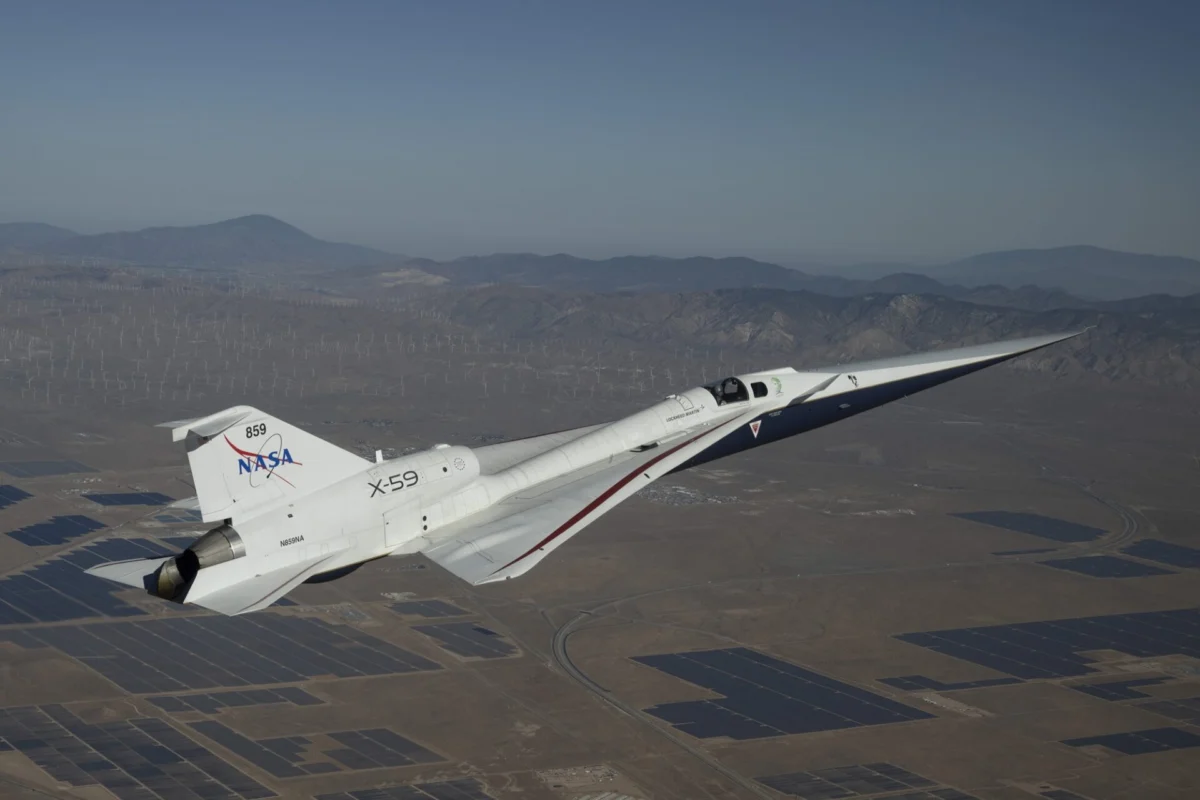
NASA has marked a “big moment” for commercial supersonic flight with the arrival of the X-59 research aircraft from collaborator Lockheed Martin.
According to NASA, the supersonic X-59 aircraft was officially handed over to the US space agency by Lockheed Martin Skunk Works on November 18, 2026.
The X-59 is designed to be a boomless supersonic aircraft with the capability to fly faster than the speed of sound while reducing the loud sonic boom to a quieter ‘sonic thump’.
The concept and the research undertaken by NASA and Lockheed Martin could pave the way for supersonic flight over land, a restriction that ultimately limited the longevity of Concorde.
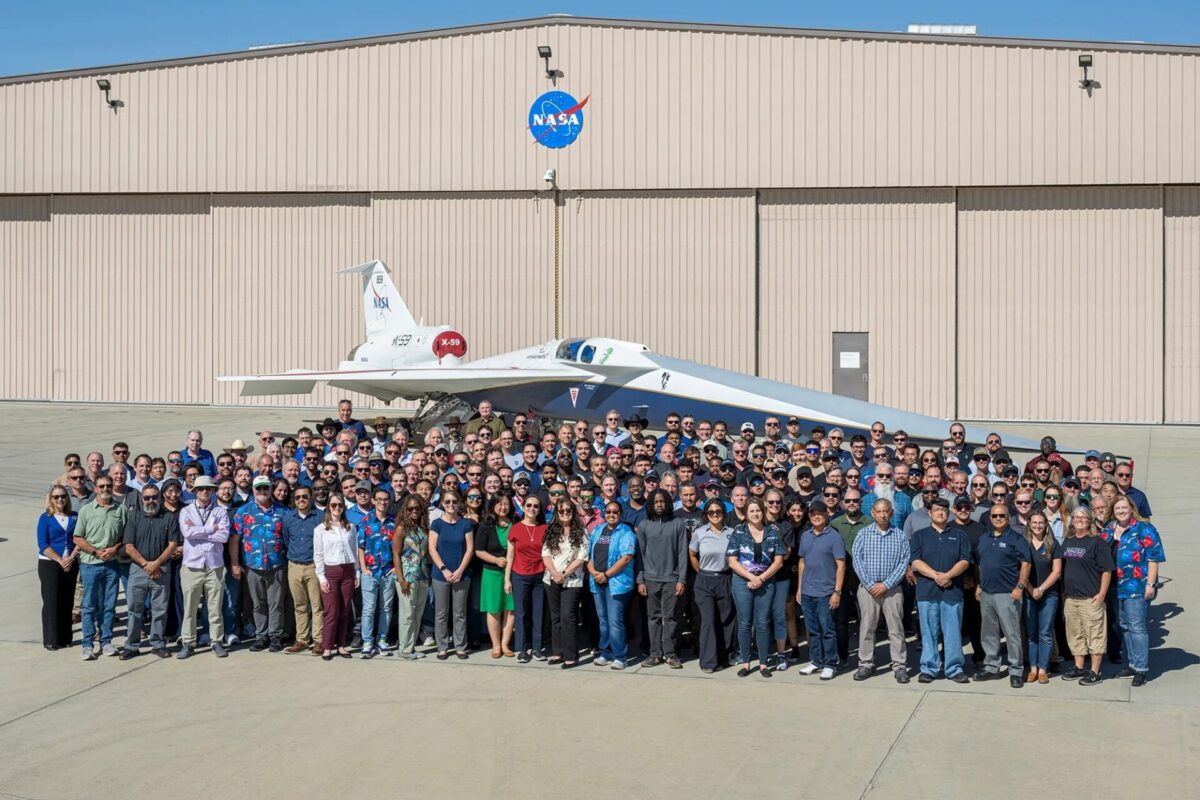
While under Lockheed Martin’s stewardship, the defense firm has led on vehicle building and testing for the NASA’s Quesst mission.
The X-59 made its first flight October 28, 2025, departing Lockheed Martin Skunk Works’ facility in Palmdale, California, and flying to NASA’s Armstrong Flight Research Center in Edwards, California, which has since served as its home base.
Despite the move to NASA facilities, the official ownership has remained under Lockheed Martin while progressing toward completion of an aircraft acceptance review.
“To someone outside the flight test, this might seem like a subtle change,” Cathy Bahm, Low Boom Flight Demonstrator Project Manager, said. “But for NASA, this is another big moment for the X-59 showing how far we have come, how much our hard work has paid off, and how much closer we are to providing the data to hopefully make commercial supersonic flight over land a reality.”
As the X-59 continues flight testing under NASA ownership, Lockheed Martin will provide supplemental support on an as-needed basis.
On June 5, 2026, the X-59 supersonic research aircraft flew faster than the speed of sound for the first time.
Taking off from Edwards Air Force Base, the aircraft reached about Mach 1.1, or 713 mph, during an 81-minute test flight.
The X-59 was accompanied by a NASA F-15 chase aircraft during the flight. NASA said sonic booms from the F-15 obscured any sound made by the X-59 during the test.