
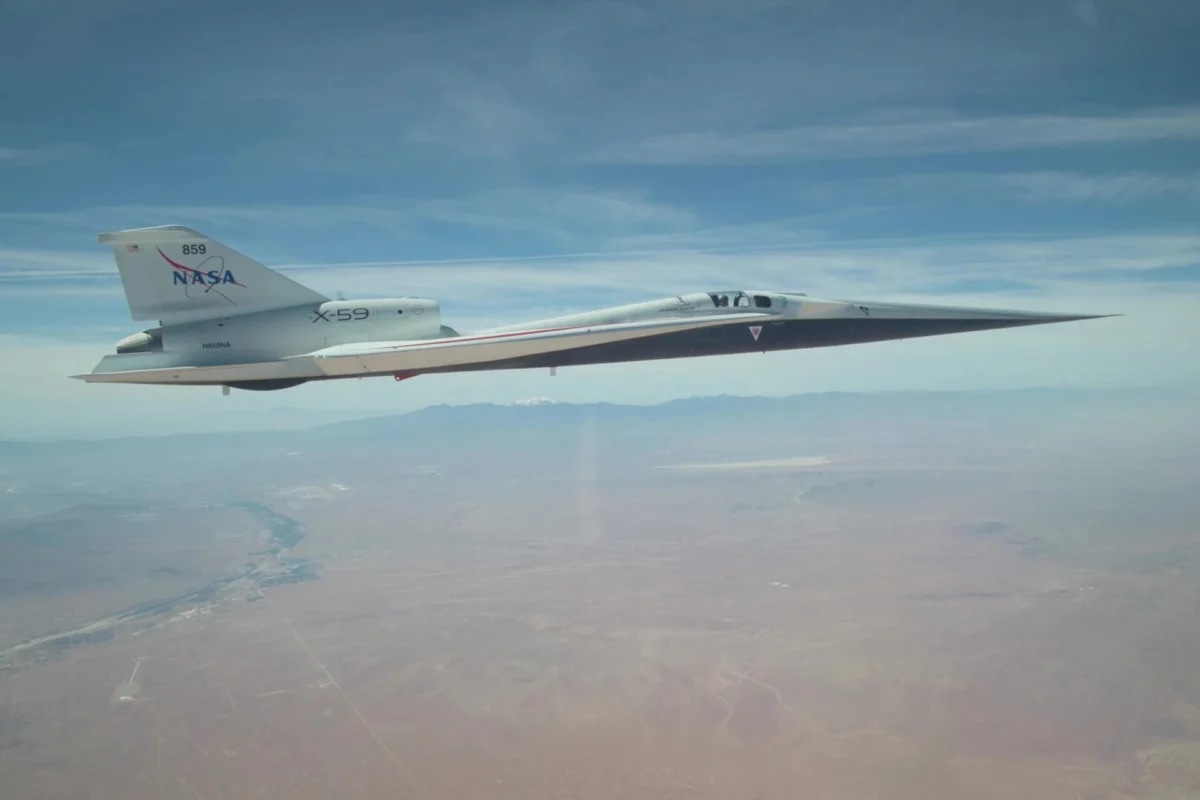
NASA has demonstrated how its supersonic X-59 aircraft will help reduce sonic booms by executing its first wheels-up test flights above the Mojave Desert.
On April 16, 2026, NASA congratulated its team on the development which finally reveals the X-59’s sleek, streamlined design and profile in all its glory during flight.
Following the experimental flight on April 3, 2026, NASA said that flying with the landing gear up allowed the team to examine the performance of the X-59’s streamlined profile.
The aircraft profile is a key design element ensuring the X-59 can fly faster than the speed of sound with just a quiet thump instead of a loud sonic boom.
“Experimental aircraft typically make their earliest test flights with the landing gear down, then begin retracting it after successfully meeting performance benchmarks,” said a NASA spokesperson.

Piloted by NASA test pilot Jim “Clue” Less, X-59 departed from its home base at NASA’s Armstrong Flight Research Center in Edwards, California, and flew for 90 minutes, reaching a maximum altitude of 20,000 feet and a top speed of approximately 460 mph.
The X-59 has made eight flights as of April 10, 2026, as it continues its test flight envelope expansion campaign.
The X-59 is the centerpiece of NASA’s Quesst mission, which aims to show that a supersonic aircraft can fly faster than sound without disruption.
If as expected, NASA can expel the sonic boom from operations then supersonic travel over land becomes a real possibility.
In March 2026, the US House of Representatives passed legislation aimed at opening the skies to civil supersonic flight over land, a step supporters say could usher in a new era of air travel.
The bill, approved by voice vote on March 24, 2026, would require the FAA to revise its rules within a year to allow civil aircraft to fly faster than Mach 1 over land without special authorization, provided no sonic boom reaches the ground.