
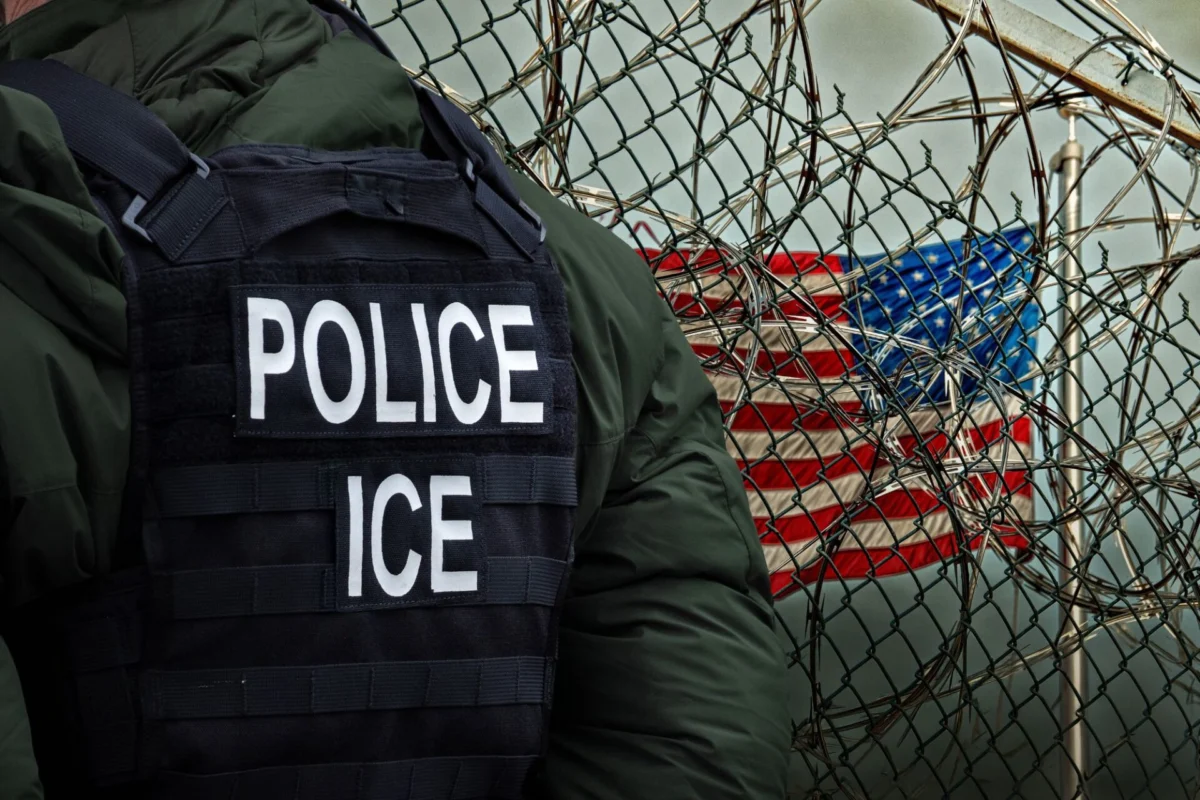
A nonprofit government watchdog organization, American Oversight, reported on July 29, 2026, that it had obtained and released a previously undisclosed agreement between the Transportation Security Administration (TSA) and Immigration and Customs Enforcement (ICE).
The agreement formalizes a data-sharing arrangement between the two agencies, part of the Trump administration’s broader push to expand immigration enforcement into domestic air travel.
The group said it obtained the Memorandum of Agreement, signed in May 2025, after suing TSA and ICE under the Freedom of Information Act when the agencies failed to turn over records about the arrangement.
According to American Oversight, the lawsuit sought to determine the program’s legal basis, what passenger information was being shared between the agencies, and how that information was being used in immigration enforcement.
NEW: We obtained a previously undisclosed data-sharing agreement between ICE and TSA.
— American Oversight (@weareoversight) July 28, 2026
It suggests that TSA is sharing traveler data directly with ICE — which is not what the TSA Administrator told Congress in sworn testimony earlier this year. https://t.co/GDgnGsRAkA
What the agreement entails
American Oversight said the document lays out a formal framework for how TSA and ICE coordinate the sharing, storage, and handling of passenger data.
The agreement cites the Secure Flight Final Rule, the regulation that governs how passenger information is collected and used for aviation security, as the legal basis for TSA’s involvement.
Per the group’s review, the agreement states that TSA intends to share specific data elements with ICE, which would then store that information in its own systems.
American Oversight also pointed to a possible conflict between the agreement and sworn testimony given by acting TSA Administrator Ha Nguyen McNeill during a House committee hearing in January 2026.
According to the group, McNeill told lawmakers that TSA does not send information to ICE, but instead helps ICE check names against TSA’s records. American Oversight said the newly released agreement appears to describe something more formal than that characterization, laying out specific procedures for ICE to receive and retain data from TSA.
Chioma Chukwu, American Oversight’s Executive Director, said the release was meant to shed light on a partnership the administration had not fully explained to the public, and raised broader concerns about how personal information collected for one purpose, boarding a flight safely, was being used for another.
The organization also noted that this was not the first time it had uncovered this kind of arrangement, pointing to earlier records it obtained showing the IRS had agreed to share taxpayer data with ICE.
A wider pattern of airport arrests
The released report adds to reporting from other outlets on the growing use of airports as a setting for immigration enforcement.
ABC News, which reported on the story also on July 29, 2026, cited an internal immigration memo describing a tactic in which federal authorities have arrested travelers believed to have overstayed their visas at airport checkpoints, with at least 27 such arrests reported across nine states, though the exact timeframe for those arrests wasn’t specified in the document ABC News reviewed.
According to ABC News, immigration attorneys say some of those detained have no criminal record and hold valid work authorization or documentation showing pending green card applications. That suggests the enforcement tactic has begun touching travelers whose legal status is technically unresolved rather than clearly unlawful.
One immigration attorney interviewed by ABC News described the shift as a change in venue and method, noting that using name matches at TSA checkpoints allows for arrests without the warrants or investigative steps typically involved in past enforcement actions.
American Oversight said it plans to continue pursuing additional records related to the agreement’s implementation through its ongoing litigation, including details on how passenger data is used, what safeguards exist and how the partnership affects travelers more broadly.