
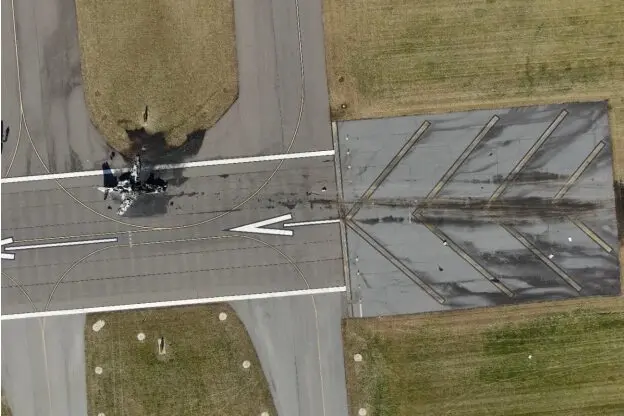
The National Transportation Safety Board has released a preliminary report into the December 18, 2026, crash of a Cessna Citation II in North Carolina that found the right-seat occupant was not qualified to serve as second-in-command, despite occupying a cockpit seat and performing checklist and radio duties during the flight, and the left seat pilot was not qualified to fly the jet without another pilot.
The accident killed seven people aboard the aircraft, which was registered to a holding company affiliated with former NASCAR driver Greg Biffle. The jet, N257BW, was operating under Part 91 as a personal flight from Statesville Regional Airport in North Carolina to Sarasota, Florida.
According to the NTSB, the airline transport pilot flying the aircraft held a CE-500 type rating with a limitation requiring a second-in-command. The right-seat occupant, the pilot’s adult son, held a private pilot certificate with single-engine land and instrument ratings but had logged about 175 total flight hours and was not qualified under federal regulations to act as SIC.
Biffle, seated in the cabin near the cockpit, also held pilot certificates and assisted during portions of the flight.
According to investigators, the crew discussed several anomalies before and after departure. During taxi, the pilot and the two pilot-rated passengers noted an inoperative thrust reverser indicator light, though they believed the reverser itself was functioning properly. During the takeoff roll, the rear-seat passenger commented that the left engine appeared to be producing more power than the right.
The airplane departed under visual flight rules, with plans to activate an IFR clearance once airborne. After takeoff, the jet entered a climbing left turn, reaching about 2,200 feet mean sea level before continuing to turn and descend. Attempts by the right-seat occupant to contact Atlanta Center and activate the IFR clearance were unsuccessful due to controller workload.
Cockpit voice recorder audio captured the pilot reporting problems with his altimeter and other left-side flight instruments. The autopilot disengaged shortly afterward, either intentionally or automatically. Control of the airplane was briefly transferred to the right-seat occupant before returning to the pilot.
As the airplane maneuvered back toward Statesville, the crew configured it for landing. Although discussions suggested the landing gear had been extended, the gear indicator lights were not illuminated. A transmission on the common traffic advisory frequency stated, “We’re having some issues here.”
The aircraft descended on final approach to Runway 28, striking the approach light system approximately 1,380 feet short of the runway threshold before impacting terrain and exploding in a fireball. Investigators found no evidence of an uncontained engine failure or pre-impact structural breakup. Both thrust reversers were found stowed.
Weather conditions deteriorated during the flight, with reports of heavy drizzle and ceilings as low as 1,200 feet agl at the time of the accident.
A final report determining the probable cause of the crash is expected to be issued in around a year’s time.