
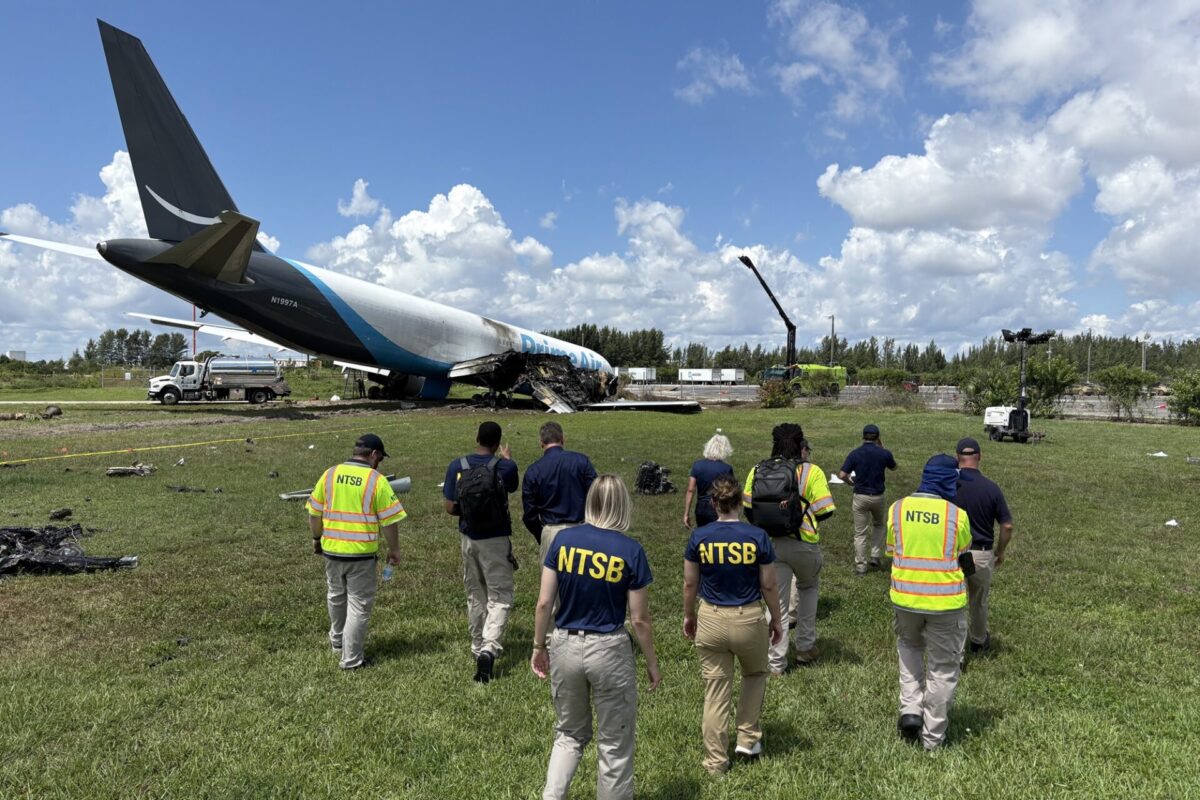
National Transport Safety Board (NTSB) analysis of the Miami Boeing 767-300 freighter crash appears to suggest that the pilot looked to abort the landing moments before the crash.
On September 6, 2026, the incident aircraft, operated by 21 Air on behalf of Amazon Air, overran the end of runway 30 during landing at Miami International Airport (MIA).
The 32-year-old Boeing 767-33A(ER) struck two vehicles on a public road after breaching the airport perimeter. Five people on the ground were killed.
On September 8, 2026, NTSB Chair Jennifer Homendy held a press conference, providing an update of the agency’s initial findings and plans for the days ahead.
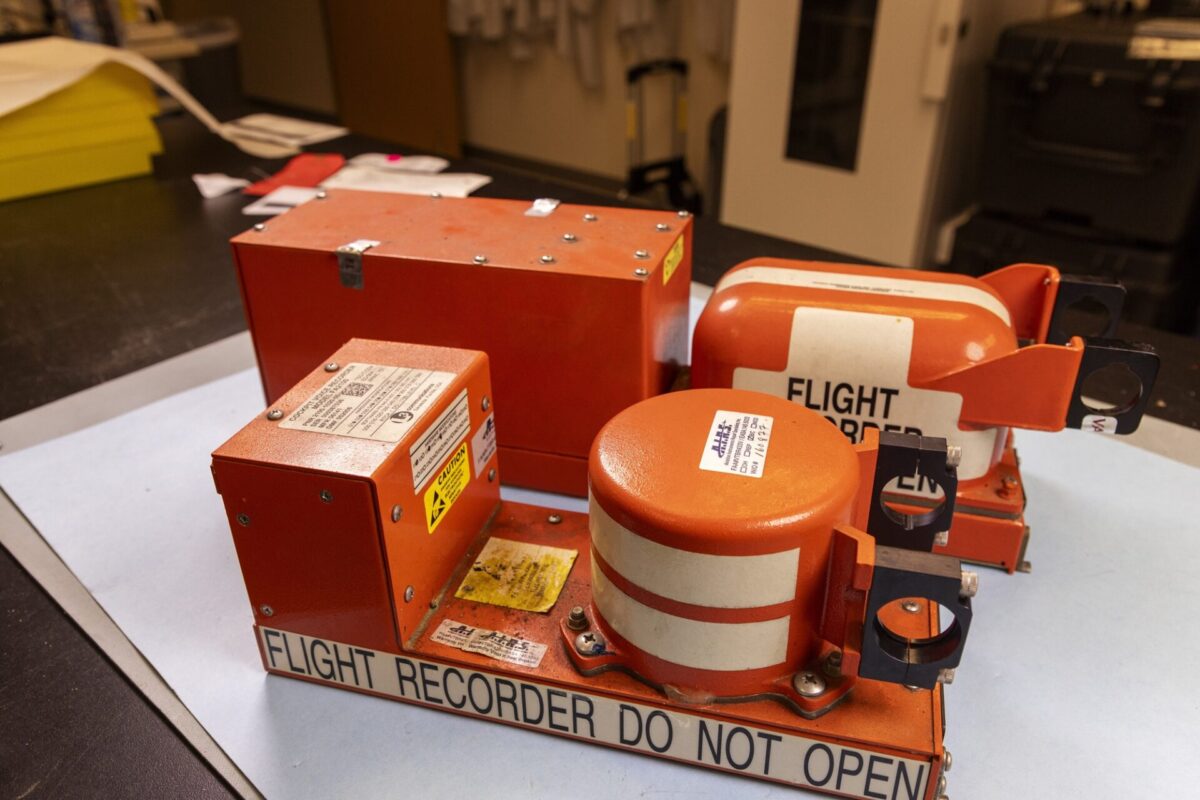
Homendy was joined by Senior Aviation Accident Investigator, Chihoon Shin, who shared some of the evidence collected by the flight data recorder.
21 Air pilot applied go-around thrust
According to Shin, 30 seconds before the end of the recording, the nose landing gear and the right main landing gear touched down at a ground speed of 158 knots.
23 seconds before the end of the recording the brakes were applied and 19 seconds before the end of the recording, the left main landing gear touched down at a ground speed of 134 knots.
15 seconds before the end of recording, brakes were released at a ground speed of 120 knots.
“Throttles increased to values consistent with go-around thrust,” Shin said.
11 seconds before the end of recording, throttles were reduced to idle power. Brakes were reapplied and the ground speed was 117 knots.
The throttles remained at idle, and brakes continued to be applied until the end of the recording.
7 seconds before the end of recording lateral, longitudinal, and vertical accelerations changed. The ground speed was 96 knots at this time.
At the end of the recording, or the last data frame, the final ground speed was 65 knots.
“No indication in the recorded data that speed brakes or thrust reversers were deployed,” Chin added.
NTSB set to interview pilots on Wednesday
Homendy confirmed interviews with the chief pilot and two pilots onboard the incident aircraft will be held on September 9, 2026.
According to the NTSB chair, the captain is 55 years old with 7,145 flight hours while the first officer is 37 with 2,655 hours.
The captain, a former US Army Black Hawk pilot, received his type rating for the 767 in May 2026, while the first officer received theirs on April 2, 2025.

On September 8, 2026, NTSB representatives spoke with air traffic controllers and began gathering evidence at the crash site.
“The cockpit voice recorder contained more than two hours of good quality audio,” Homendy said. “The flight data recorder contained approximately 55 hours of data and recorded more than 400 parameters.”
The flight data recorder and cockpit voice recorder recovered from 21 Air Flight 7598 and have been taken to the NTSB laboratory in Washington DC.
Additionally, Homendy said the takeoff weight for the aircraft was 252,182 lbs (114.4 tons). The planned landing weight was 231,236 lbs (104.9 tons).