
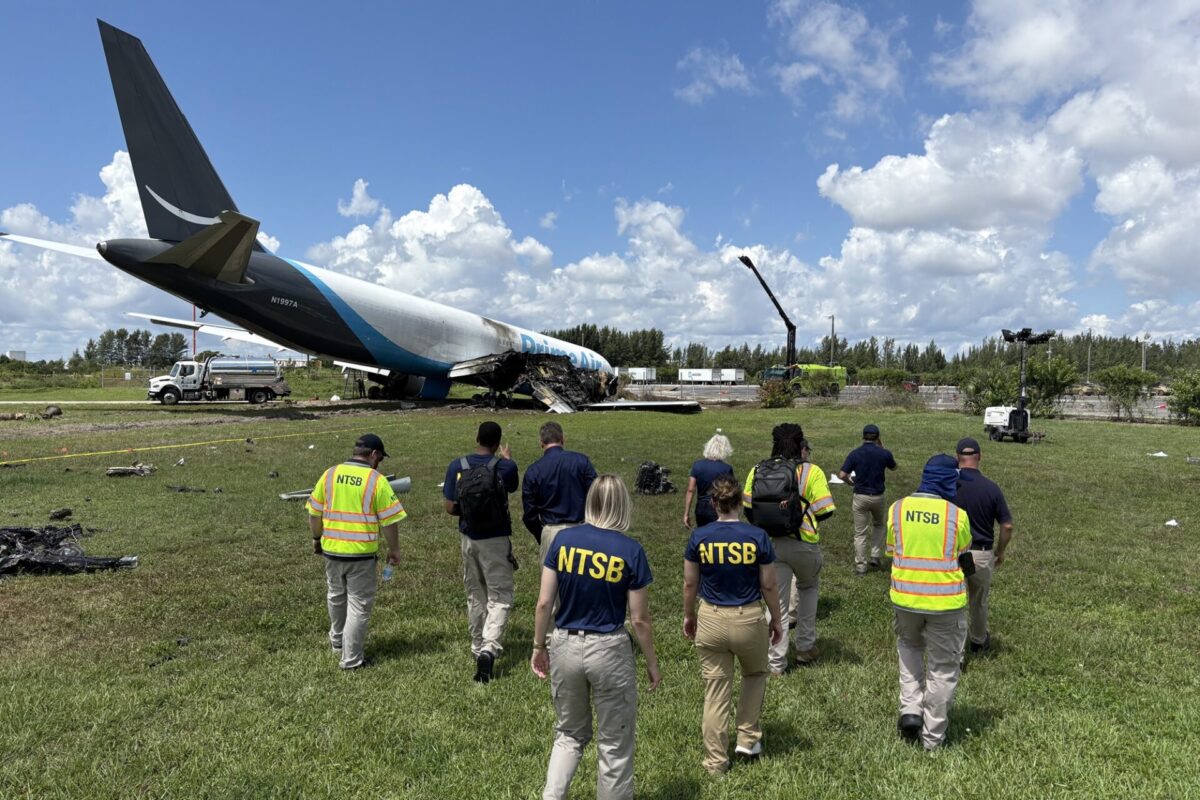
The National Aviation Safety Board (NTSB) has published a preliminary report on its ongoing investigation into the recent fatal 21 Air crash at Miami International Airport (MIA).
The report, dated September 6, 2026, provides fresh evidence gathered by NTSB investigators as the agency has tried to establish the events that led to five people on the ground being killed.
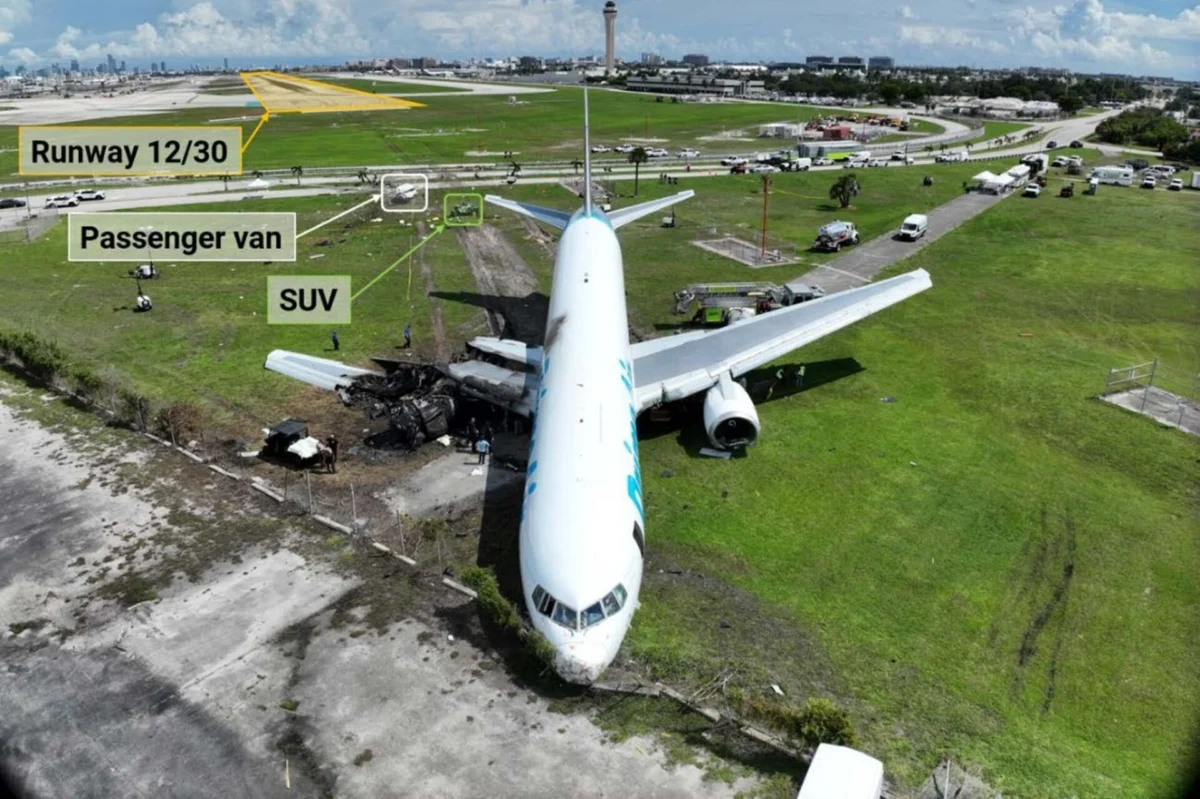
On September 6, 2026, the 32-year-old Boeing 767-33A(ER), operated by 21 Air on behalf of Amazon Air, landed in Miami, only to overrun the runway.
Prior to impacting the airport perimeter fence, the aircraft struck a Ford Econoline, resulting in the death of five victims. Two other people in the van sustained serious injuries, as did an individual in a Toyota SUV.
What was known already
Prior to the preliminary report being published, the NTSB had explained that a pilot on board the Amazon Air flight was heard warning that they were travelling “too fast”.
The NTSB noted that the pilot “made additional comments regarding the aircraft’s excessive speed throughout the remainder of the recording,” but there “was not a consistent verbal response”.
Twice, a warning system was heard to state “sink rate sink rate”, alerting the pilots that the aircraft was descending too quickly.


Additionally, in the 17 seconds before touching down, the pilots were told on five occasions, “too low terrain”.
The preliminary report established that the first officer was the individual warning about their speed, and the captain was the pilot flying the aircraft.
Wind data not communicated to crew
The NTSB stated that the local control south (LCS) operator issued a landing clearance to the aircraft but did not issue information about the wind.
“Per FAA Order JO 7110.65BB, titled ‘Air Traffic Control’, both wind direction and velocity were required to be stated when authorizing use of a runway when a tailwind component exists,” the NTSB said.
Around four minutes prior to issuing the landing clearance, when another flight asked for wind information, the LCS stated winds were from 190° at 19 kts (21.9 mph) with gusts to 22 kts (25.3 mph).
The 21 Air landing in Miami
The preliminary report established that the accident aircraft was about 105 ft above ground level, at a ground speed of 177 kts (203.8 mph), as it crossed the threshold of runway 30 and touched down about 3,750 ft past the threshold, at a ground speed of 160 kts (184.1 mph).
The runway measures 9,360 ft long, the length of which includes a displaced threshold for runway 30. The NTSN noted that the Boeing 767 had about 2,730 ft of runway remaining.
The report explains what happened when the aircraft touched down: “The FDR data showed the speed brakes remained stowed, and the thrust reversers did not deploy during the landing and subsequent landing rollout. Wheel brakes were manually applied at a groundspeed of 146 kts. The brake pedals for wheel braking were subsequently released about eight seconds later at a groundspeed of 120 kts and the throttle resolver angle for both engines increased to go-around thrust values; the airplane had about 930 ft of runway remaining.”
The report continued: “About four seconds later, the throttle resolver angles for both engines reduced to idle values at a groundspeed of 117 kts, when wheel brakes were reapplied; the airplane had about 415 ft of runway remaining. The airplane departed the runway at a groundspeed of 113 kts and subsequently impacted the localizer and MALSR at the northwest end of runway 30.”
What 21 Air has said
21 Air has told CNN that it is reviewing the preliminary report and working closely with the NTSB on the investigation.
“Our focus since the accident has been on supporting everyone affected, to include providing resources to those who were injured, the loved ones of those who lost their lives, and our colleagues and commercial partners,” a 21 Air spokesperson said. “We will take all appropriate action to improve our safety based on the facts as they are established.”
The NTSB will publish a final investigation report into the crash in around a year’s time.
To read the full preliminary report visit the NTSB website.