
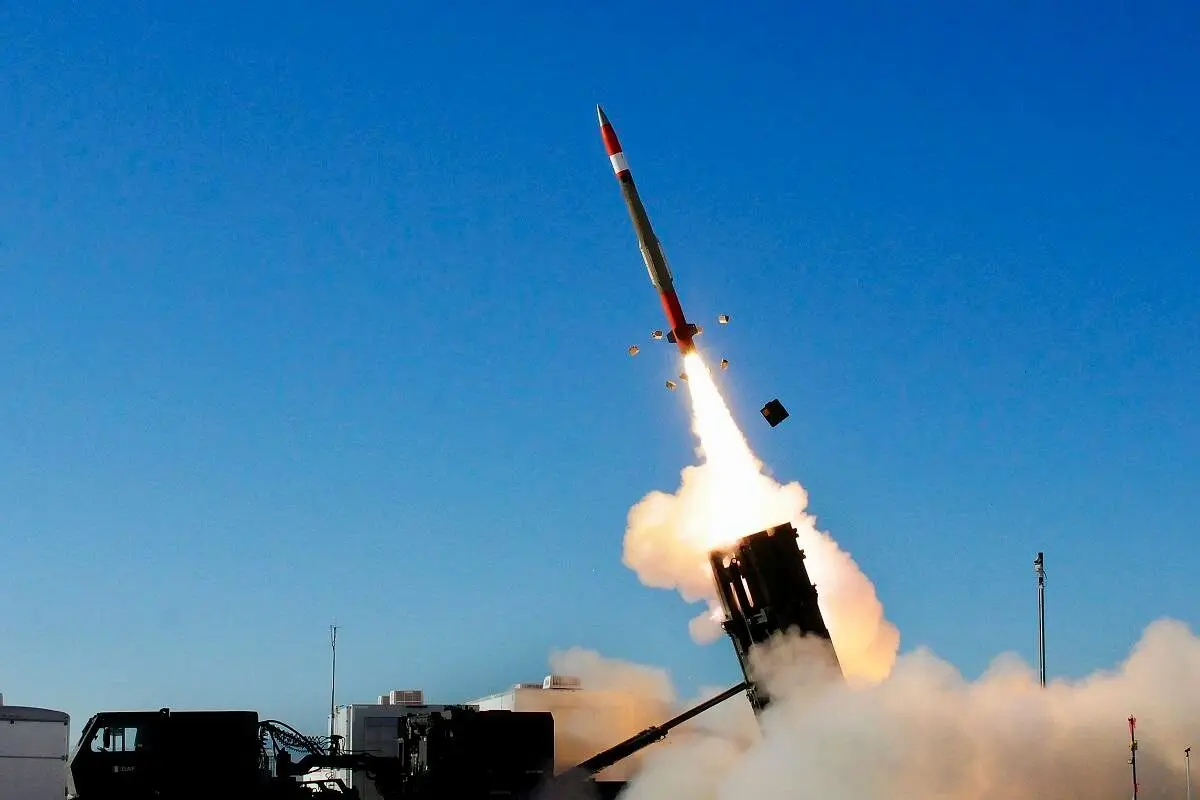
The Pentagon has signed seven-year agreements with General Dynamics and Lockheed Martin aimed at sharply increasing production of THAAD and Patriot missile interceptors as the US moves to boost its air defense manufacturing capacity.
The agreements announced on August 31, 2026, call for tripling production capacity for Patriot Advanced Capability-3 Missile Segment Enhancement (PAC-3 MSE) interceptors and quadrupling capacity for Terminal High Altitude Area Defense (THAAD) interceptors.
The deals are framework agreements intended to lead to seven-year multiyear procurement contracts. Funding remains subject to annual congressional appropriations.
General Dynamics Ordnance and Tactical Systems (GD-OTS) will increase production of several critical interceptor components, including motor cases, seeker housings and midsections, and shroud deployment systems.
The company said the agreements establish the foundation for a multiyear production expansion, with final contract terms to be negotiated later.
The Pentagon said the longer-term agreements will guarantee minimum annual procurement quantities, giving manufacturers and suppliers greater confidence to invest in additional workers, bulk material purchases and factory upgrades.
“General Dynamics and Lockheed Martin have answered the call,” Under Secretary of War for Acquisition and Sustainment Michael Duffey said. “We are cutting red tape, shortening timelines, and rapidly scaling our domestic manufacturing capacity.”
The latest agreements are part of a broader Pentagon effort to increase US missile production as demand for air defense interceptors has risen sharply.
Lockheed Martin received a separate seven-year contract worth up to $35 billion in June 2026 to quadruple THAAD interceptor production. That award followed a framework agreement signed with the Pentagon in January.
The Pentagon has been pursuing similar long-term agreements across other missile programs to give defense companies enough certainty to invest in manufacturing capacity that can take years to build.
PAC-3 MSE is the latest interceptor used by the Patriot air defense system and is designed to destroy ballistic missiles, cruise missiles and aircraft through direct impact.
THAAD is designed primarily to intercept short-, medium- and intermediate-range ballistic missiles during the final stage of flight, operating at higher altitudes and longer ranges than Patriots.
The new agreements come amid growing concern about US stocks of advanced air defense interceptors after years of sustained demand from the wars in Ukraine and the Middle East. Patriot and THAAD missiles are among the most difficult weapons in the US arsenal to replace quickly, and production has not kept pace with the rate at which the interceptors have been used.
The more immediate concern is what happens if another major conflict erupts before those stocks are rebuilt. Independent estimates put remaining US inventories at fewer than 1,000 Patriot interceptors and roughly 250 THAAD interceptors, raising the prospect that commanders could be forced to ration high-end air defense missiles.