
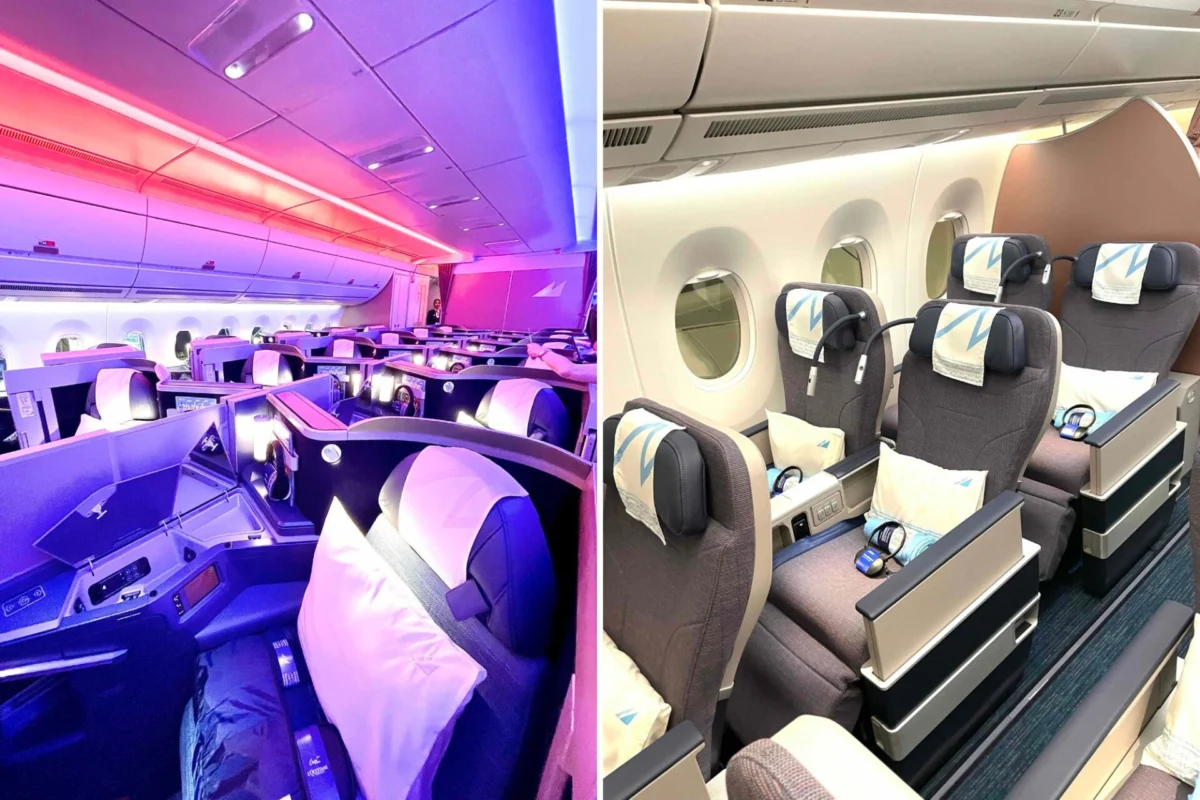
Philippine Airlines made aviation history on January 18, 2026, when it unveiled its first Airbus A350-1000 during a ceremony at Villamor Airbase in Manila.
The flag carrier, which is also celebrating 85 years of operations, becomes the 10th airline worldwide to operate the variant and the first in the Southeast Asian region, marking a significant milestone.
But beyond the ceremonial unveiling lies a meticulously crafted cabin experience styled in partnership with LIFT Aero Design, whose team spent months refining every detail of the 382-seat tri-class interior.
AeroTime gained exclusive insights into the styling process and cabin features through conversations with Daniel Baron, CEO of LIFT Aero Design, and Aaron Yong, Design Partner, who walked through each cabin class and explained the thinking behind key styling decisions.
Business class: Privacy meets functionality

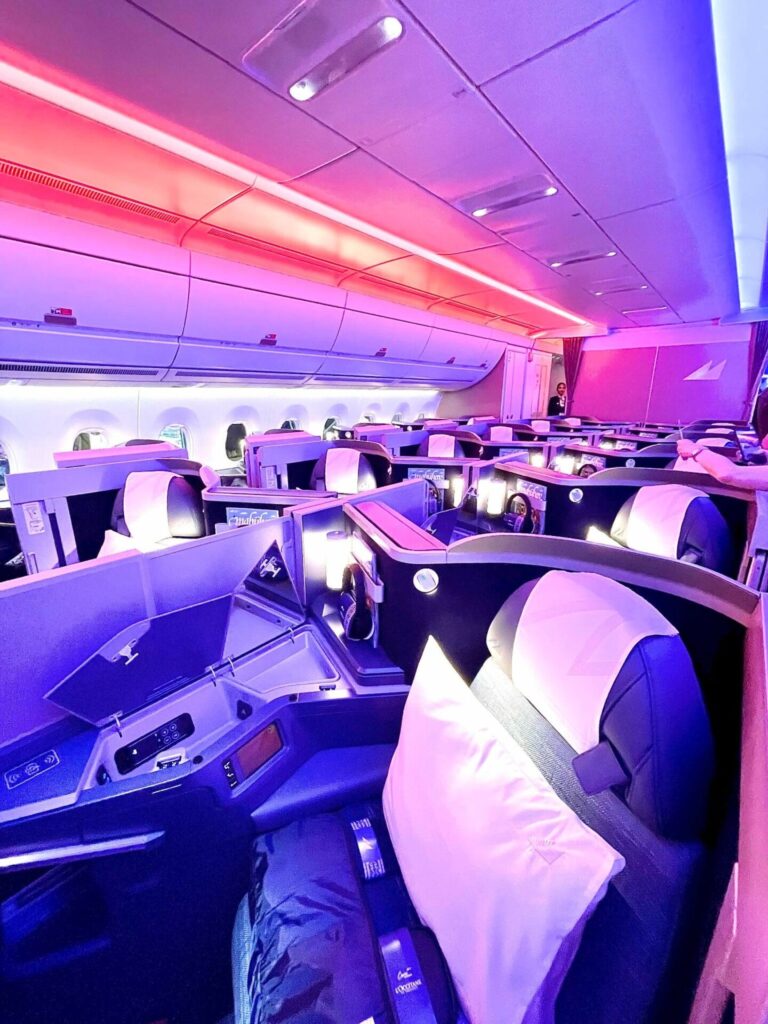
A notable feature of PAL’s “Mabuhay Studios” business class is the absence of overhead bins along the centerline. With all storage positioned along the sidewalls, passengers in the center seats of the 1-2-1 configuration have unobstructed ceiling space above them. This creates a greater sense of openness on long-haul flights that can exceed 14 hours such as New York’s John F Kennedy Airport (JFK).
All 42 Collins Aerospace Elevation suites come equipped with sliding doors for enhanced privacy, a feature that has rapidly become standard rather than exceptional on premium long-haul products. Each suite measures 44 inches in pitch and 20.25 inches in width, lying fully flat for sleep.
The cabin incorporates multiple storage compartments within reach of each passenger: a wireless charging pad, dedicated spaces for personal items on both sides of the suite, and a purpose-built water bottle holder. The number of storage options, while practical, means passengers need to keep track of where they’ve placed their belongings during the flight.
The suites feature 20-inch 4K entertainment screens, in-seat power outlets, USB-A and USB-C ports, and complimentary full-flight Wi-Fi for messaging, browsing, and streaming—amenities that have become increasingly common on competitive long-haul business class products.
Premium economy: Measured upgrade from economy
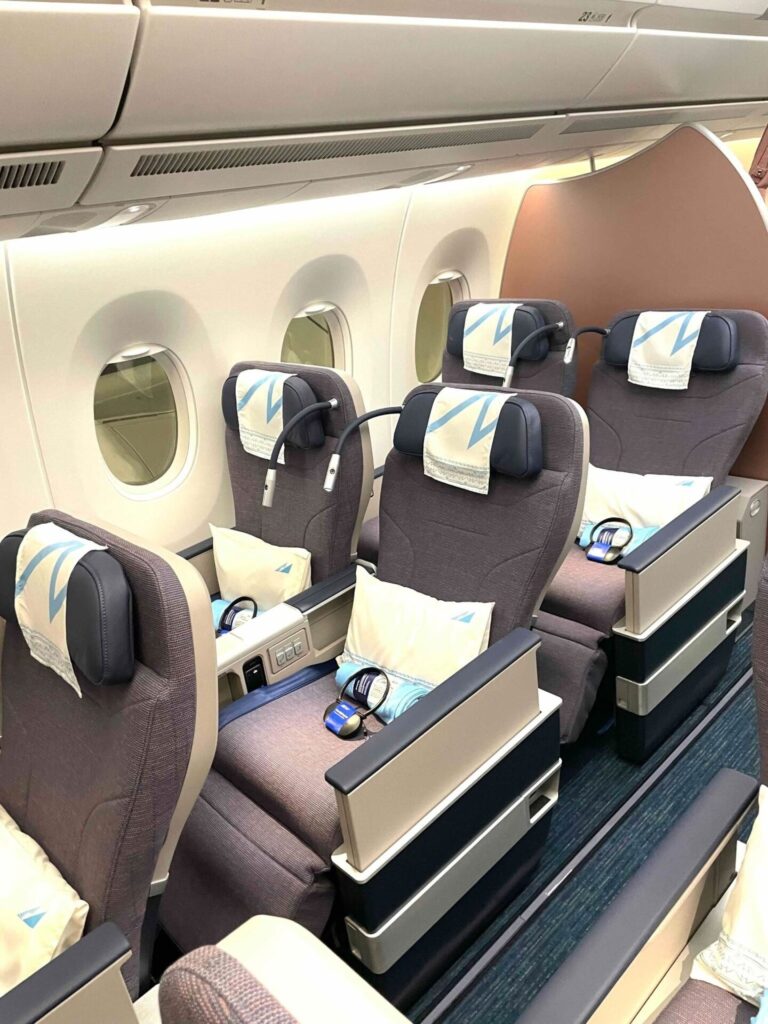
Premium economy comprises 24 seats measuring 19 inches in width with 38 inches of pitch and seven inches of recline. Each seat includes a calf rest and footrest.
The cabin features genuine leather on headrests and armrests, distinguishing it from the fabric-covered economy seats. Each seat is equipped with a 13.3-inch 4K screen (the same size as those in economy) along with Bluetooth connectivity for personal device pairing and both USB-A and USB-C charging ports.
The bifold tray table allows passengers to deploy either half or the full surface depending on their needs, whether for dining, working, or maintaining access to the aisle.
Economy: Maximizing space through engineering
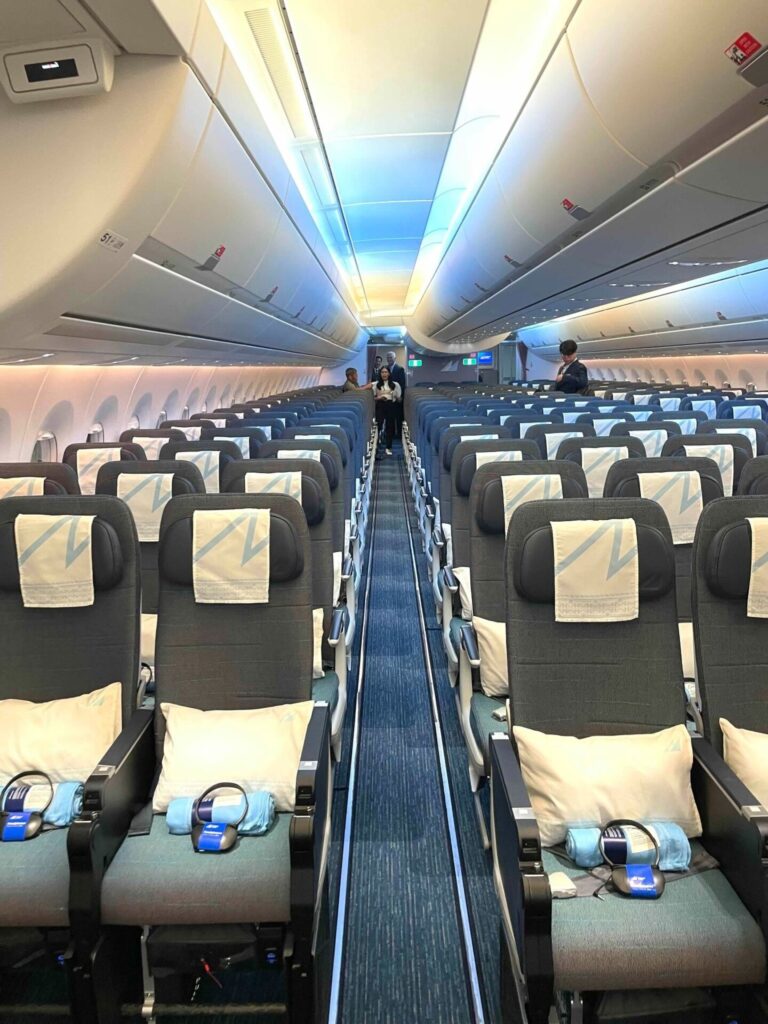
At 316 seats, economy class accounts for the bulk of the A350-1000’s capacity, configured in a 3-3-4 layout. Achieving a 17-inch seat width in the densest section required creative problem-solving.
“Airbus shaved millimeters off the sidewall panels on this newer A350 variant,” Baron explained. “It doesn’t sound like much, but those millimeters add up when you’re trying to fit 10-abreast seating while maintaining a competitive seat width.”
The 32-inch pitch is notably generous for a long-haul economy product, particularly on routes where PAL competes with ultra-long-haul carriers on transpacific services to the US mainland and Canada.
“Airlines don’t optimize for just one metric,” Baron said. “It’s the total package: pitch, width, recline, entertainment, charging options. We worked with a German fabric supplier on a two-tone weave that shifts from teal to orange depending on viewing angle. Small touches matter.”
The economy cabin mirrors premium economy in entertainment technology, with the same 13.3-inch 4K screens and Bluetooth connectivity. Adjustable four-way headrests, built-in mobile device holders, and both USB-A and USB-C ports round out the feature set.
Operational considerations
Beyond passenger-facing features, the A350-1000 brings operational advantages that influenced cabin design decisions. The aircraft delivers up to 25% better fuel efficiency compared to previous-generation widebodies and is compatible with sustainable aviation fuel – factors that will become increasingly important as aviation faces decarbonization pressure.
Enhanced cargo capacity strengthens PAL’s freight operations, while the aircraft’s extended range opens new route possibilities. The flag carrier plans to deploy the type on its transpacific services, with five additional A350-1000s arriving in 2026 and three more in 2027, bringing PAL’s total fleet to 82 aircraft.
The A350-1000 introduction comes at a time when PAL is positioning itself for expanded transpacific operations.
“The A350-1000 aircraft stands as a powerful symbol of our resurgence,” PAL Holdings President Lucio C. Tan III said during the unveiling ceremony. “It represents our confidence to compete globally, while remaining deeply rooted in who we are as Filipinos.”